
The work of Ellen Raskin
I’ve been obsessed with The Westing Game since I was a kid (Who wasn’t? Who isn’t?), but I didn’t know until very recently that the author Ellen Raskin considered herself more of an artist than a novelist. She designed over 1,000 book covers, made a bunch of picture books, and wrote multiple “puzzle mystery” novels. The Westing Game was her last published book before she passed away at age 54.
I figured it was time for me to read her other work. Here is an overview of what I learned as I studied:
She loved mischief and wordplay, fearlessly experimented with form, and always thought about how readers would experience her books as an object. She pushed boundaries in everything she made.
I was surprised that I struggled to understand or connect with quite a few of her stories, especially the picture books. But my favorite PBs are Nothing Ever Happens on My Block, Spectacles, and Franklin Stein.
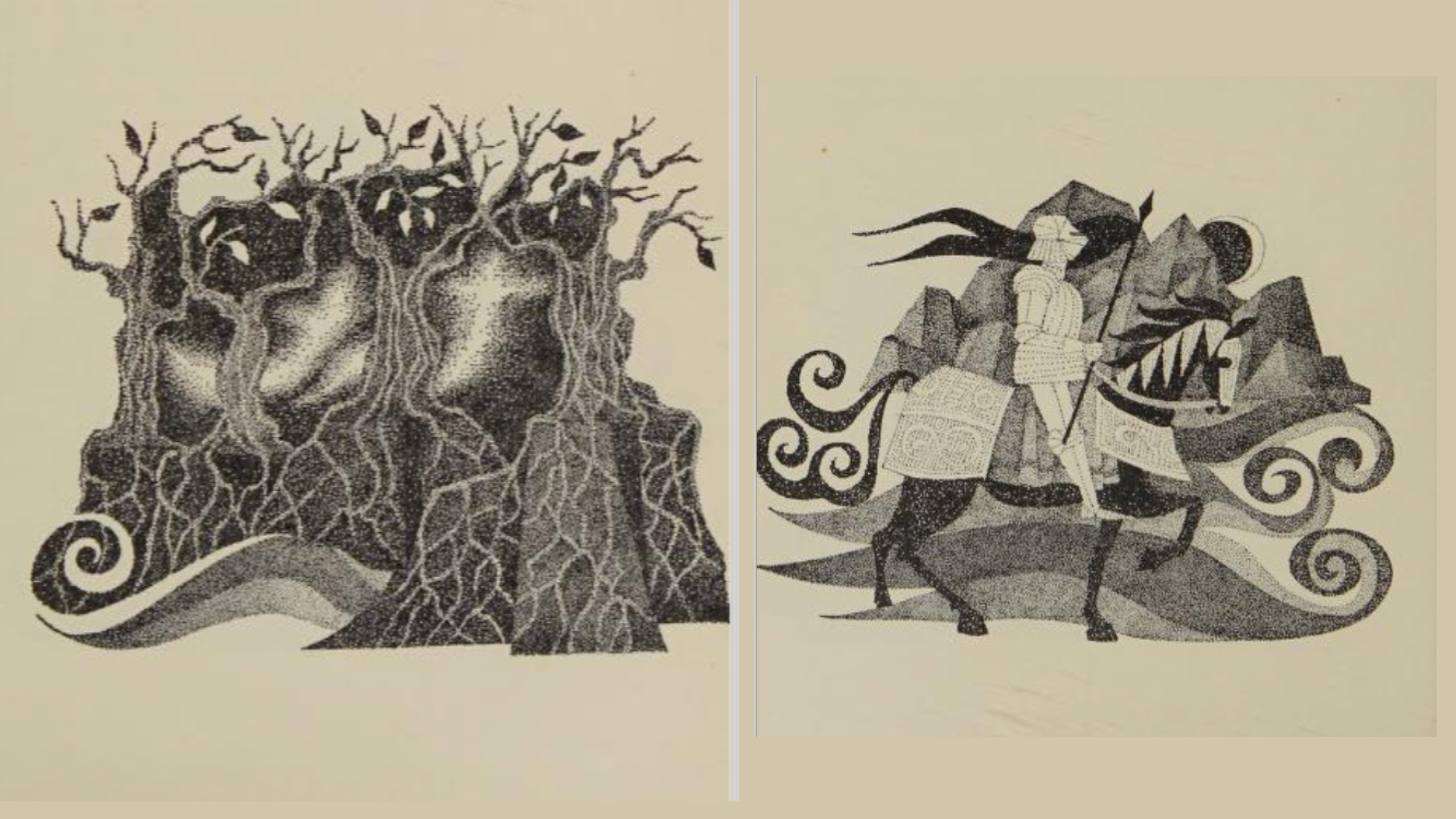
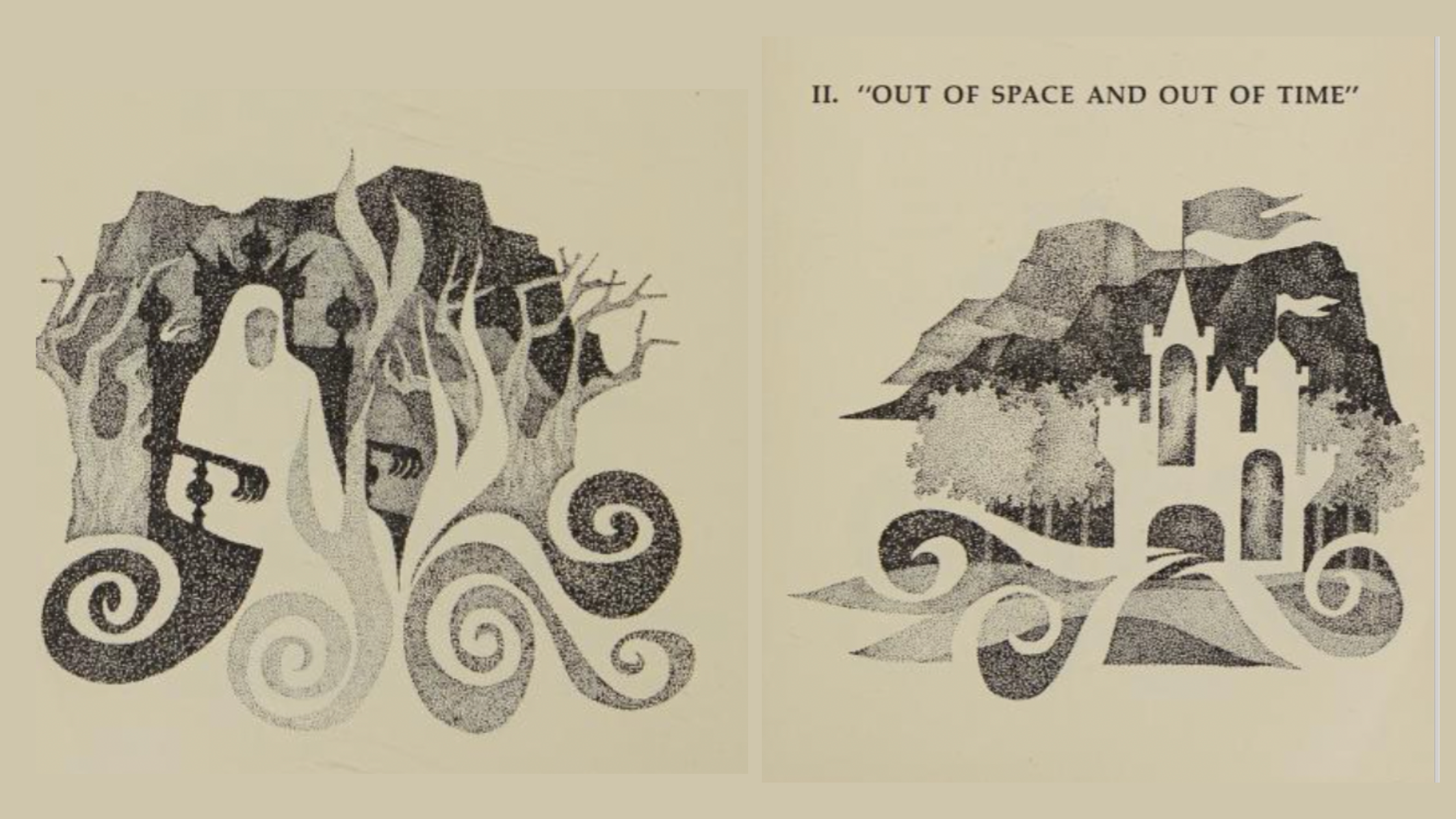
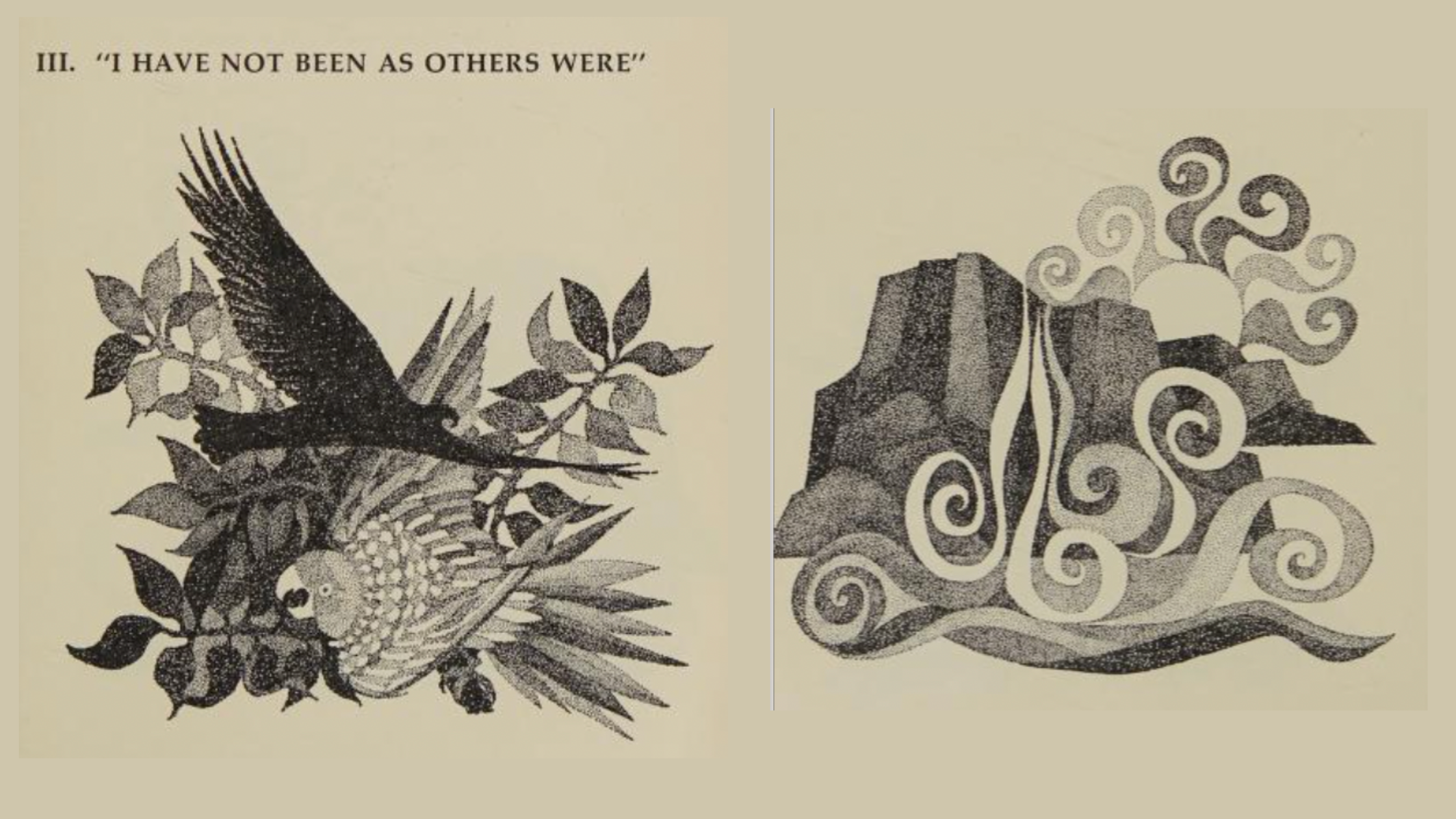
She had a wide variety of art styles. My faves were her wood cuts, and I love her soft drawings in the Poe book.
It was so cool to see her voice developing throughout her work all the way up to The Westing Game. Her books often included a cast of quirky characters, a focus on disguises and imperfections, and a contrast between how characters and the reader perceive others at the beginning of the story versus the end.
Alright, below you’ll find a detailed collection of her work organized by year.
Her books
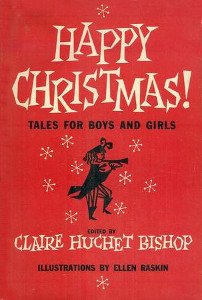
Happy Christmas: Tales for Boys and Girls. Edited by Claire H. Bishop. 1956. (illustrator only)
This is a Christmas anthology that I didn’t read, but I’m obsessed with Raskin’s little designs across the book.
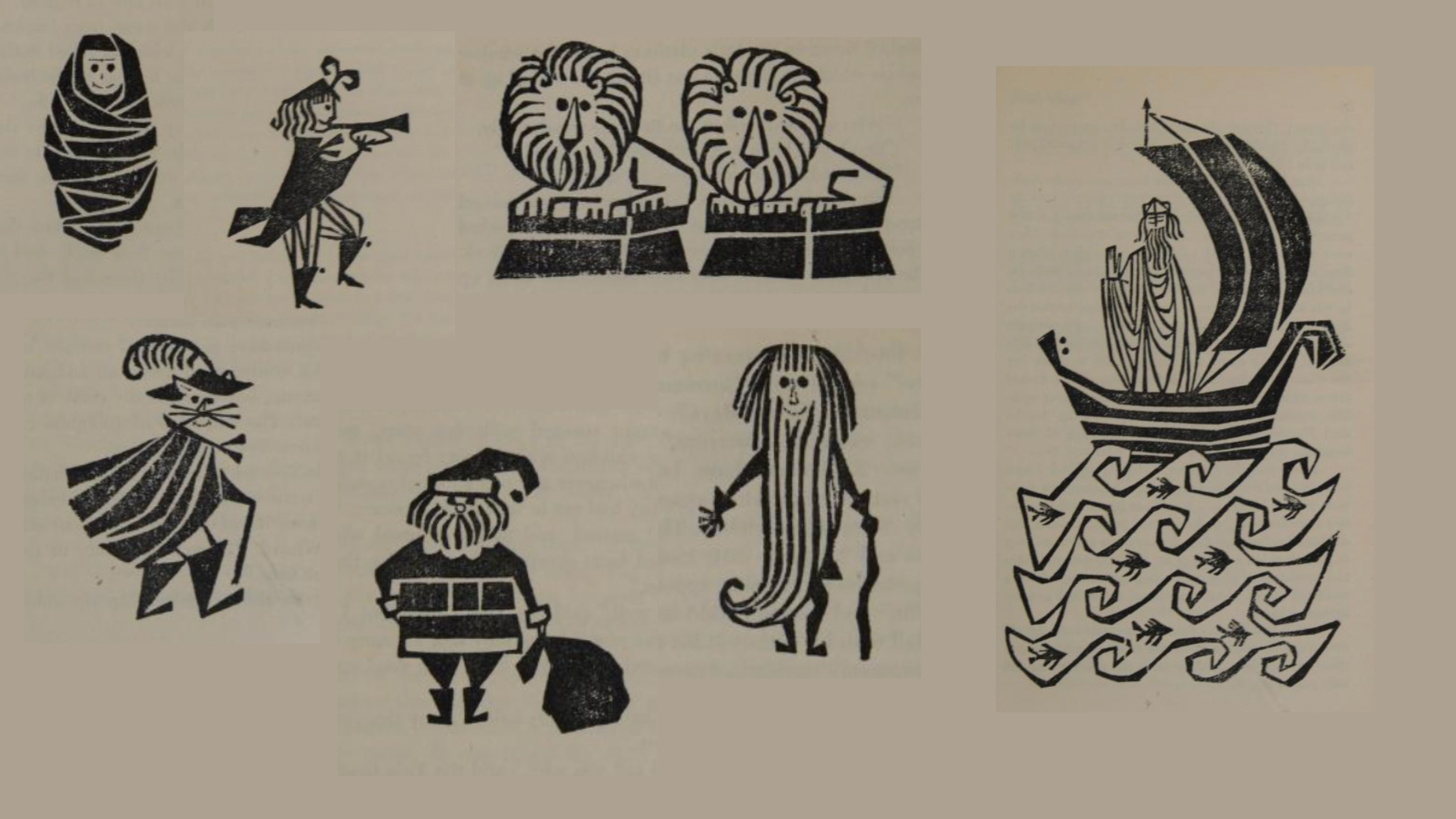
How can I choose a favorite?
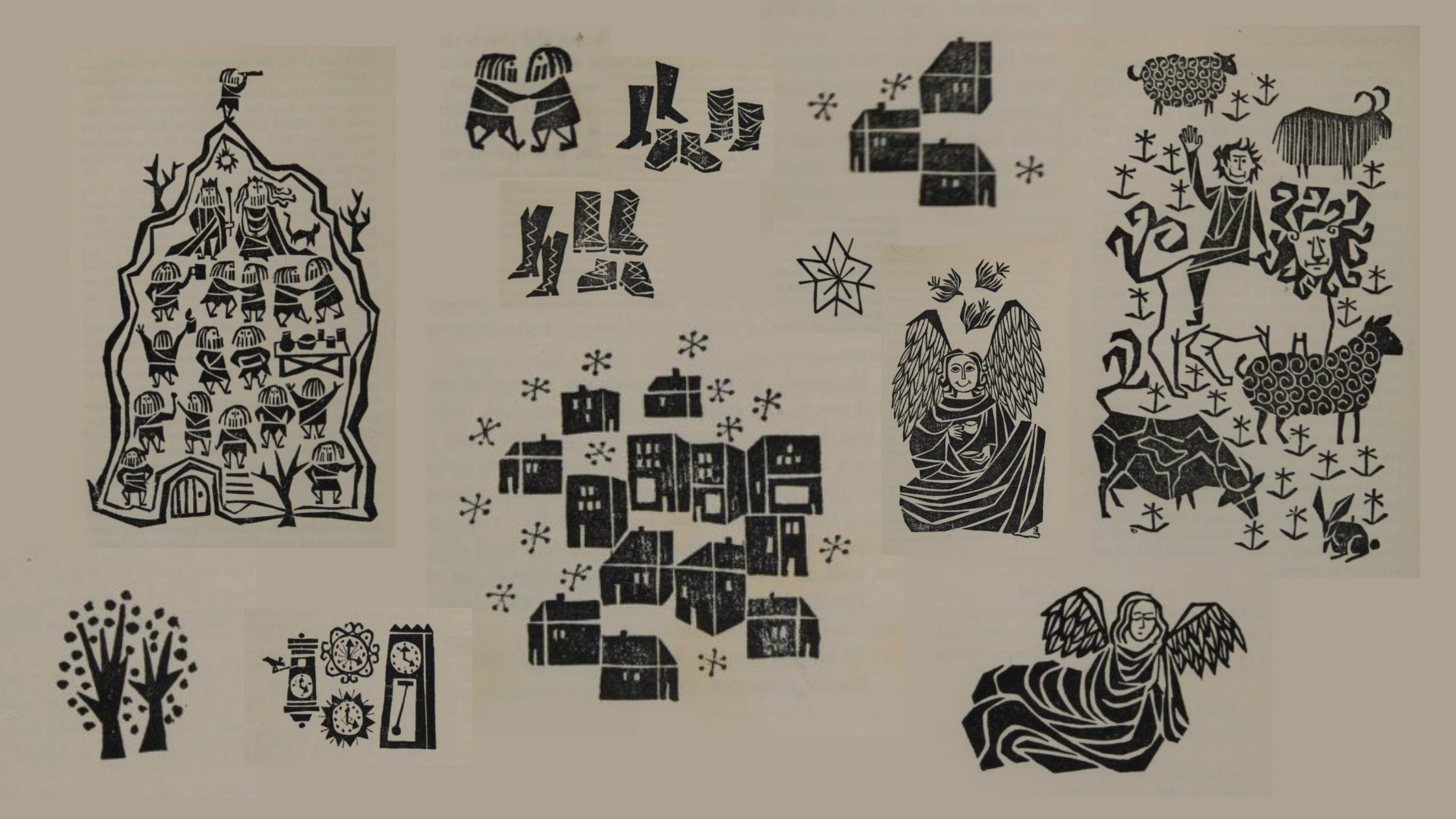
Those houses? Those little shoes?
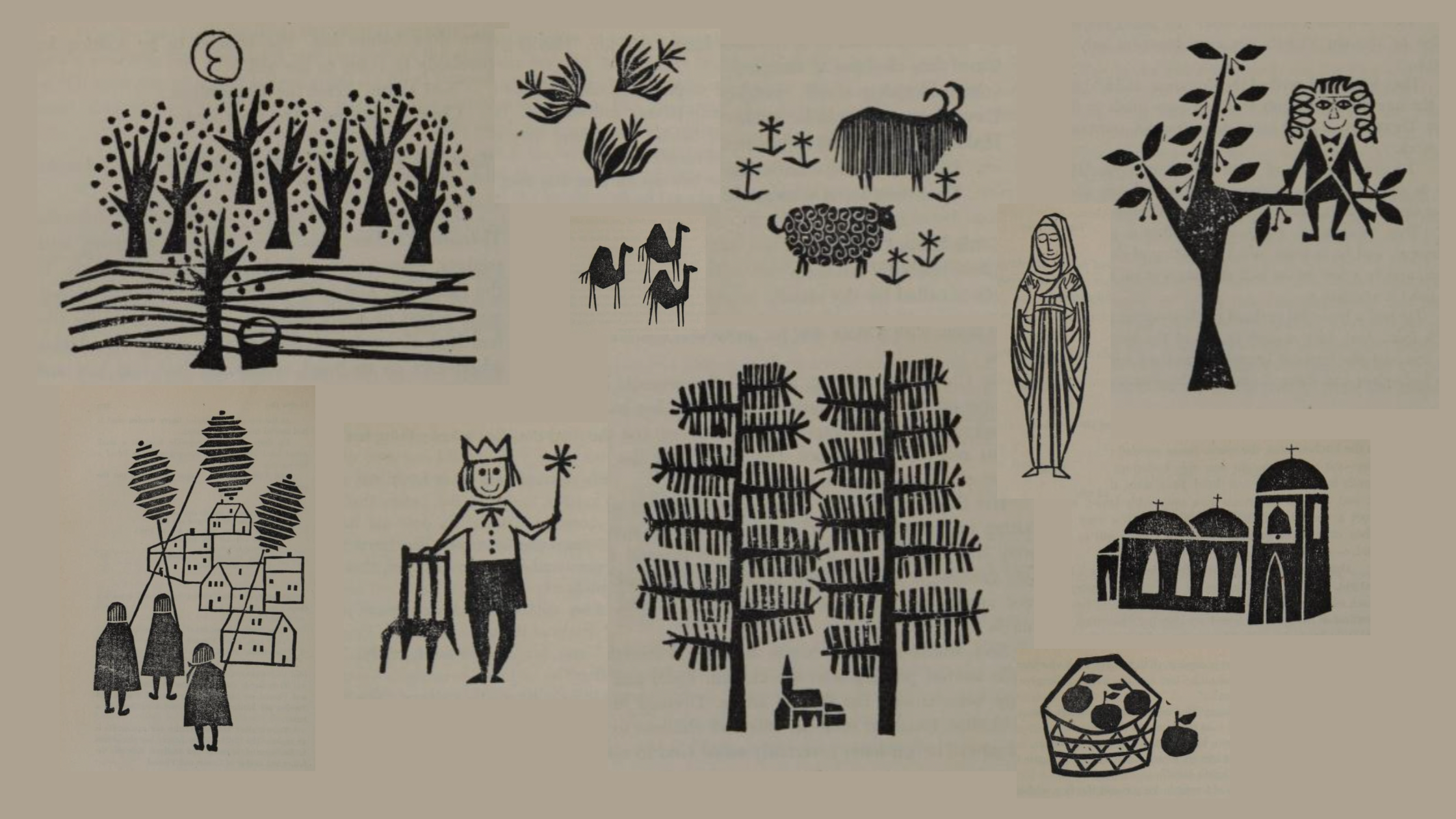
The trees? The boy with the crown? The curly haired man? My goodness. Obsessed.
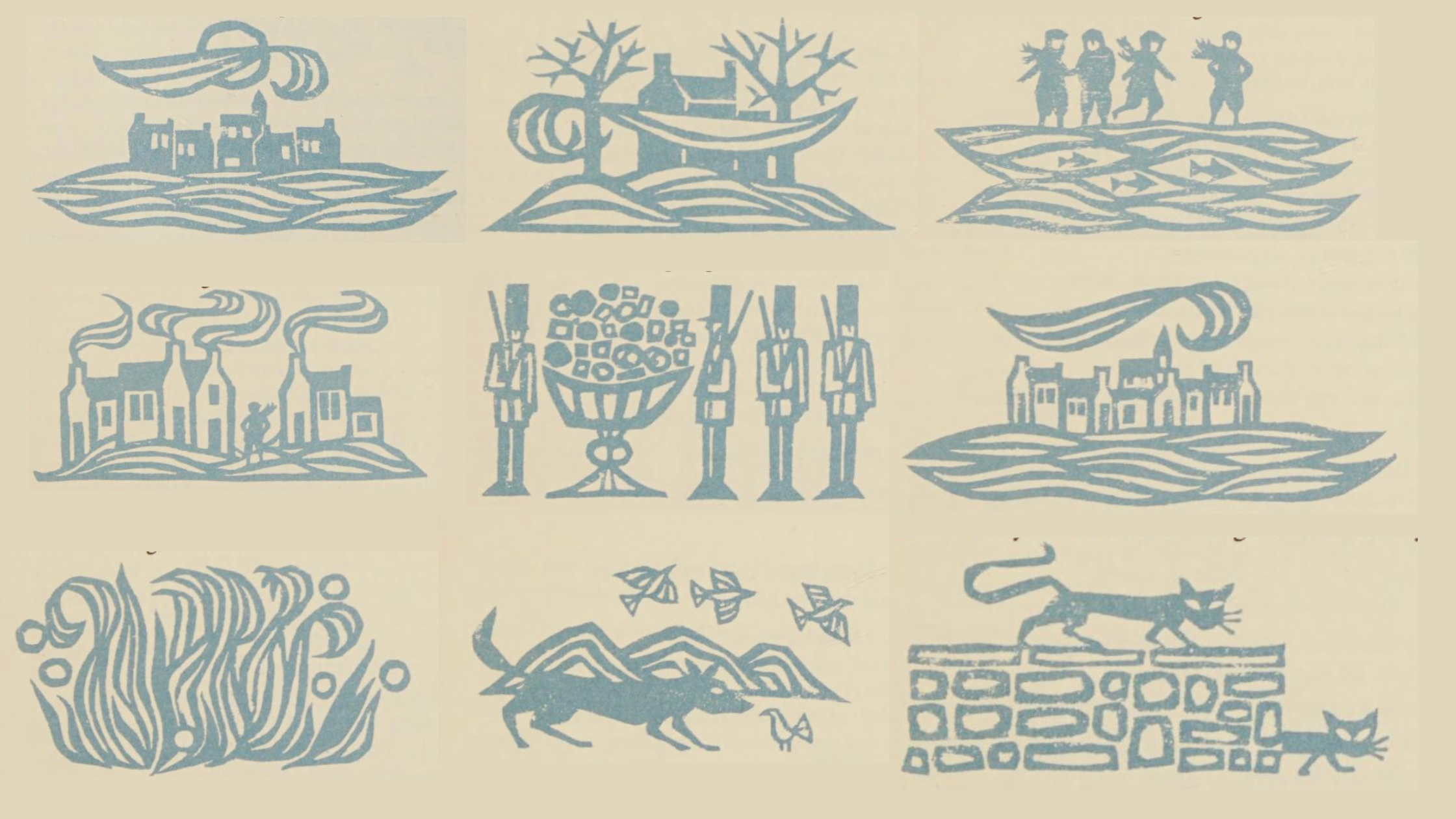
A Child’s Christmas in Wales. By Dylan Thomas, 1959 (illustrator only)
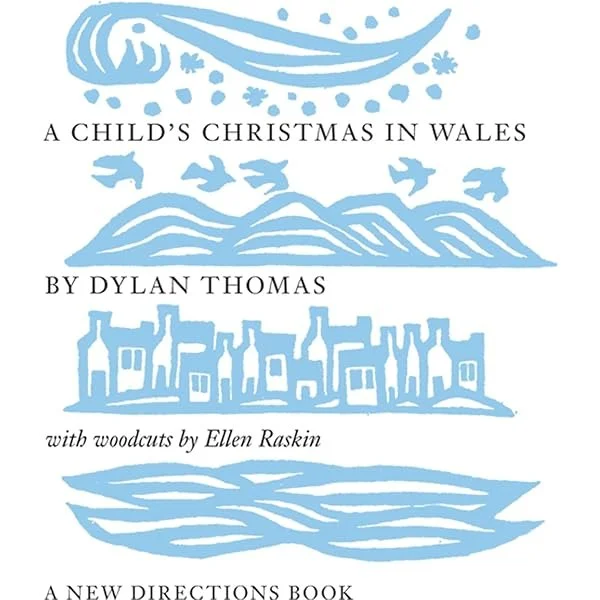
Beautiful woodcuts that decorated a longer text
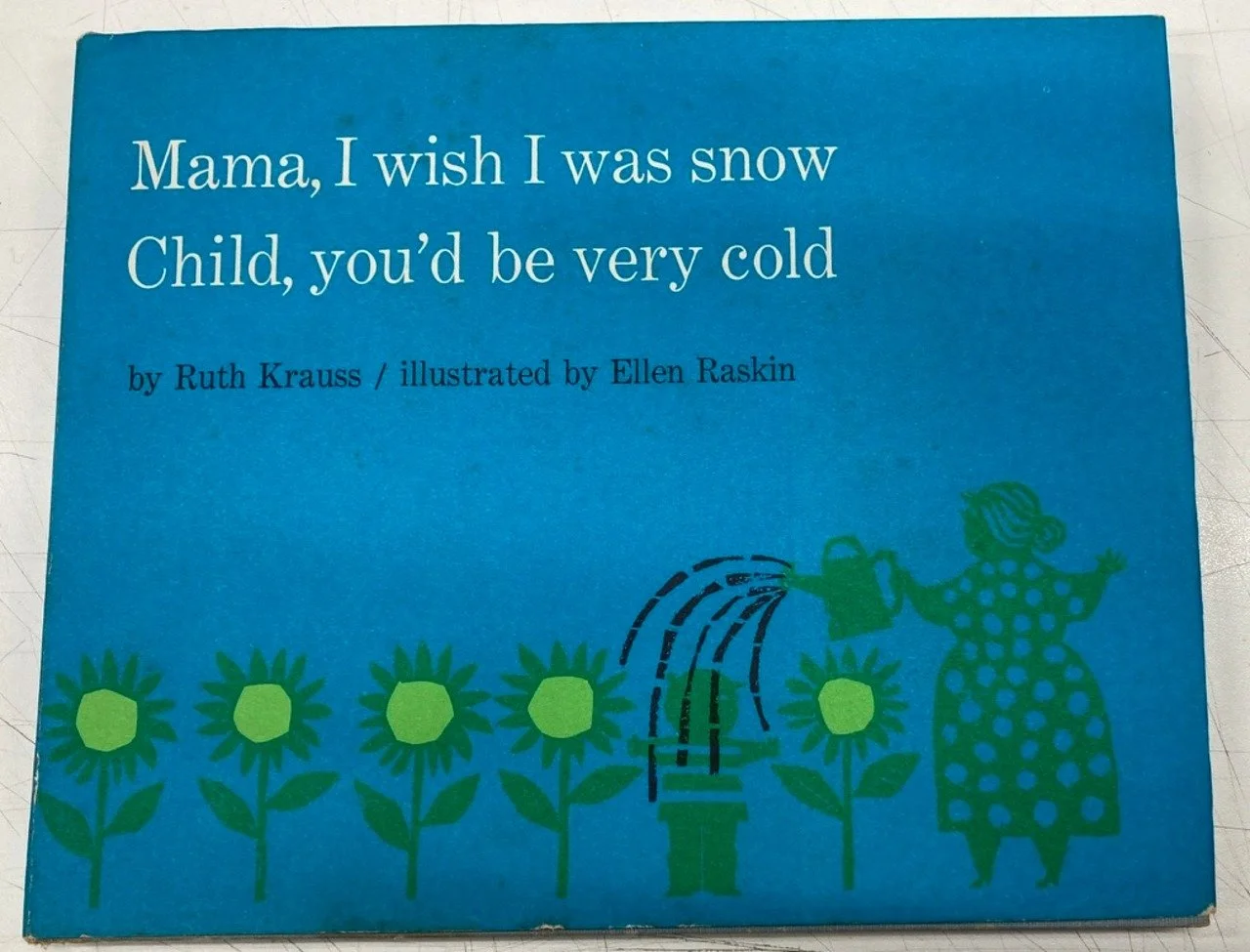
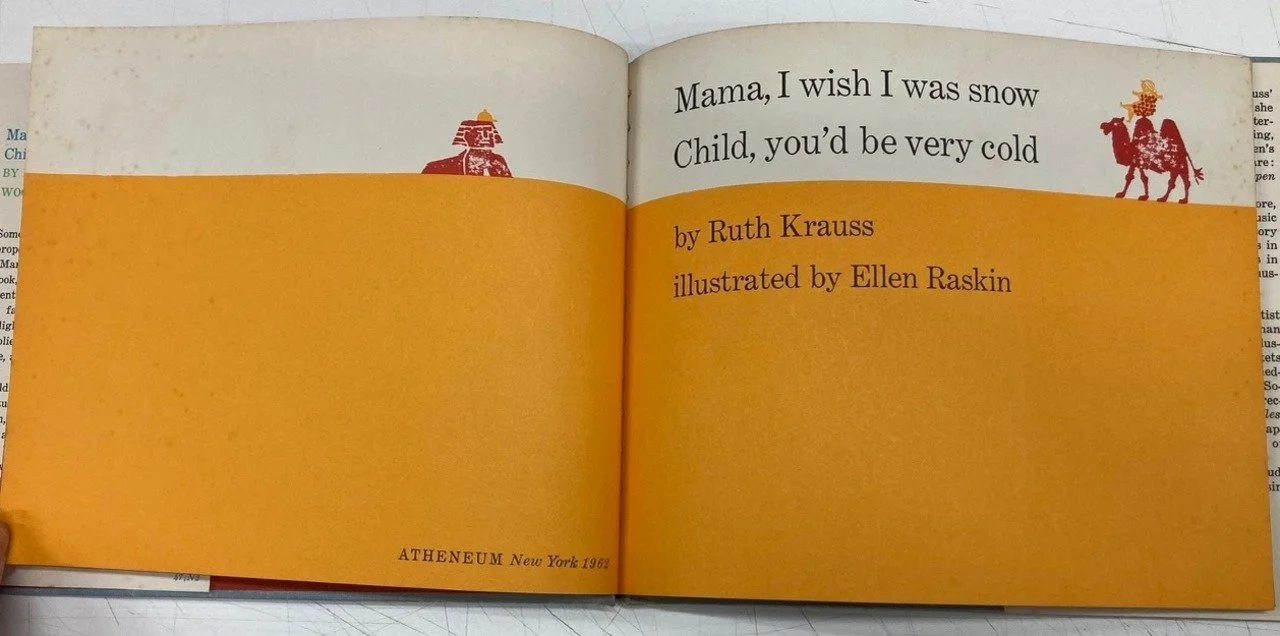
Mama, I Wish I Was Snow, Child You’d Be Very Cold. By Ruth Krauss, 1962 (illustrator only)
Haven’t been able to find this one yet, but I did find a scathing review from Kirkus. And some gorgeous spreads (credit to tomsbox).
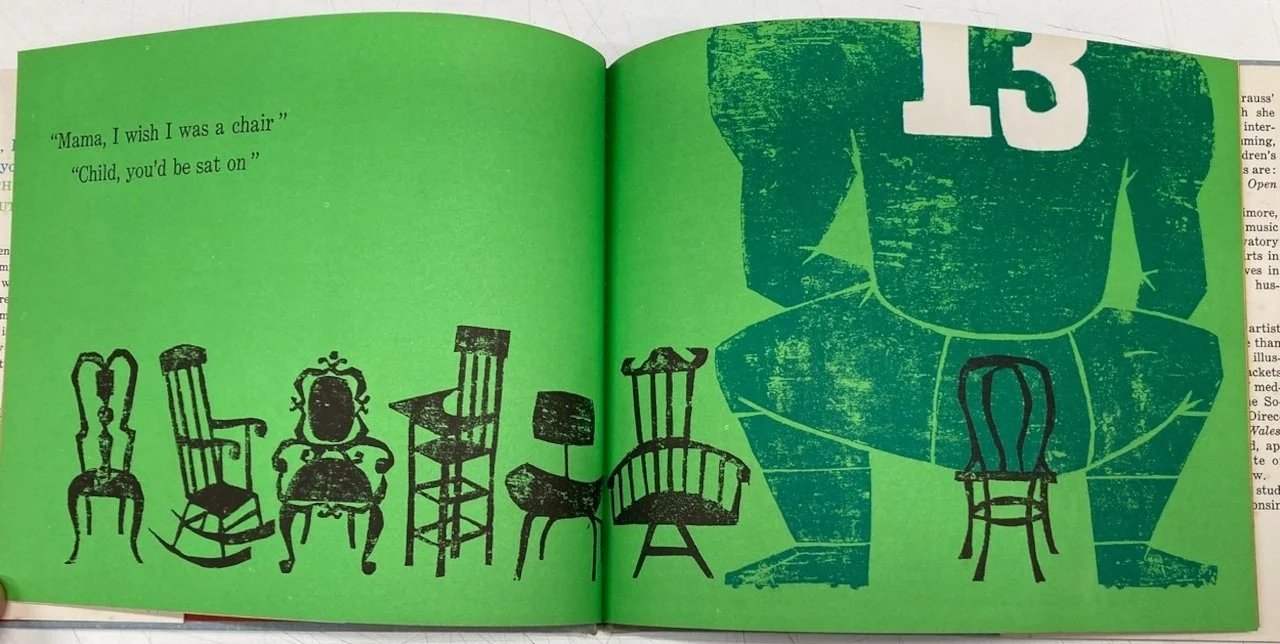
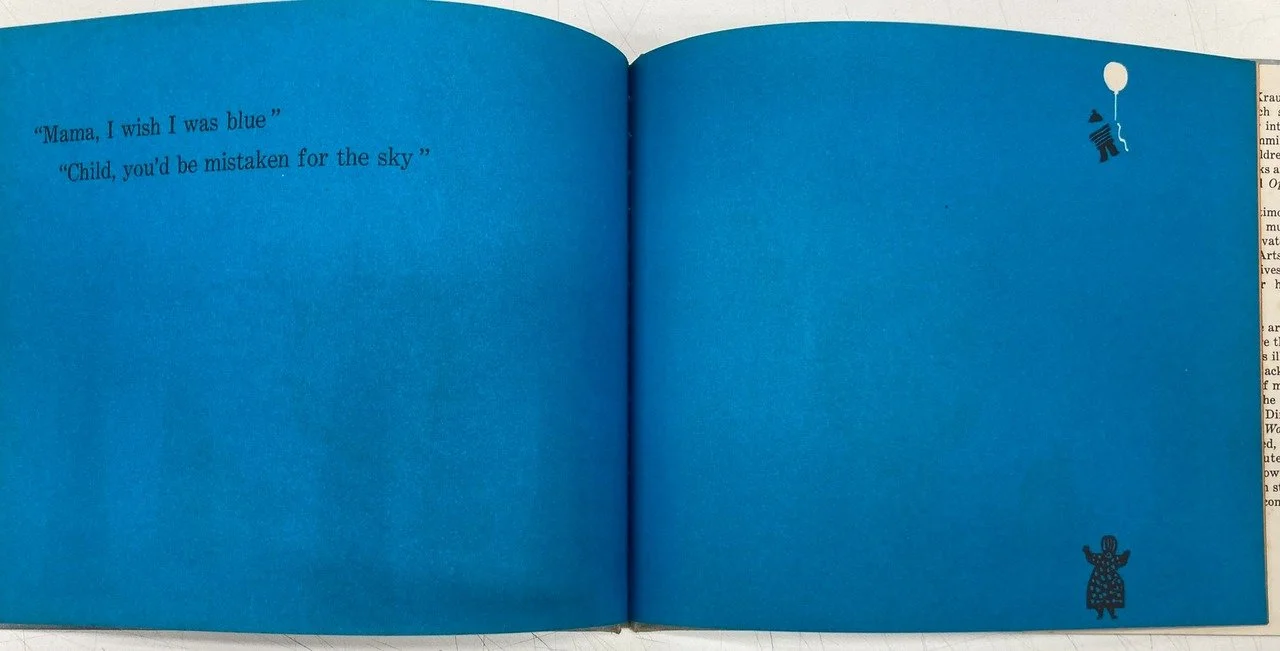
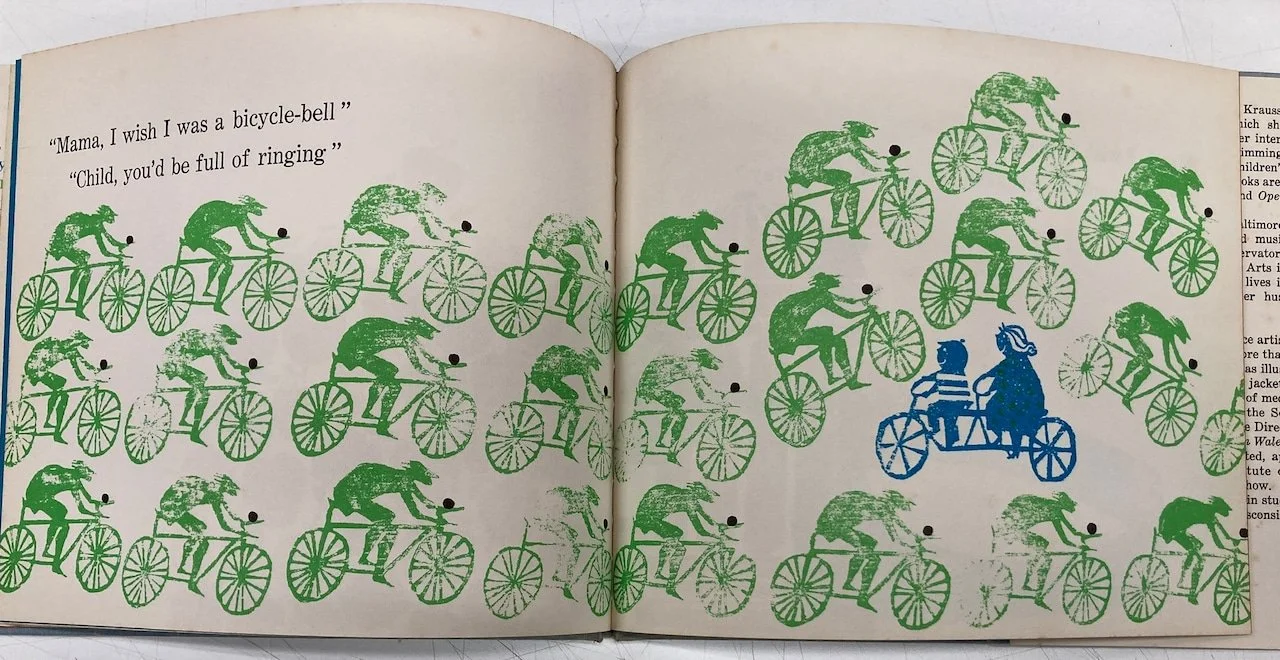
Poems of Edgar Allen Poe. Selected by Dwight MacDonald. Crowell, 1965 (illustrator only)
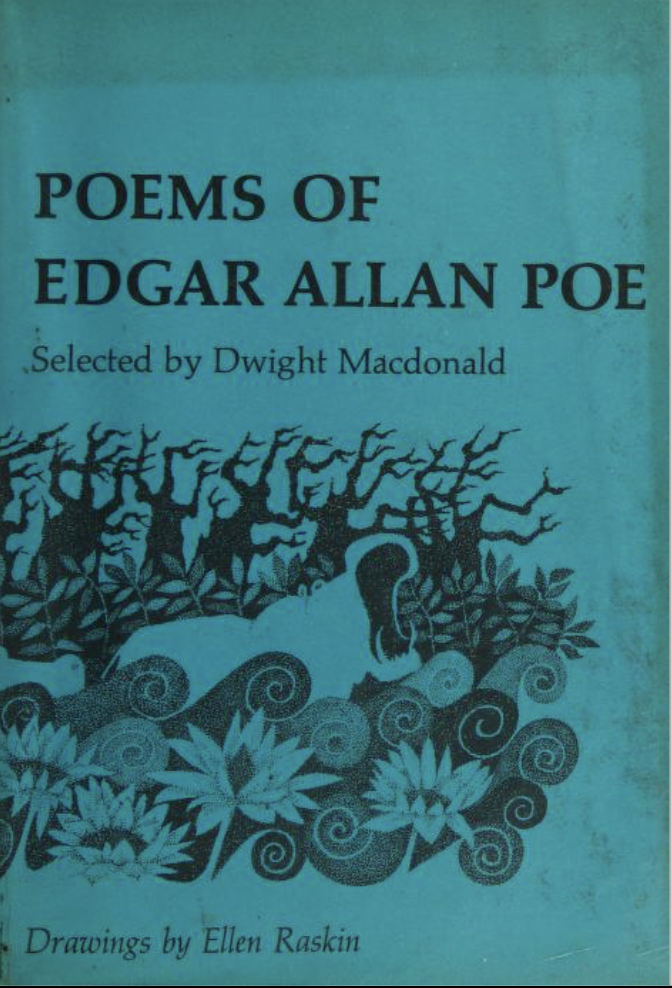
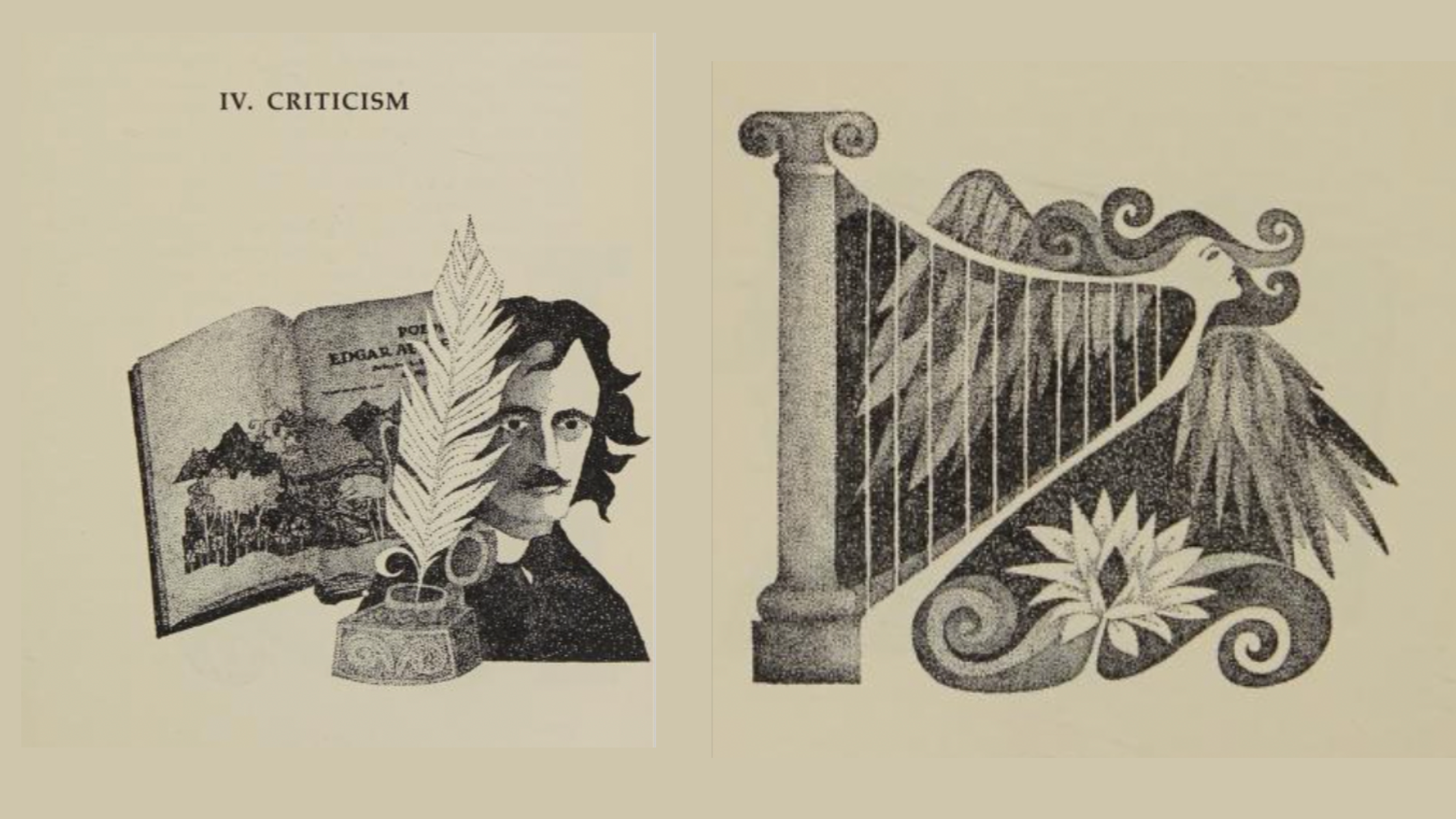
The cover doesn’t do the drawings in the book justice, but once you open it and see them in black and white…stunning!
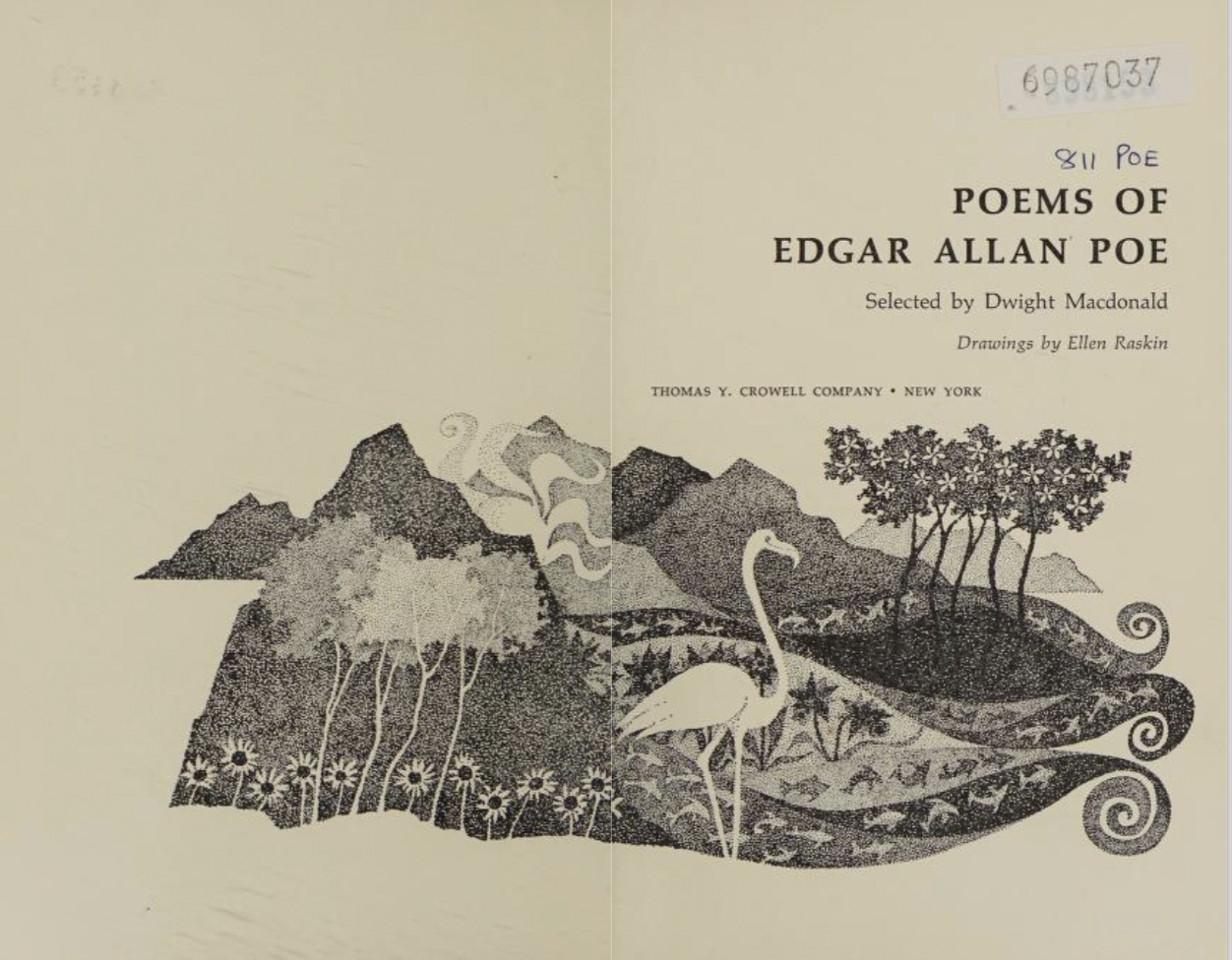
Oh my gosh, her soft drawings are incredible! There are only a few throughout the book, so I’m just going to share them all.
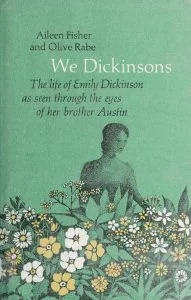
We Dickinsons. By Aileen Fisher and Olive Rabe. Atheneum, 1965 (illustrator only)
This is a book about Emily Dickinson told from the perspective of Emily Dickinson’s brother Austin. (Don’t tell anyone but I didn’t read it.)
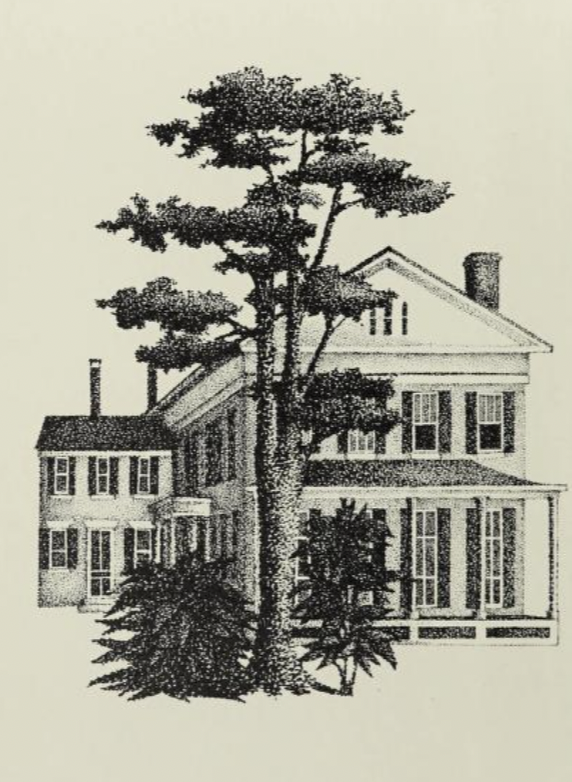
There aren’t many illustrations in this one — just the house and some floral chapter headings.
Nothing Ever Happens on My Block, 1966 (author and illustrator)
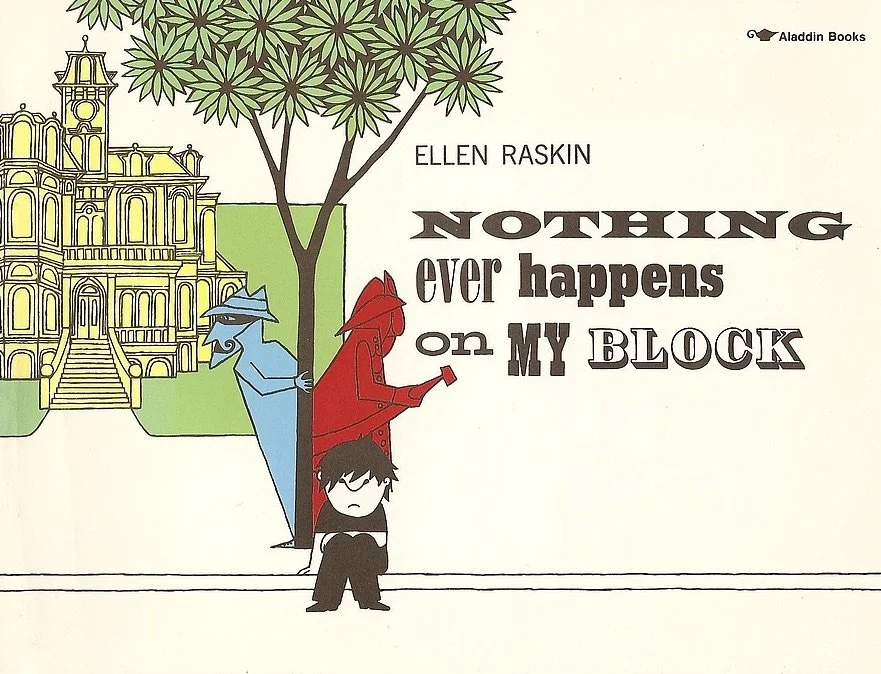
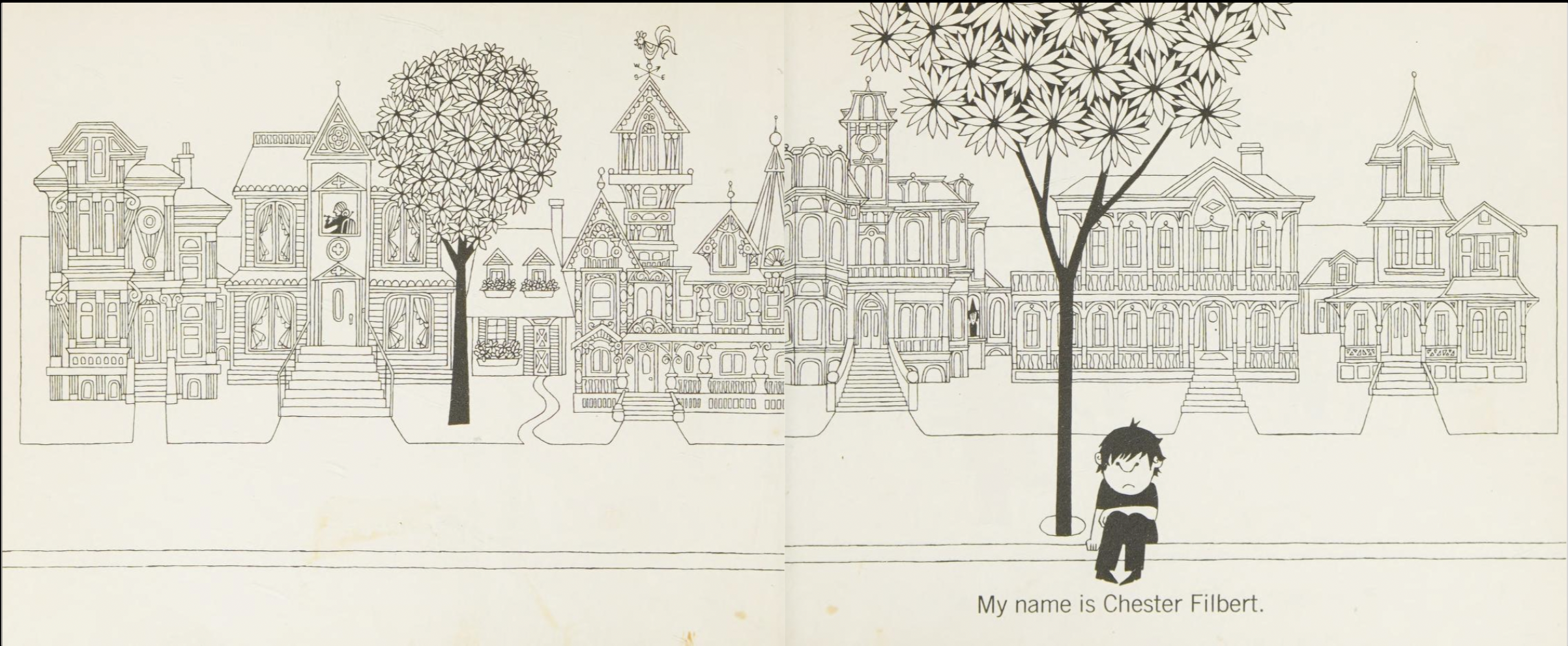
This picture book opens with a black and white scene that introduces our main character Chester who insists that nothing happens on his block.
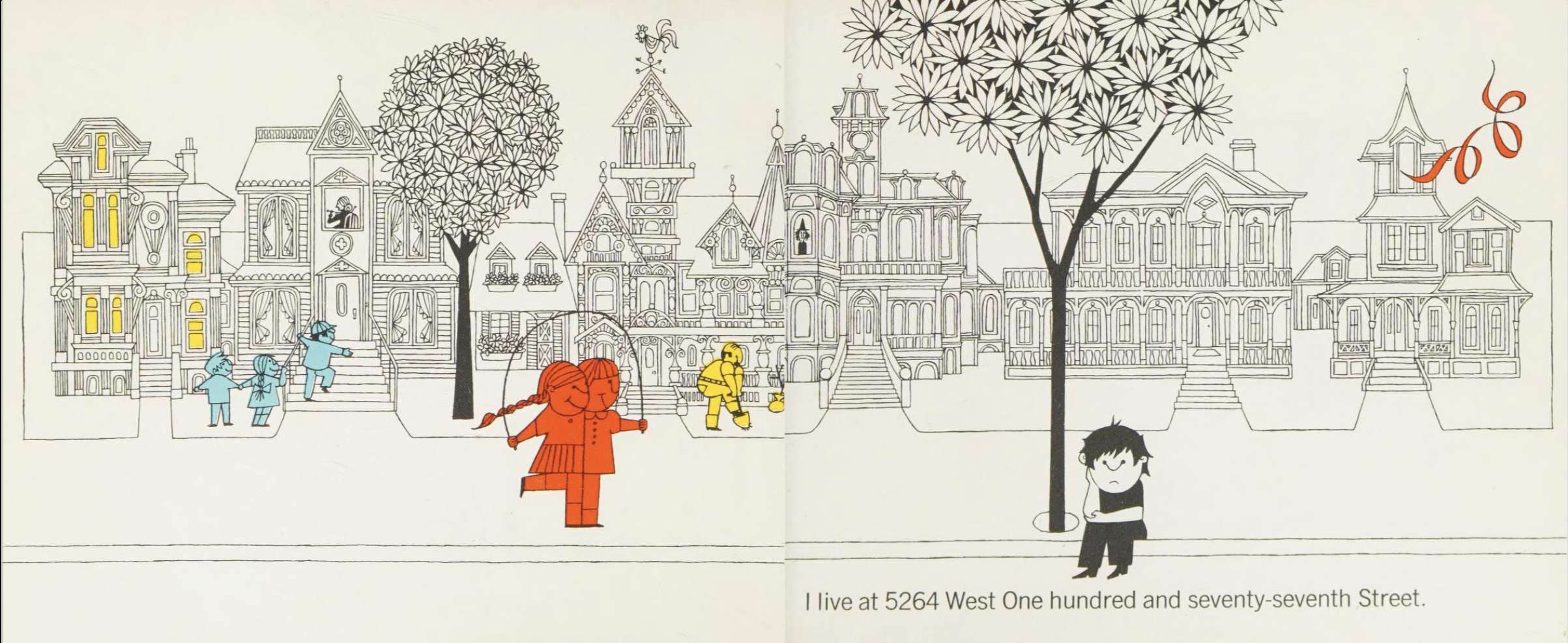
The pictures—through color and a flip book type animation across page turns—say otherwise.
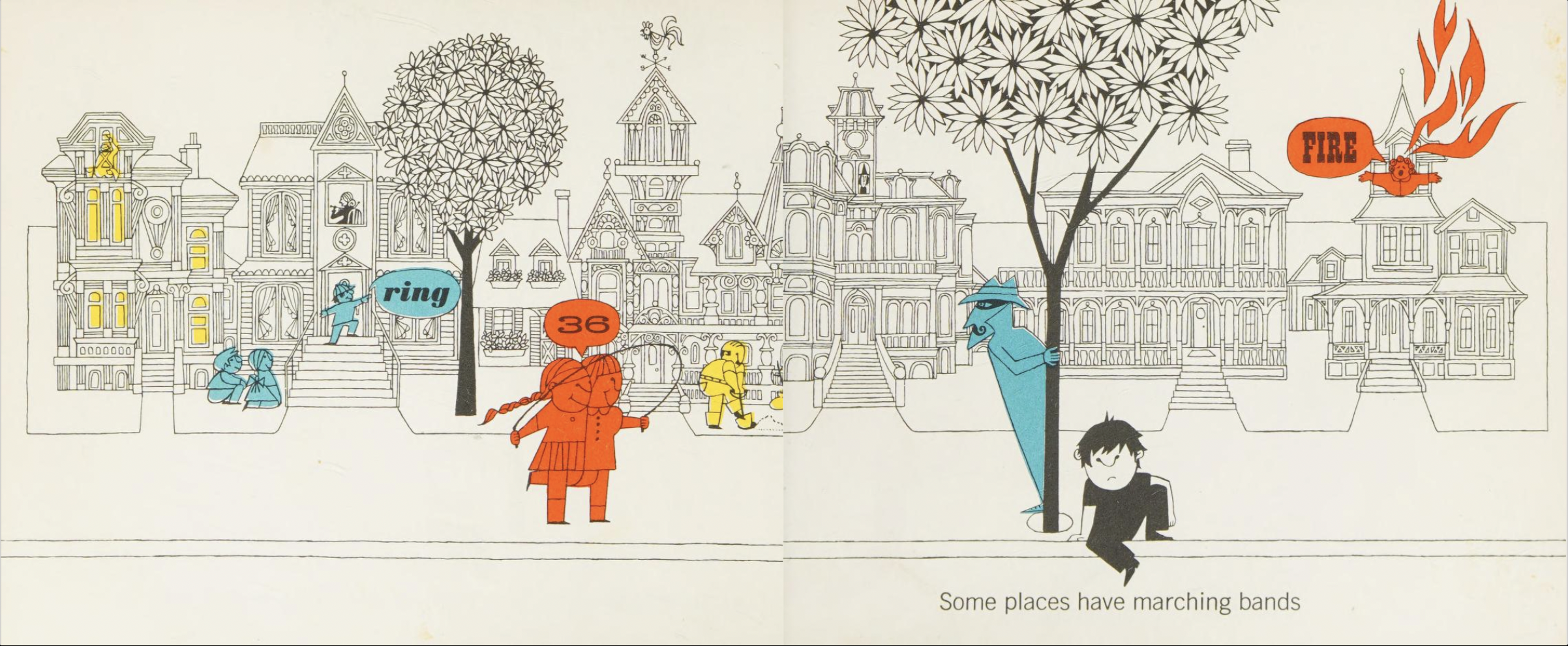
In the background, we see doorbell ditching gone wrong, jump rope triumphs and painful failures, thievery, police chases, firefighters, and more. But even so, Chester is convinced that nothing happens on his block. The reader will probably have other opinions. And have a blast pointing to what’s different on each page.
Dedication: “This book is dedicated to Susan, Patty, Steve and Larry, Mike and Helene, Nelle, Gina and children everywhere, except Chester Filbert. He’s just too dull.”
Book jacket bio: “Ellen Raskin lives in an old house on the second shortest street in New York City. She is now writing and illustrating her fifteenth book, when she isn’t watching a fire or a fight or a movie being filmed outside her window. It’s a good thing nothing ever happens on her block, or she would have to move to the shortest street (wherever that is).”
Awards: New York Herald Tribune Children’s Book Week Award (1966), New York Times Best Illustrated Children’s Books (1966), and Brooklyn Art Books for Children Citation (1973).
The Jewish Sabbath. By Molly Cone, 1966 (illustrator only)
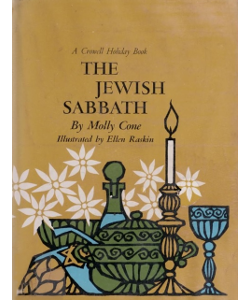
This is a children’s book about the history and traditions of the Jewish Sabbath. Here are some of Raskin’s illustrations throughout the story.
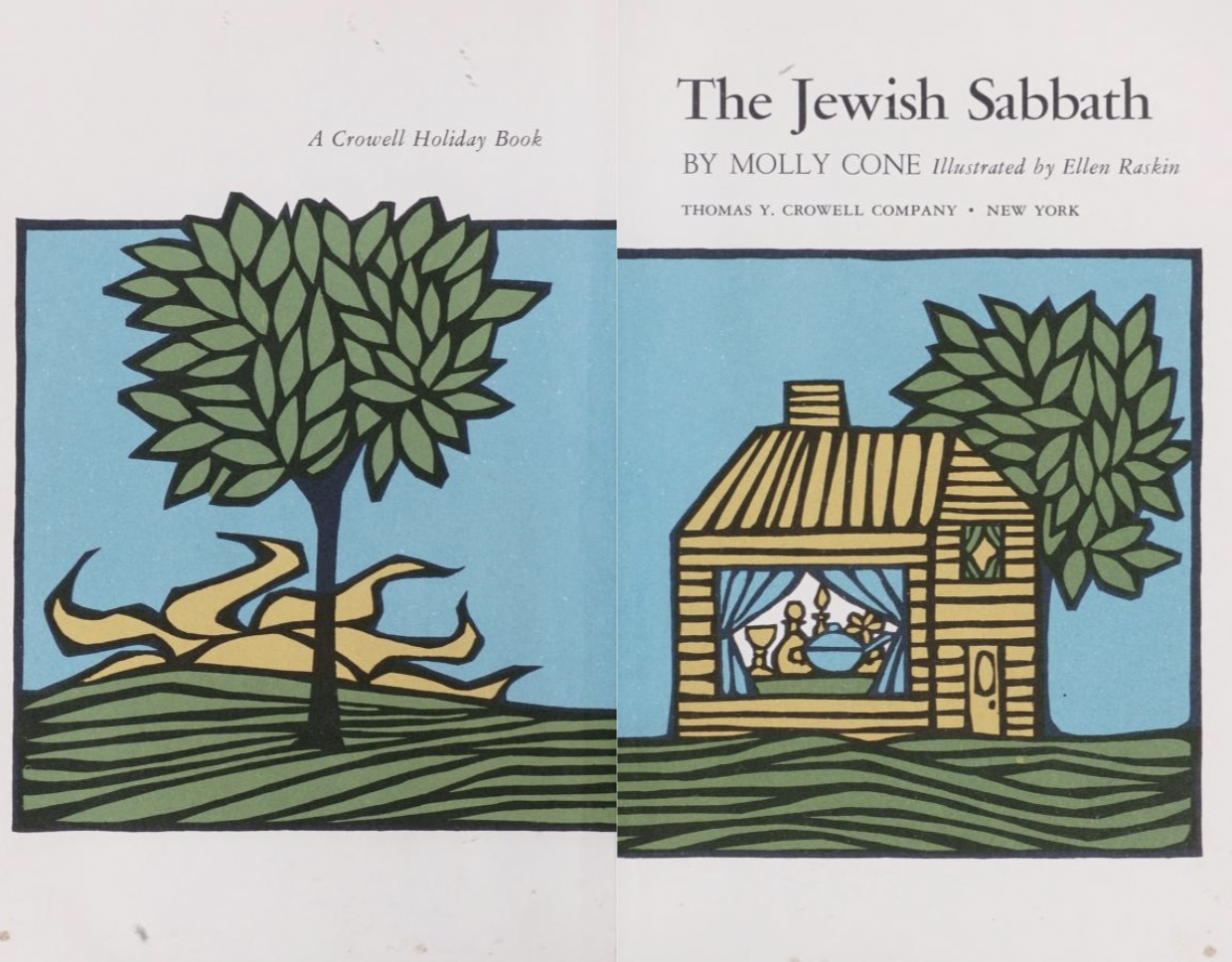
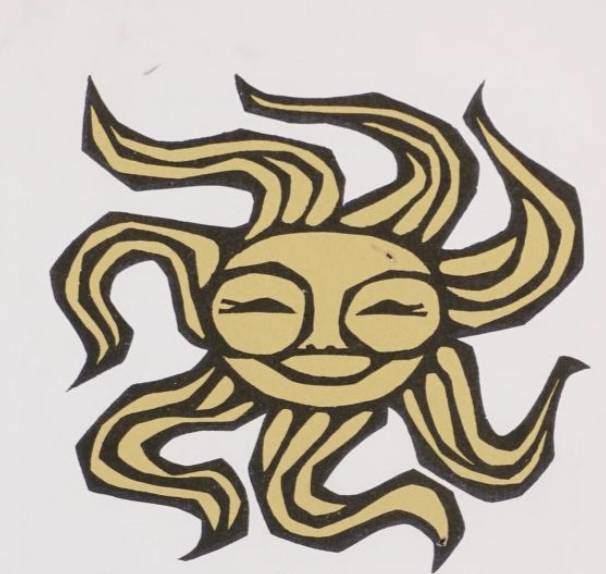
I like that the sun has glasses :)
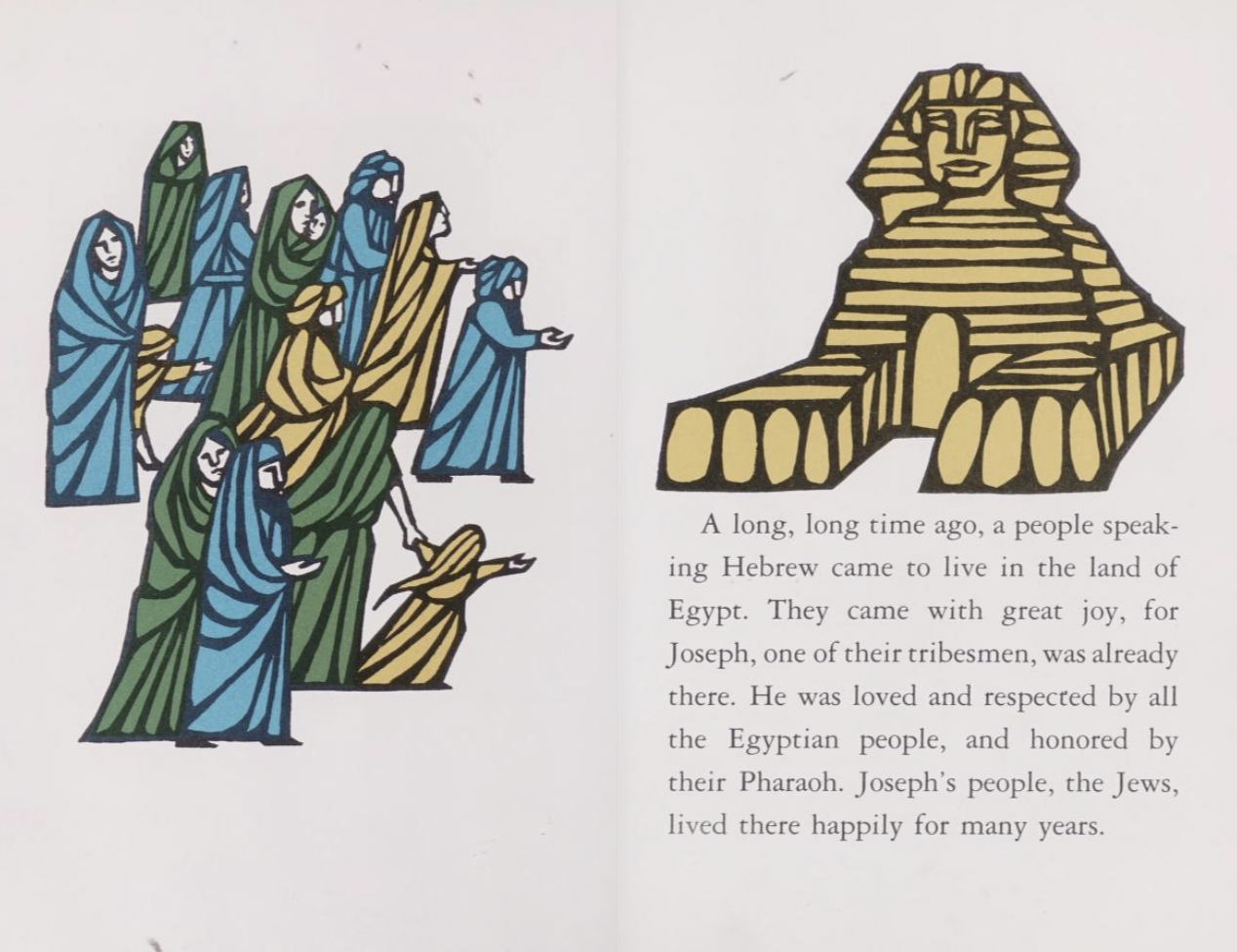
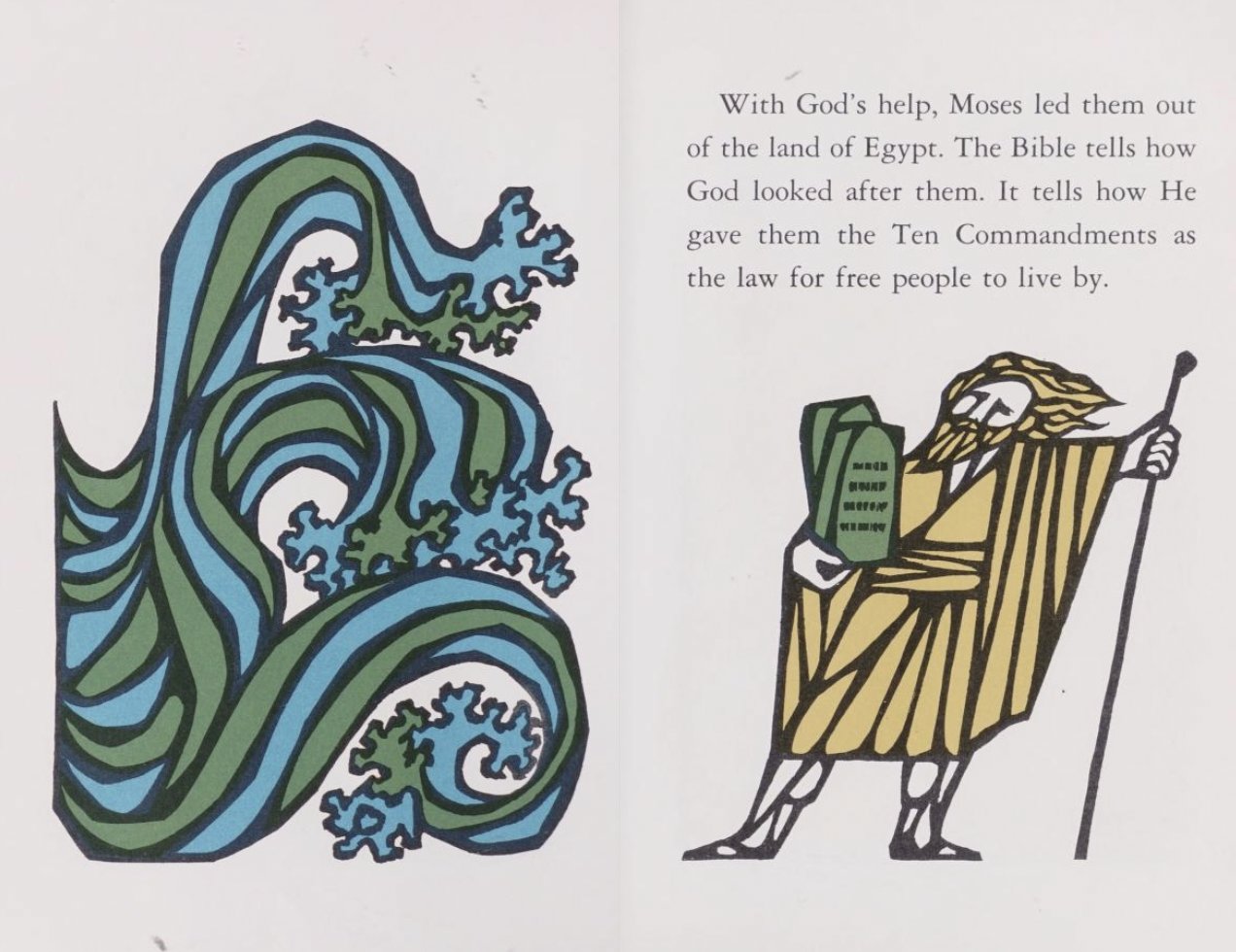
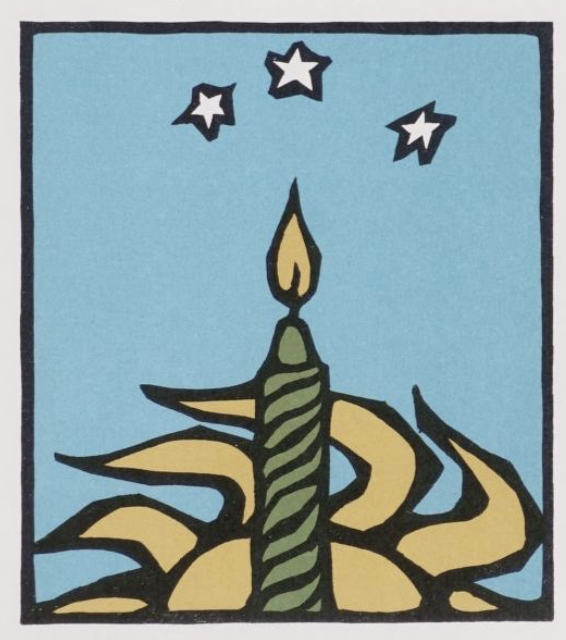
There is something so satisfying about the wonky shapes of those stars.
Paths of Poetry: Twenty-Five Poets and Their Poems. Edited by Louis Untermeyer, 1966 (illustrator only)
This is a book about poets, and I absolutely love the portraits Raskin made for each chapter. It was hard not to share them all!
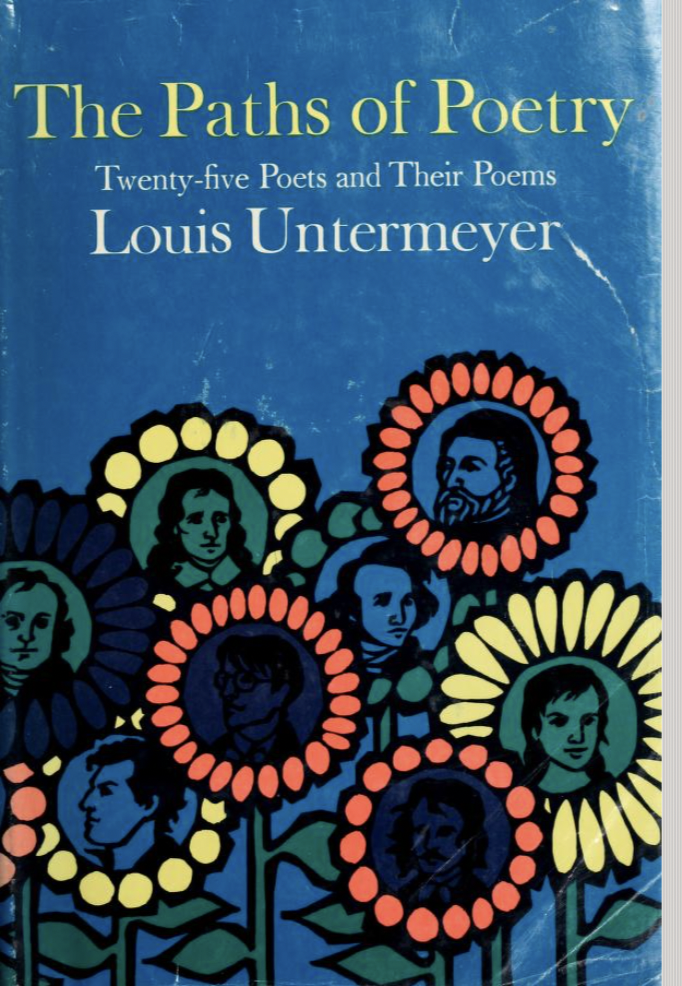
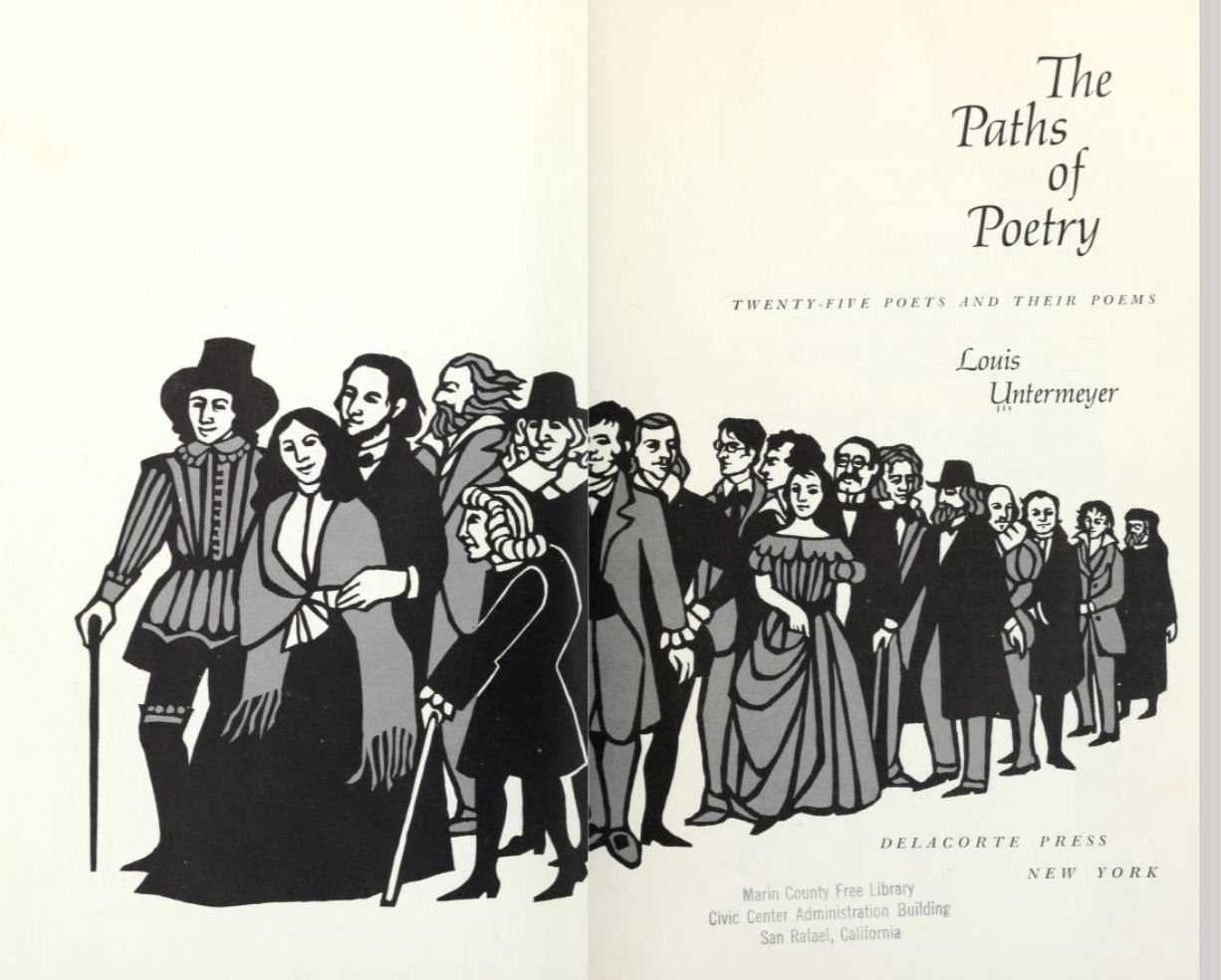
I love how in a book that is pretty male-centric, she put a woman in the front.
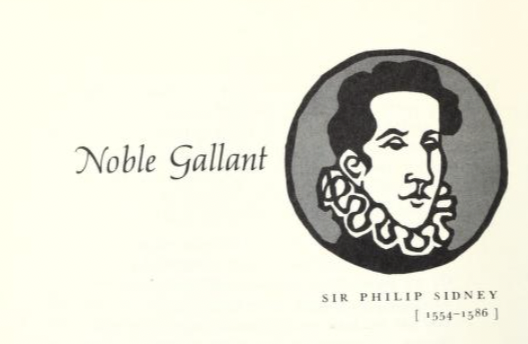
The chapter titles are pretty great too.
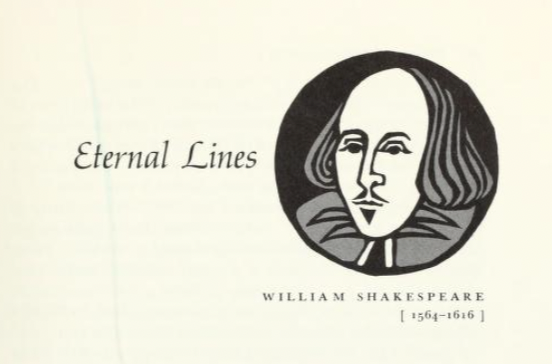
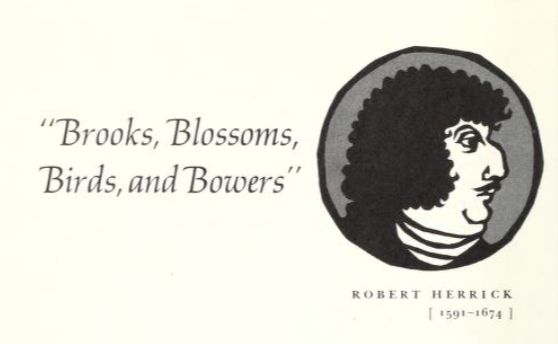
Obsessed.
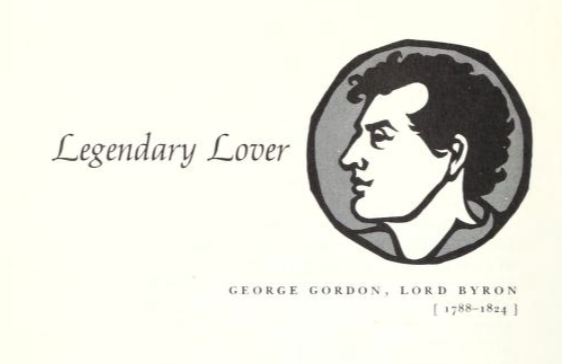
Best for last! (You can find them all here on archive.org.)
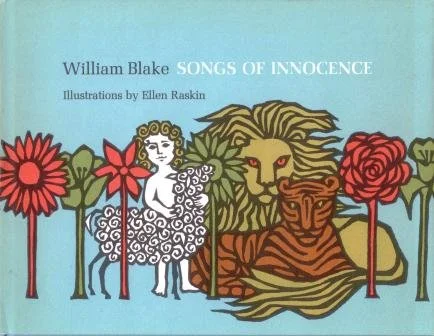
Songs of Innocence. By William Blake. Music and illustrations by Ellen Raskin, 1966 (illustrator only)
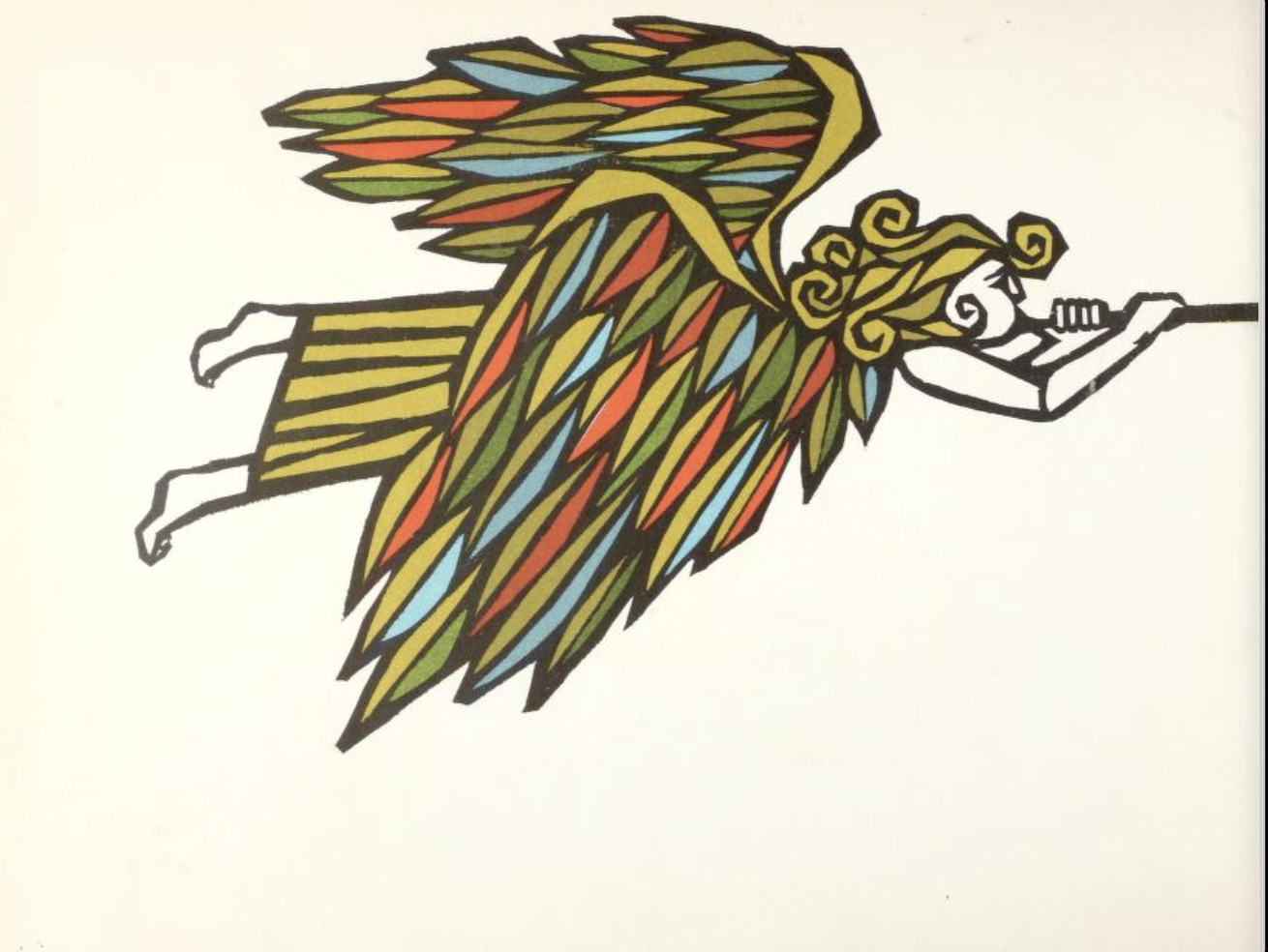
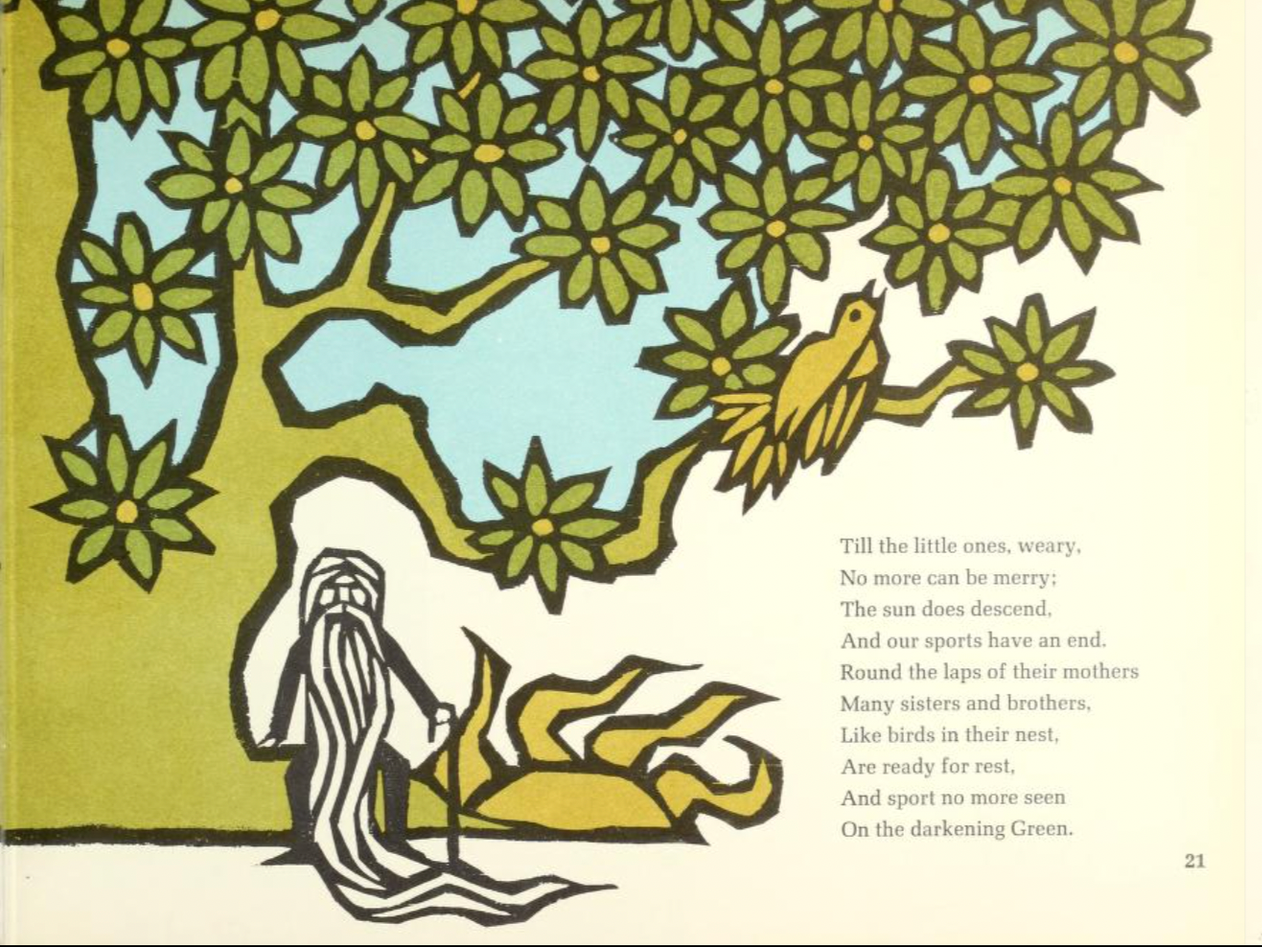
She always designs the best old guys.
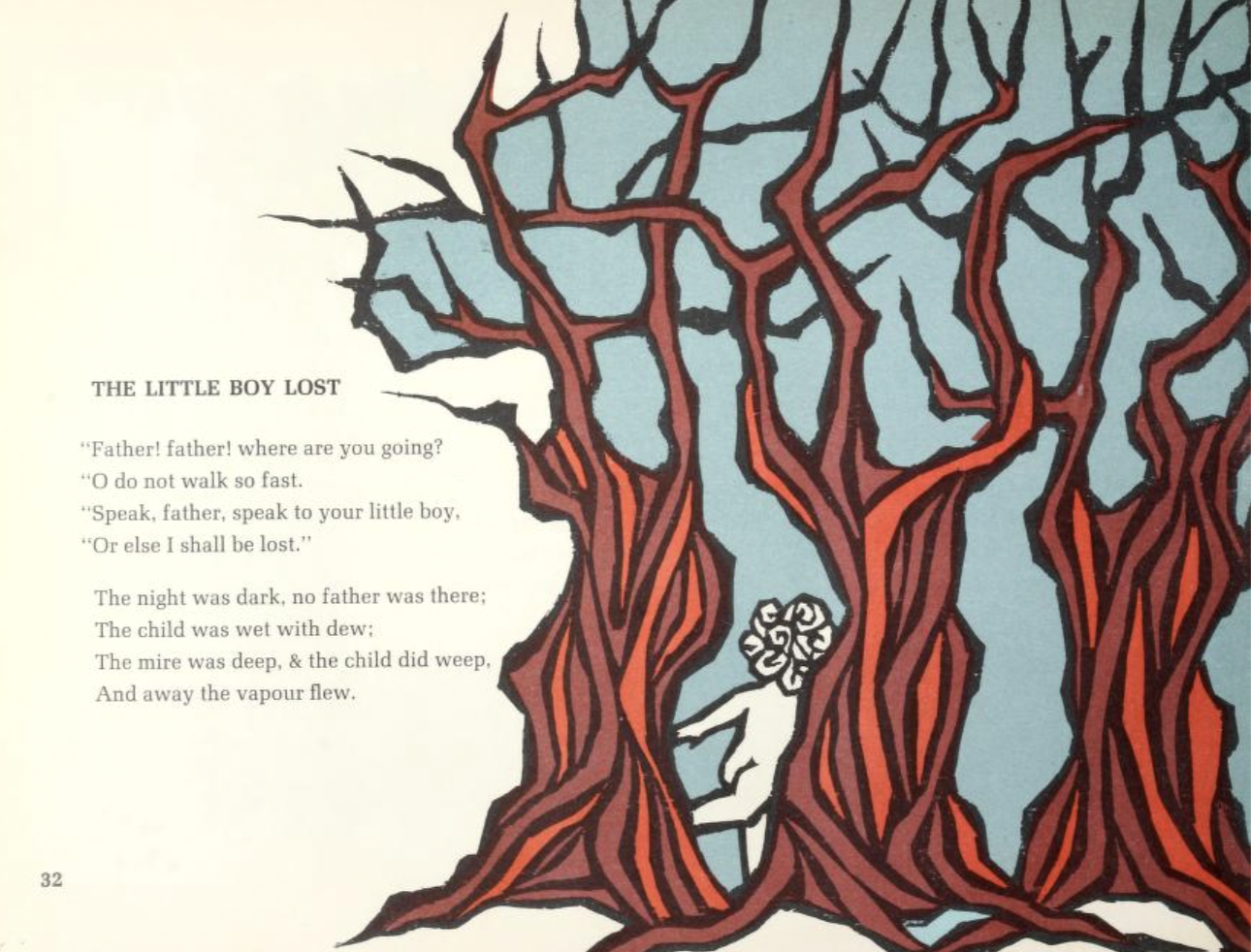
Lil’ butt!
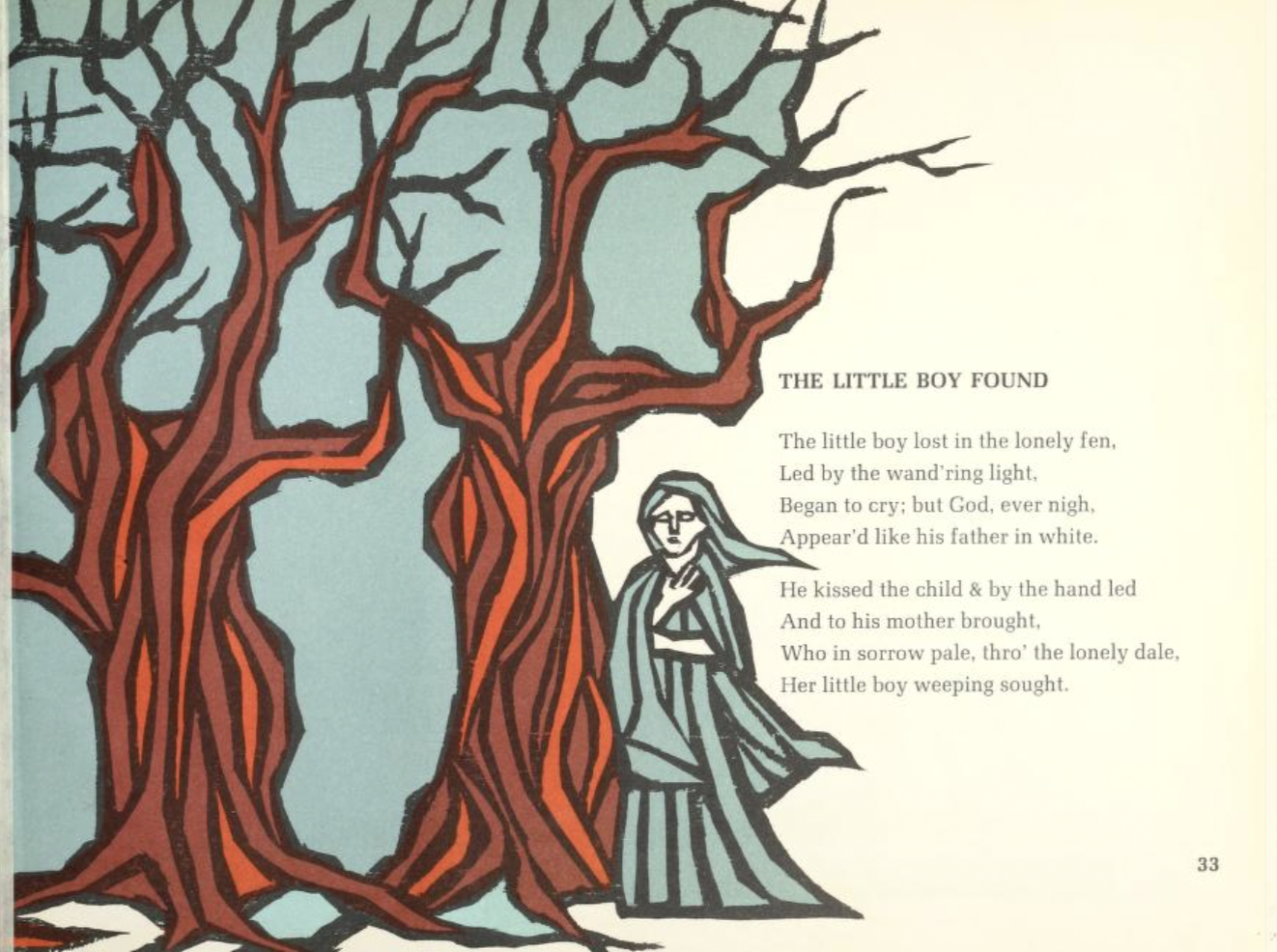
Isn’t the blue and reddish brown lovely?
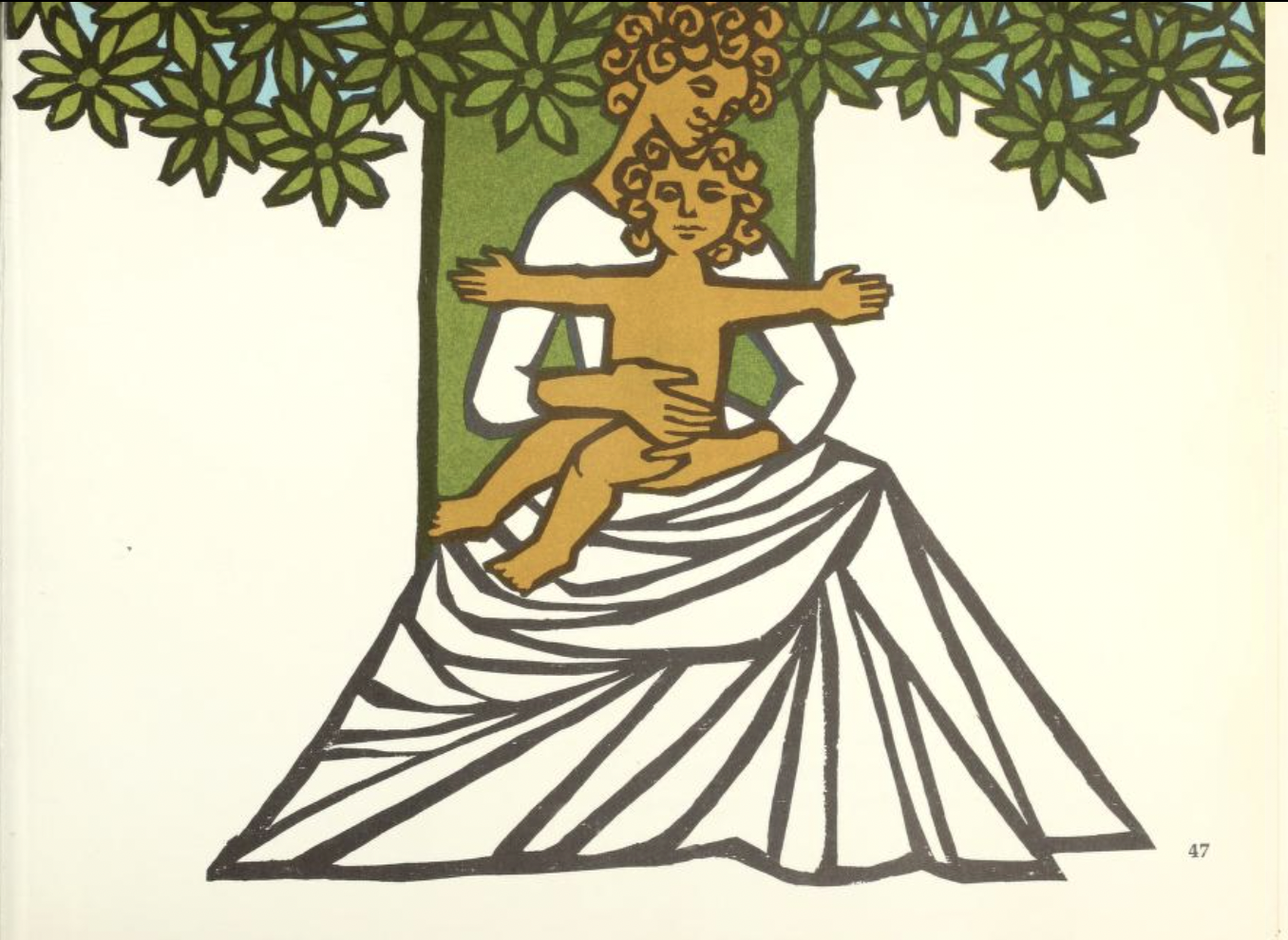
Those fabric folds!
Awards: American Institute of Graphic Arts (AIGA) Best Books Exhibit, 1966
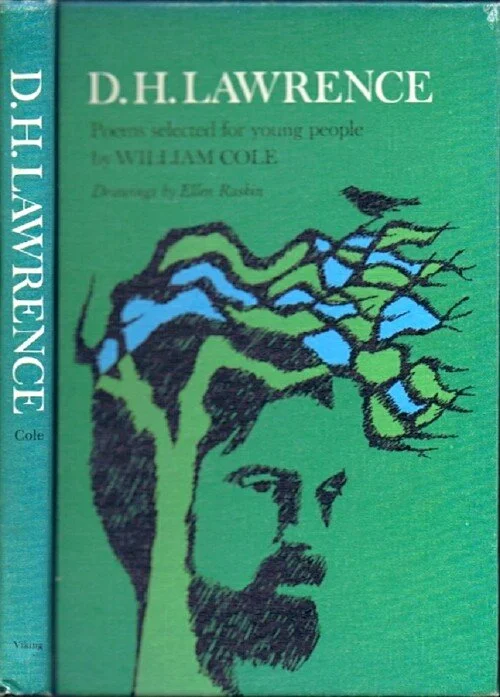
D. H. Lawrence: Poems selected for Young People. Edited by William Cole, 1967 (illustrator only)
Haven’t found this one yet but here is the cover!
Ellen Grae. By Vera and Bill Cleaver, 1967 (illustrator-only)
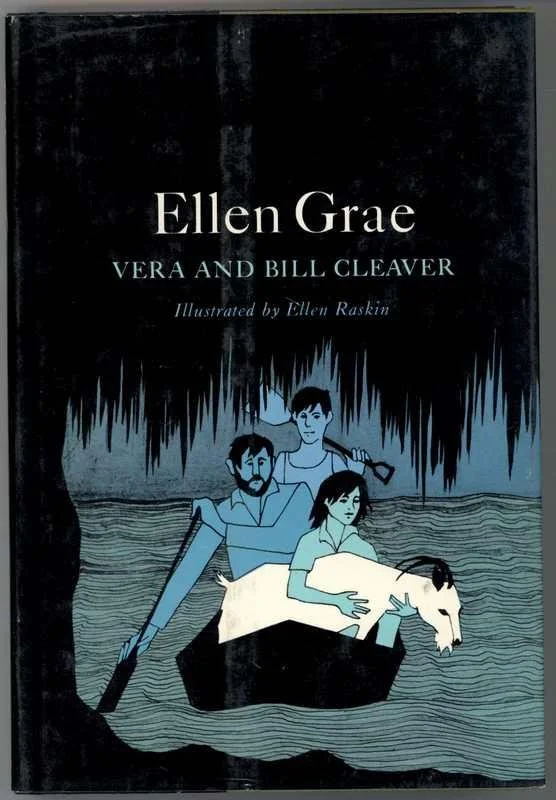
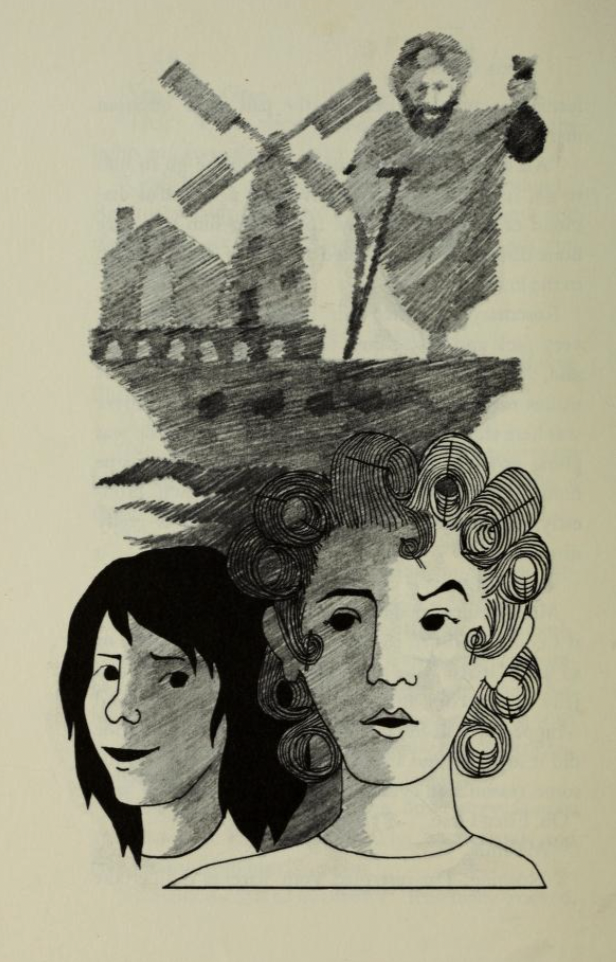
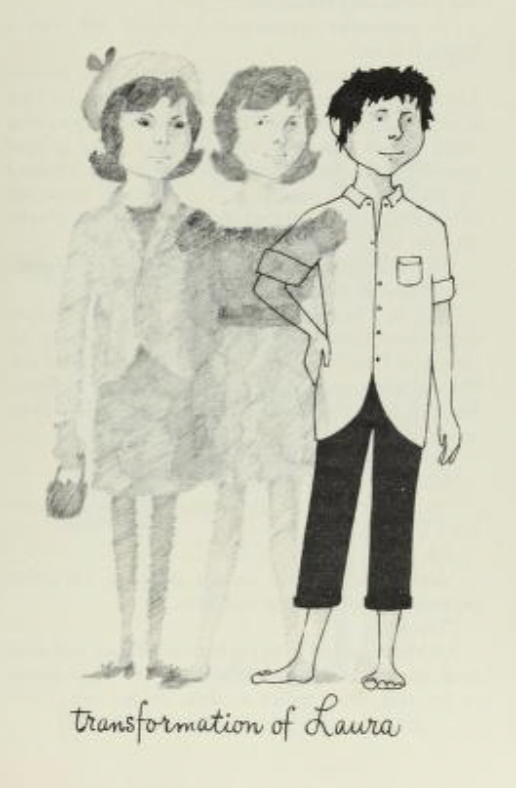
This is a novel with a few illustrations by Raskin throughout.
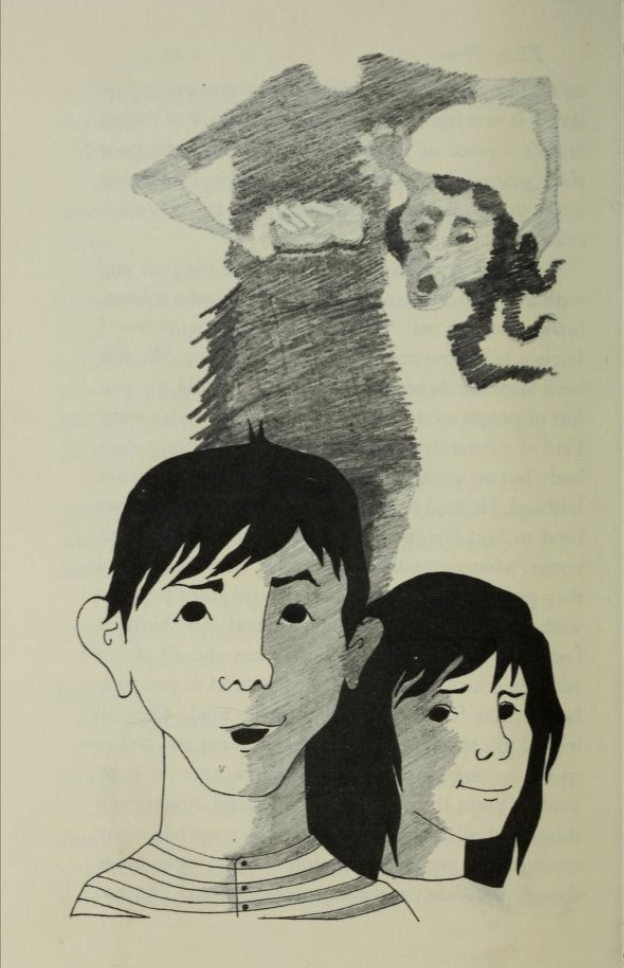
They are all set up using the same structure — two faces in front and a “blurry” image behind.
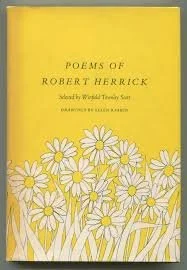
Poems of Robert Herrick. Edited by Winfield T. Scott, 1967 (illustrator only)
Haven’t found this one but here is the cover.
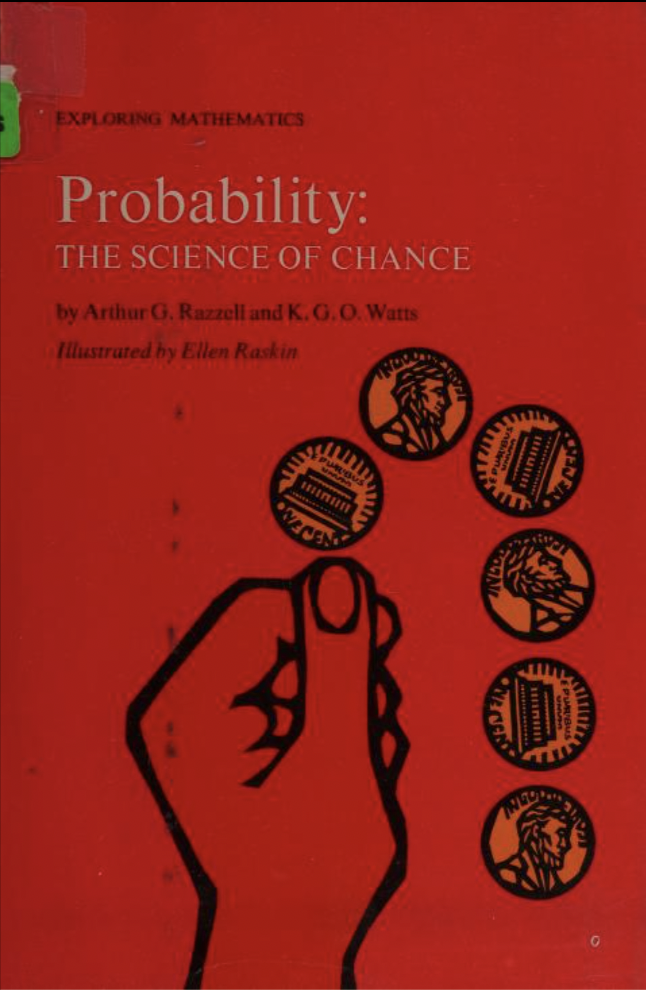
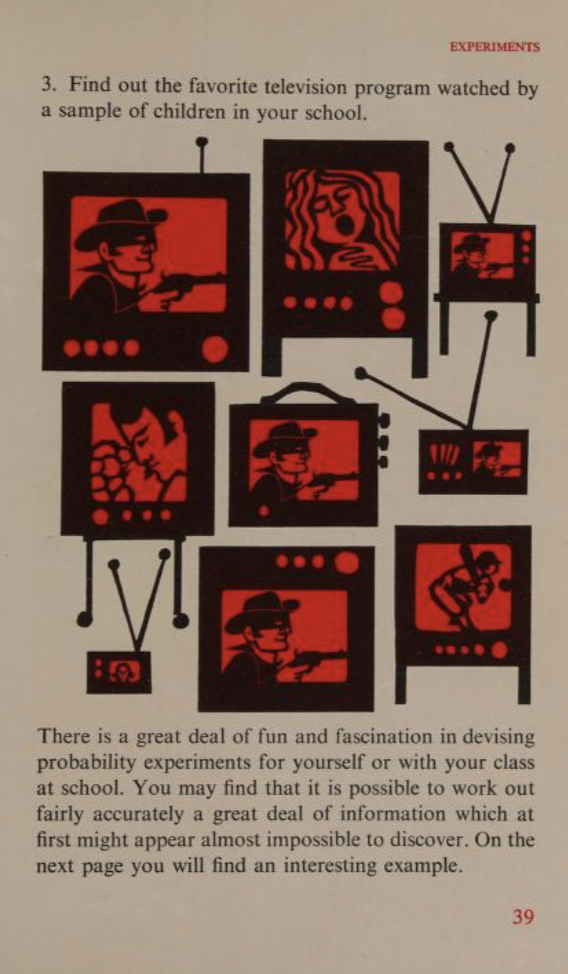
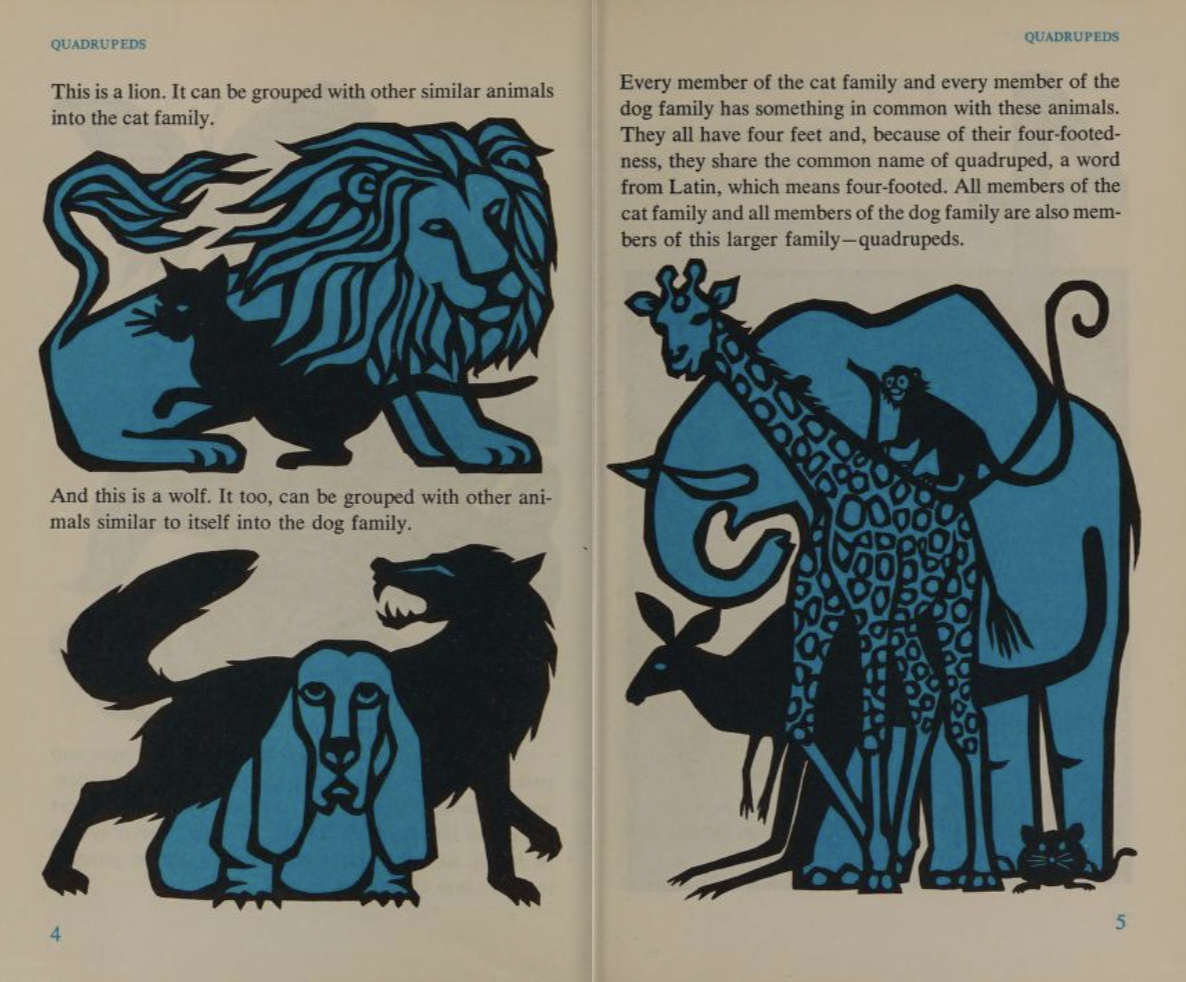
Probability. By Arthur G. Razzell and K. G. Watts. Doubleday, 1967 (illustrator only)
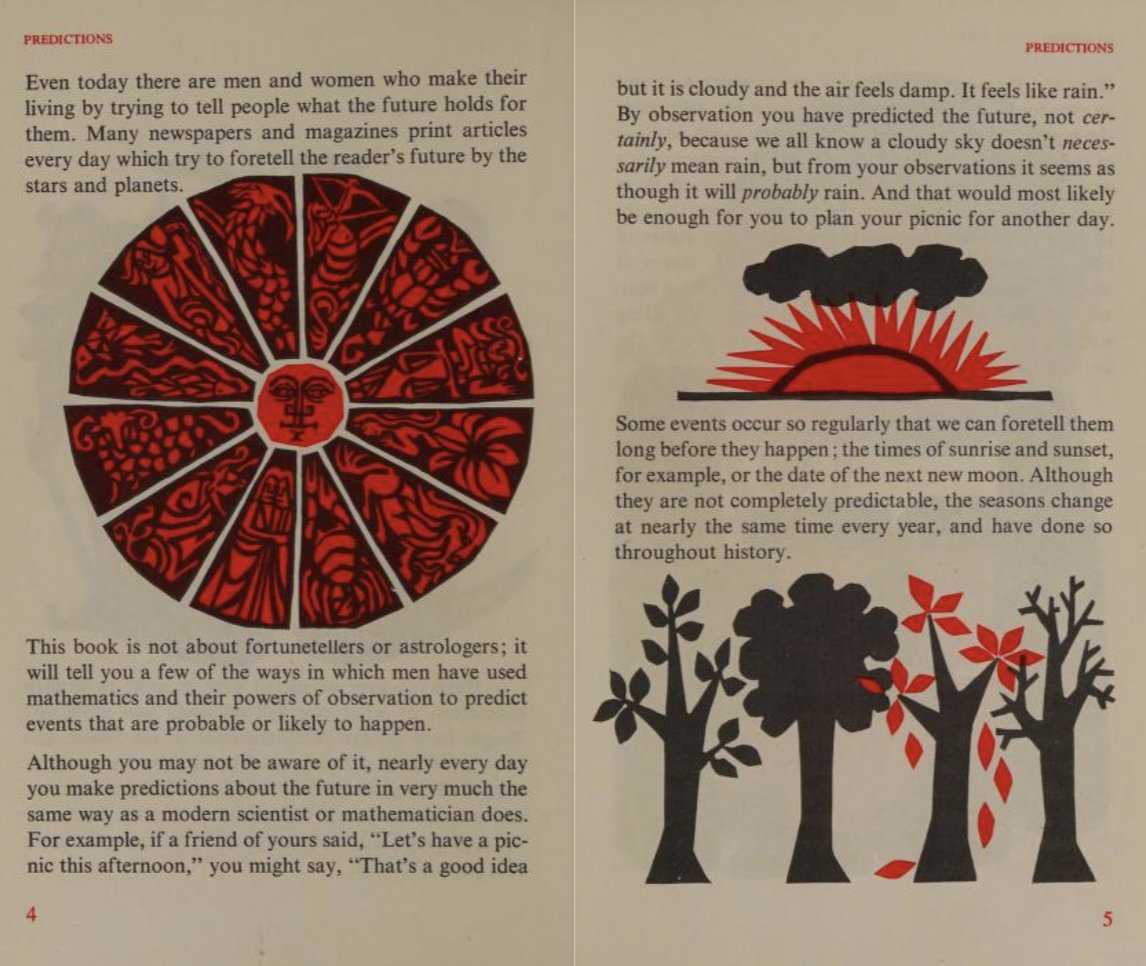
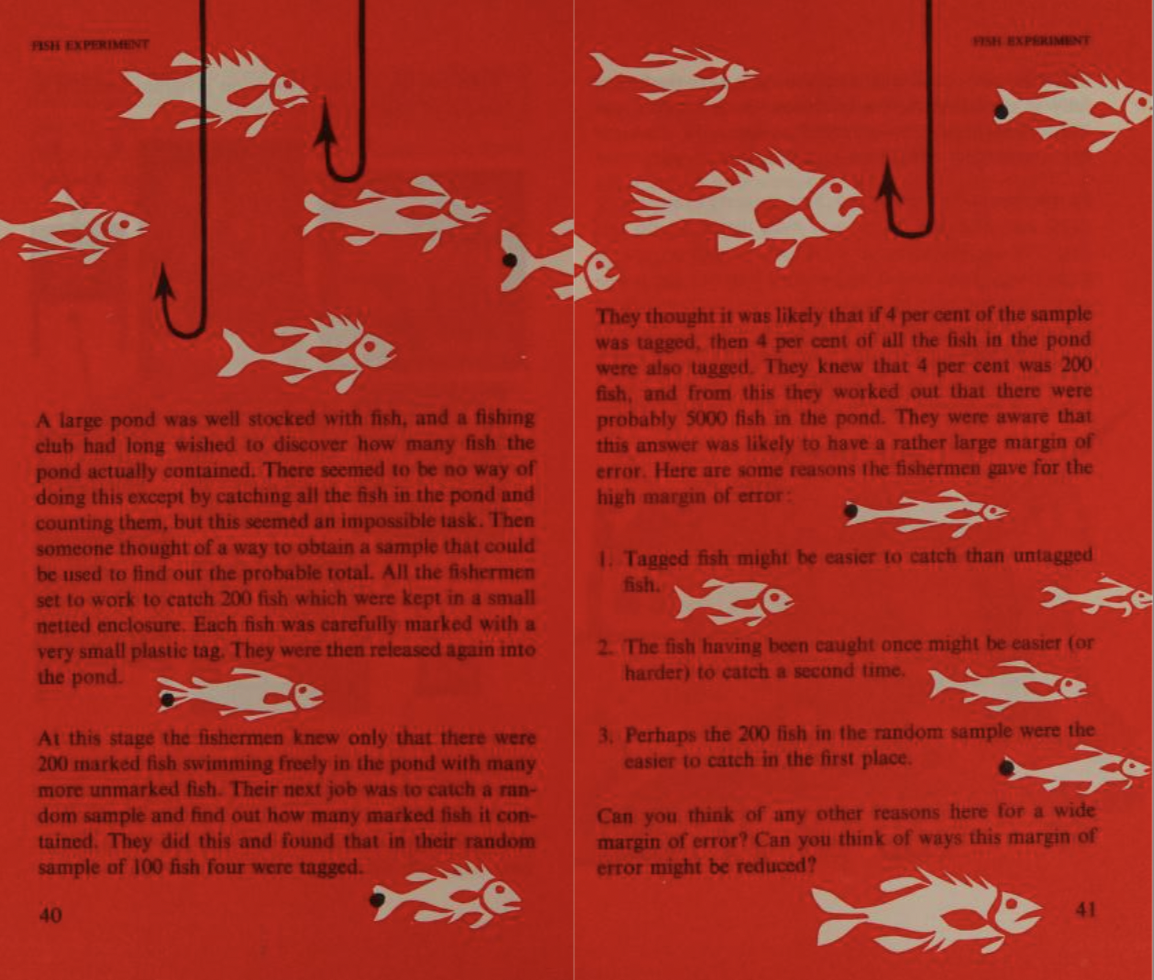
A book for younger readers that offered experiments and explanations of probability with red and black illustrations along the way
I love these end papers.
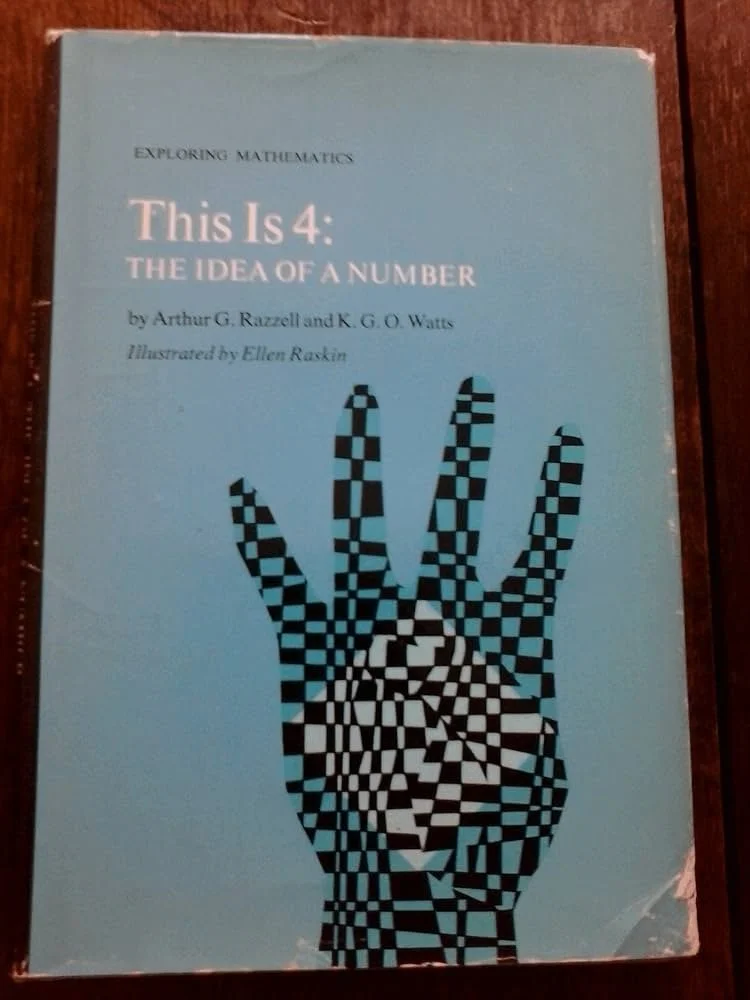
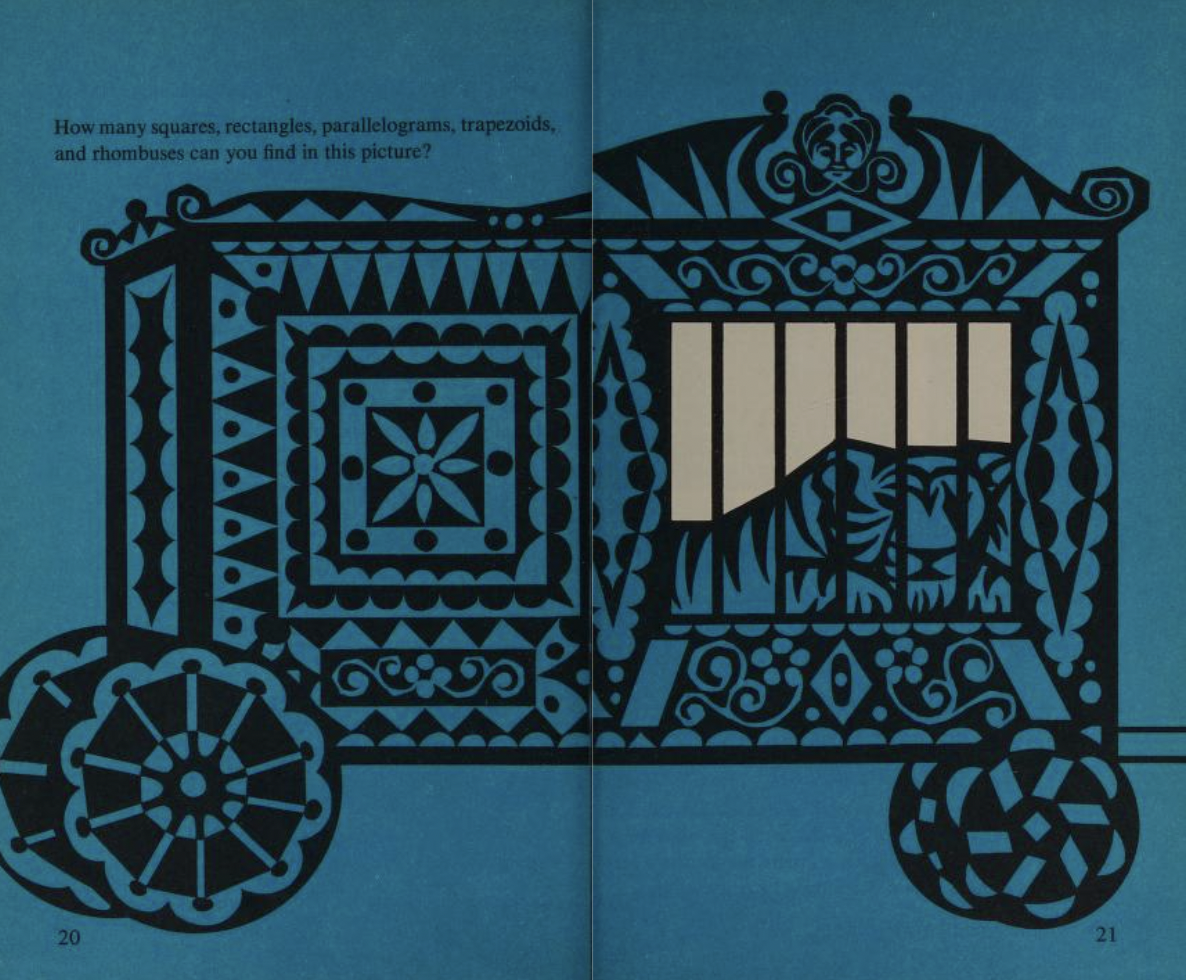
This Is Four: The Idea of a Number. By Arthur G. Razzell and K. G. Watts. Doubleday, 1967 (illustrator only)
A sort of puzzle and experiment book with blue and black illustrations
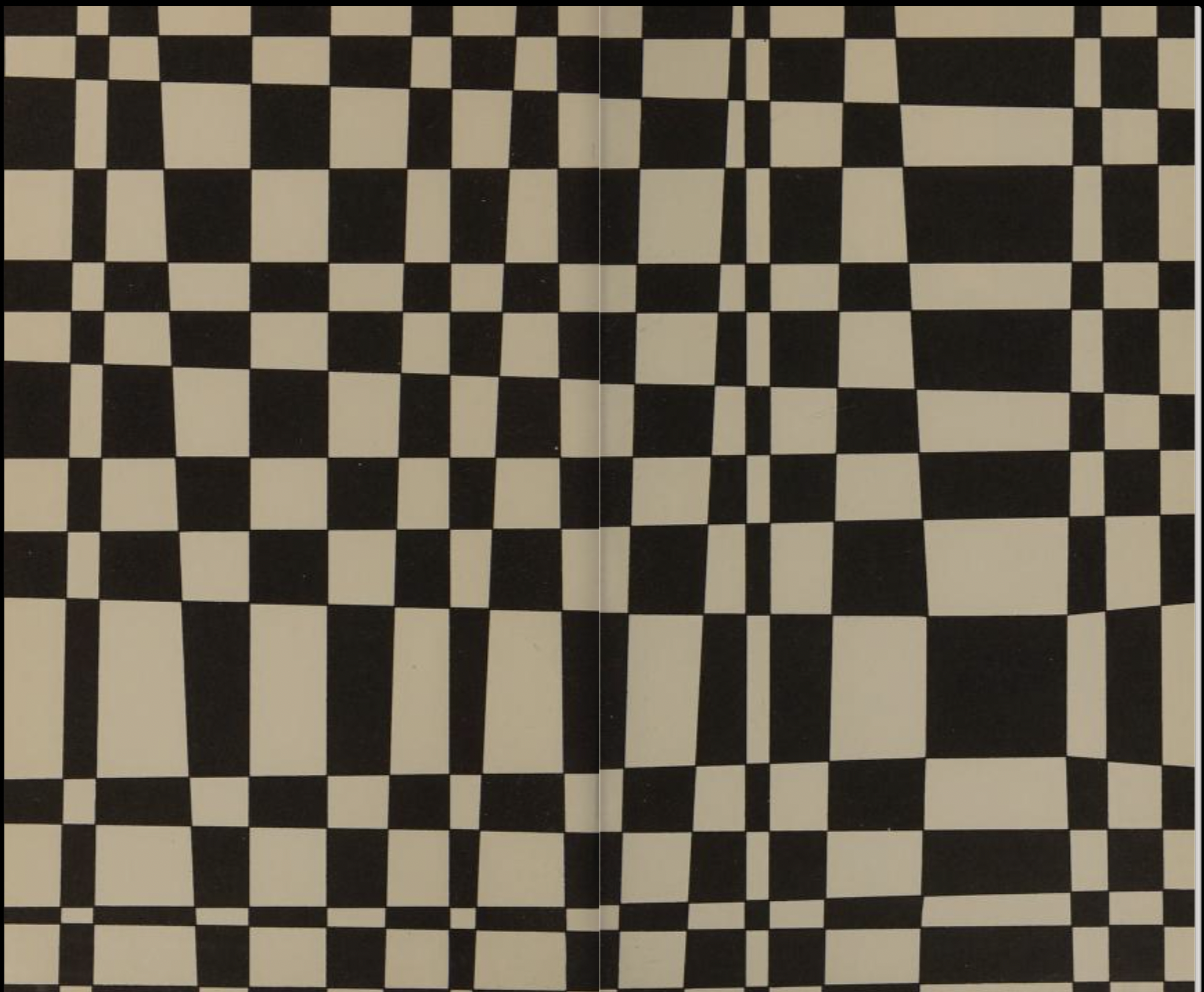
Love these end papers!
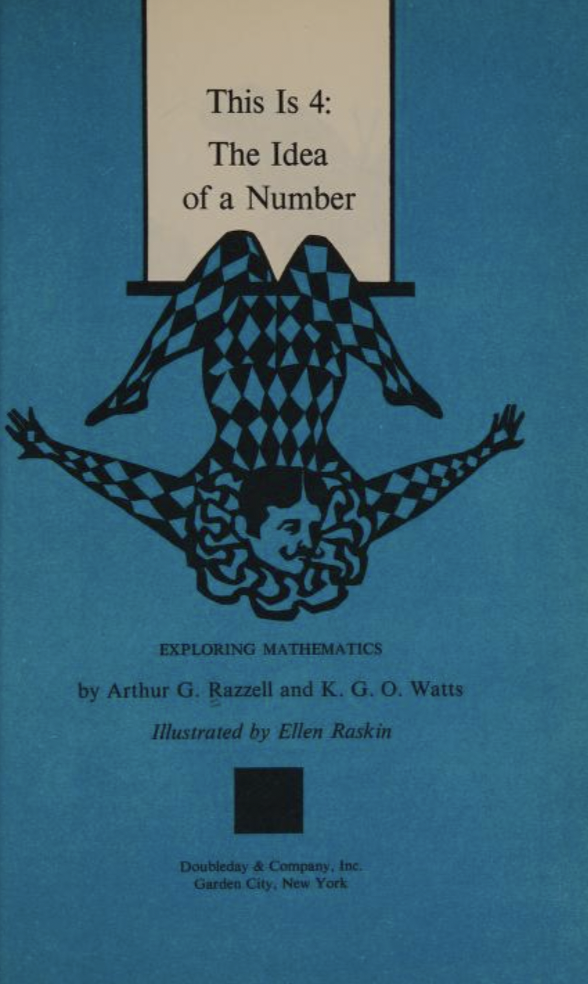
Fun title page :)
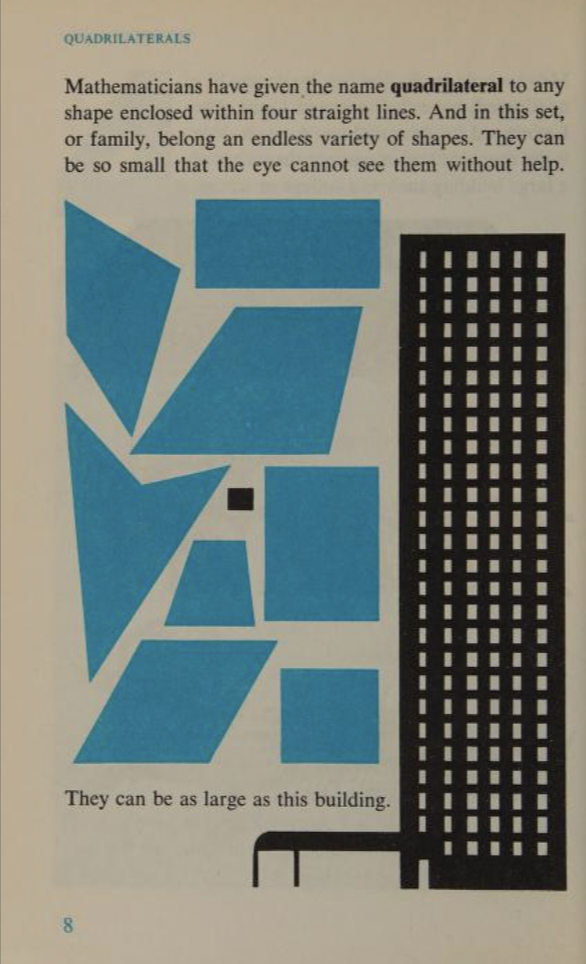
There is something so satisfying about that building. The surprise of it.
Silly Songs and Sad, 1967 (author and illustrator)
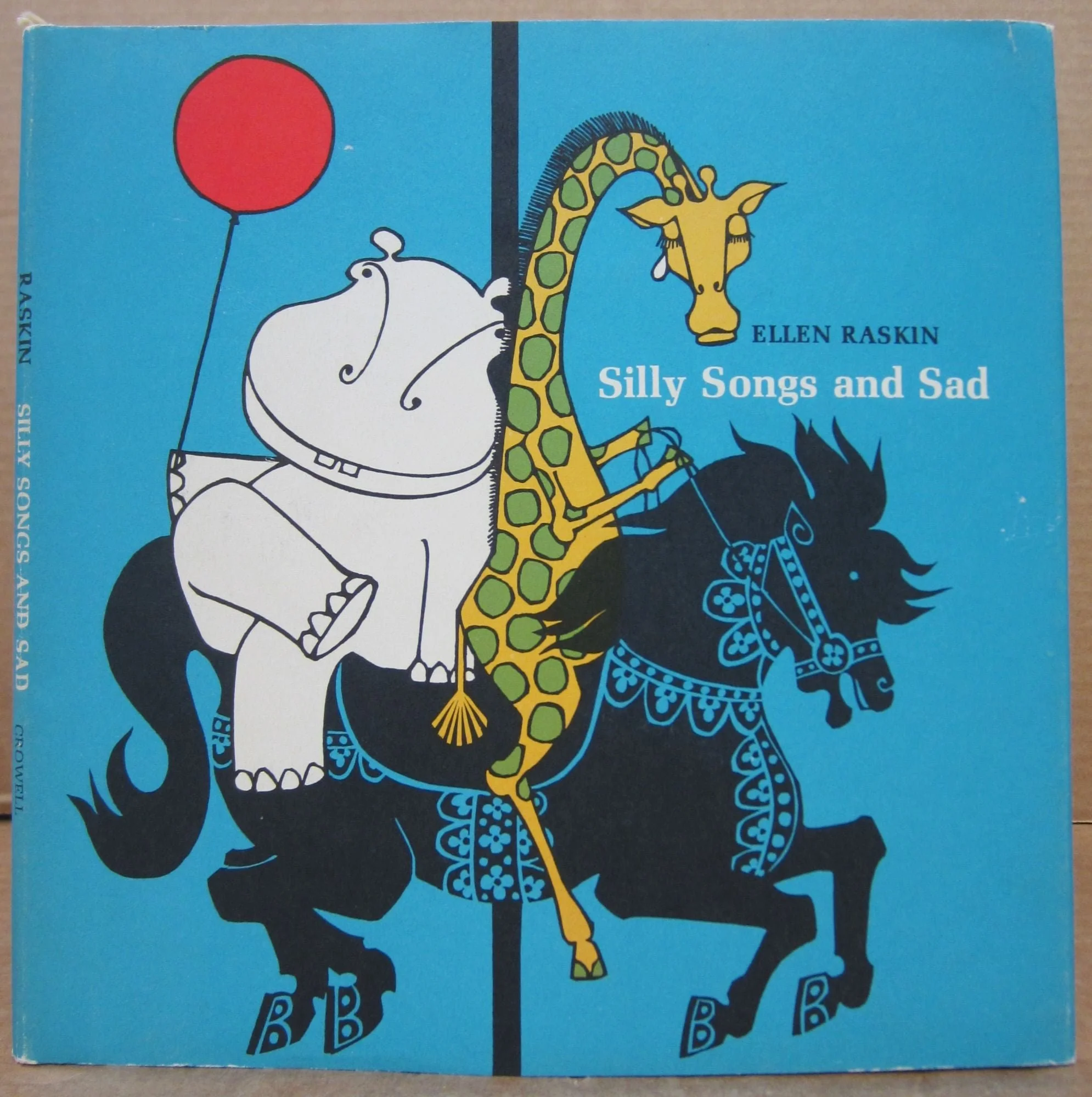
This picture book is a collection of poems, and the illustrations are in a variety of styles (at times it felt a little random which I’m guessing is the point but not sure?).
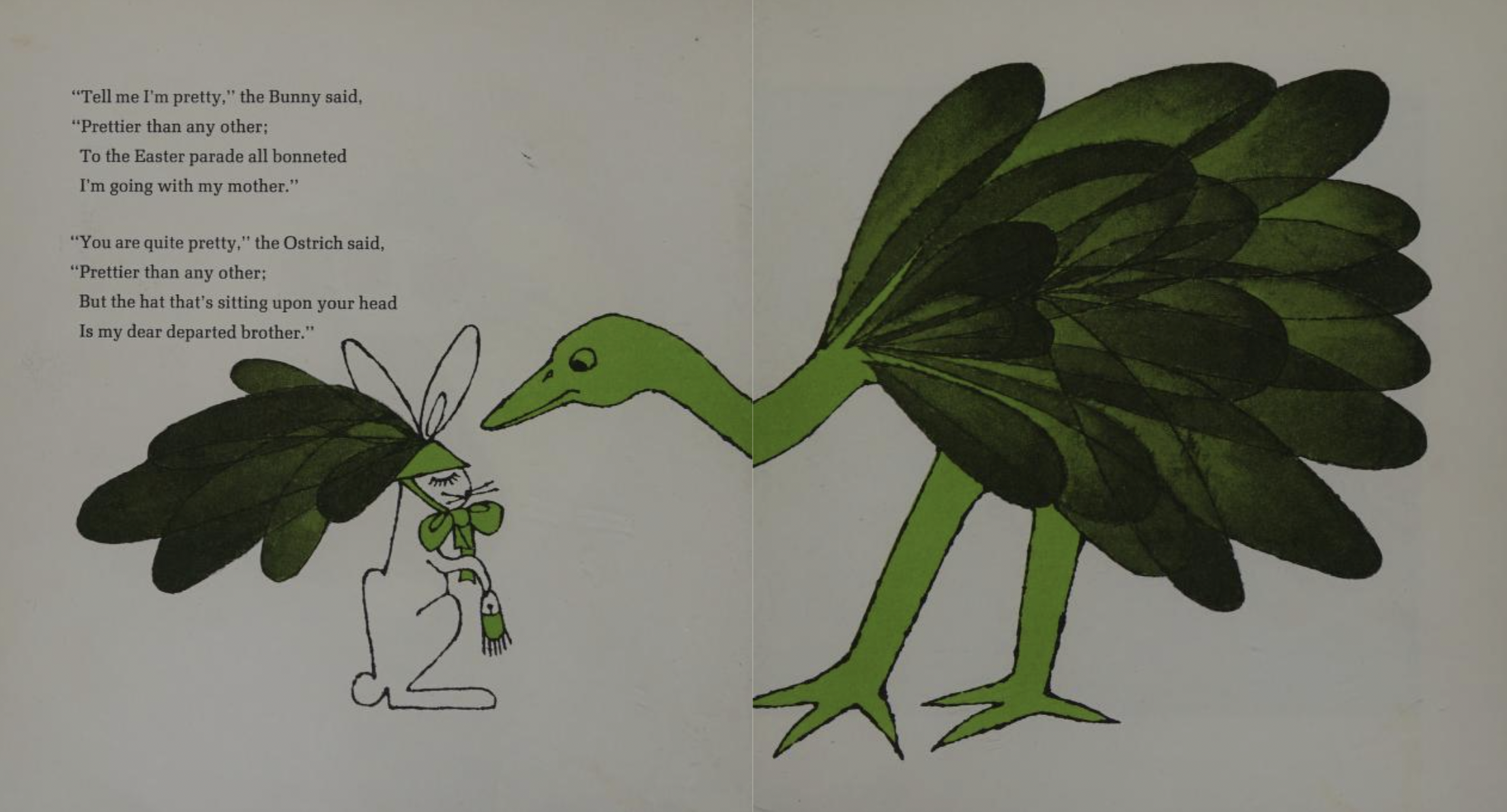
I like a few of the dark humor poems. This one was my favorite of the bunch.
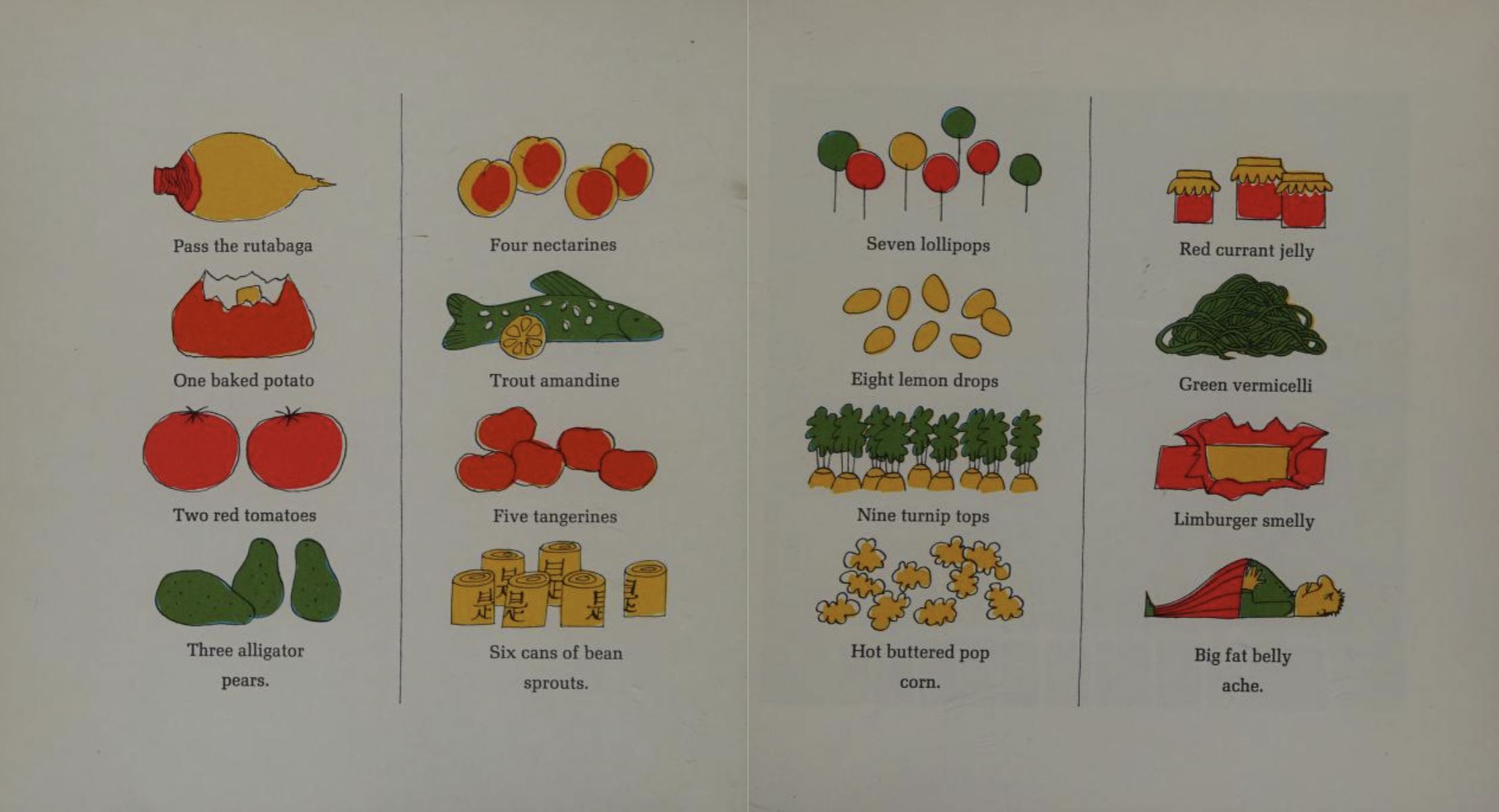
I like the design of this one.
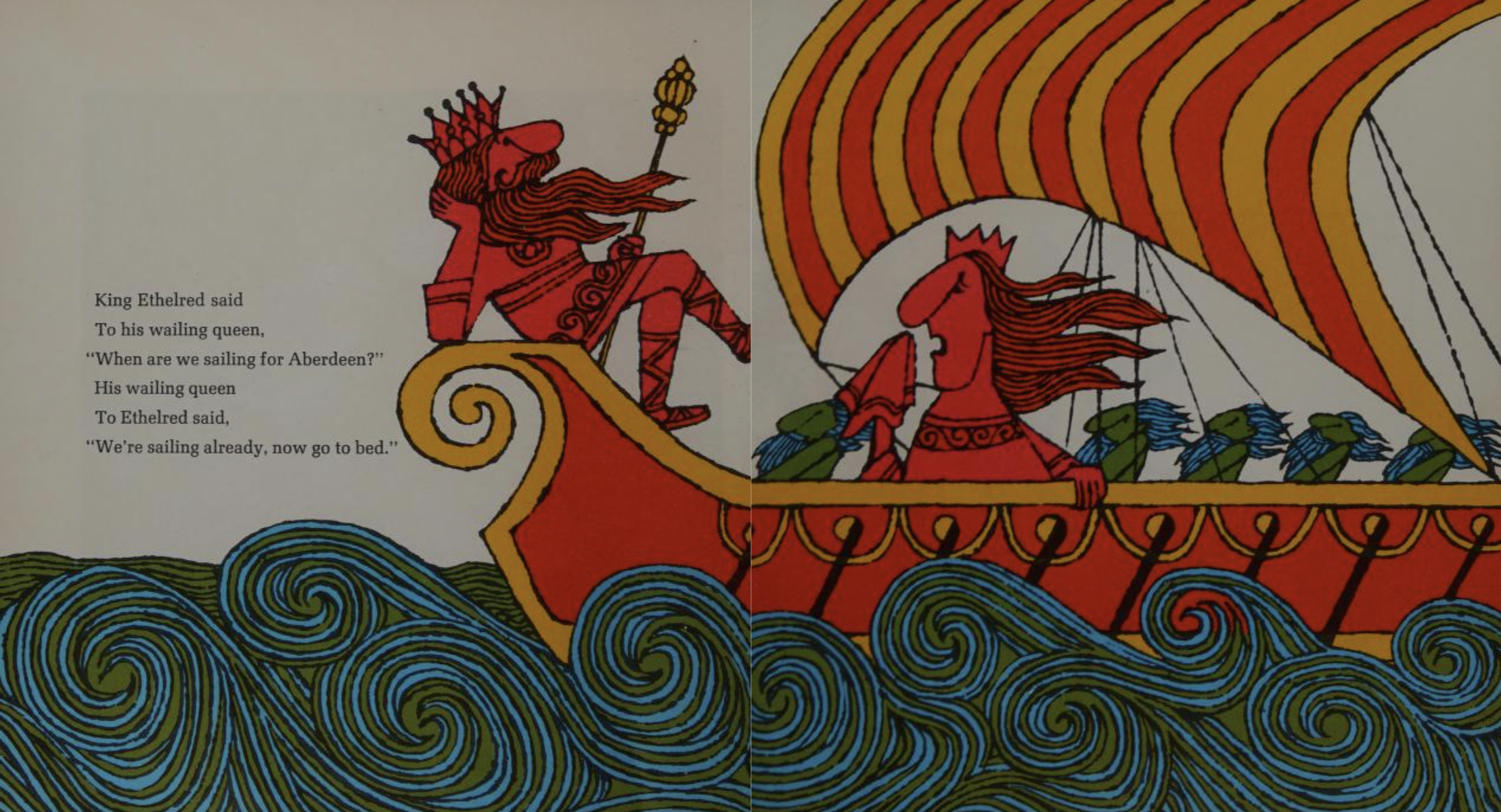
And this one.
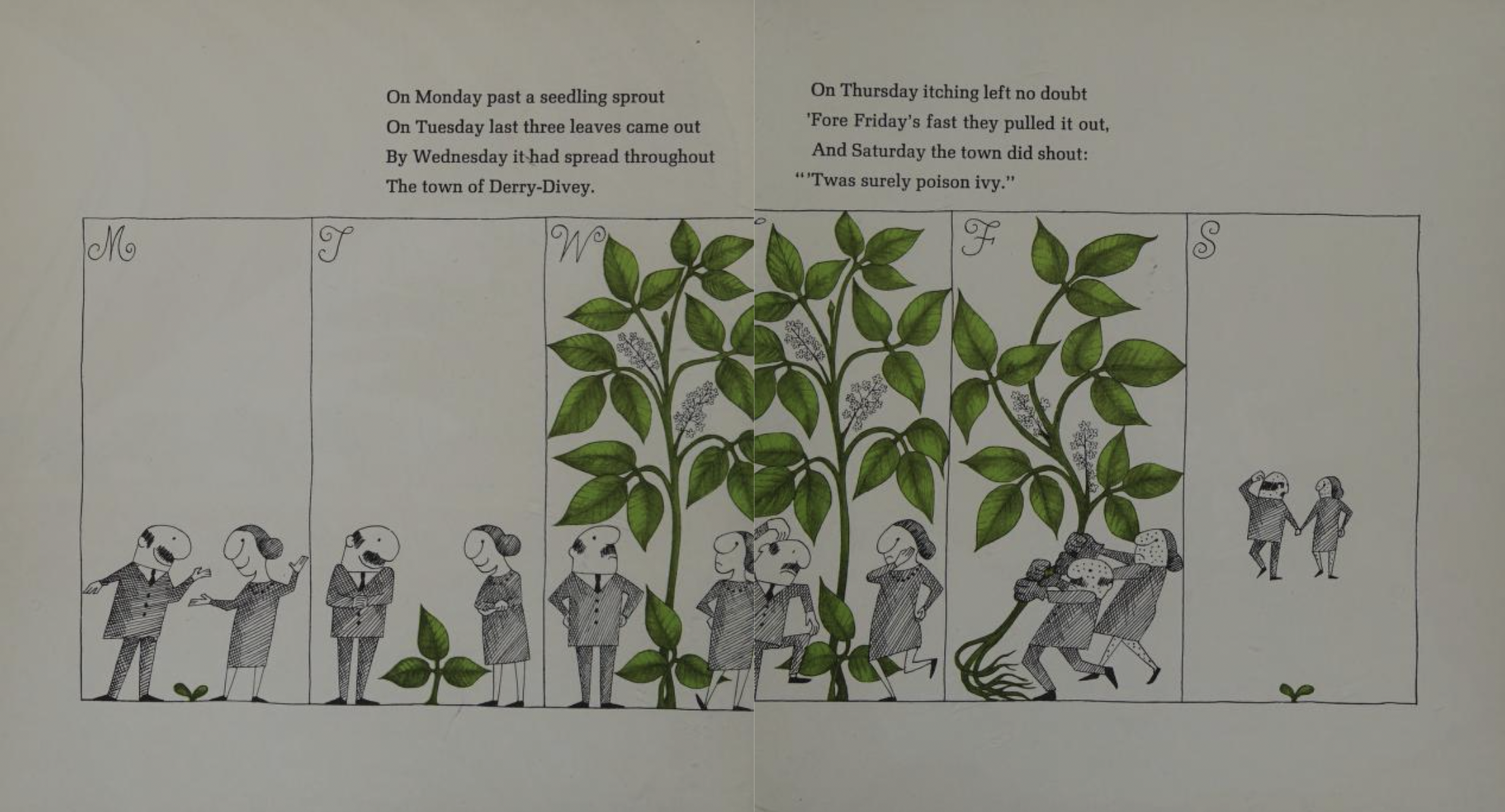
And this one. (But the poems fell a bit flat for me.)
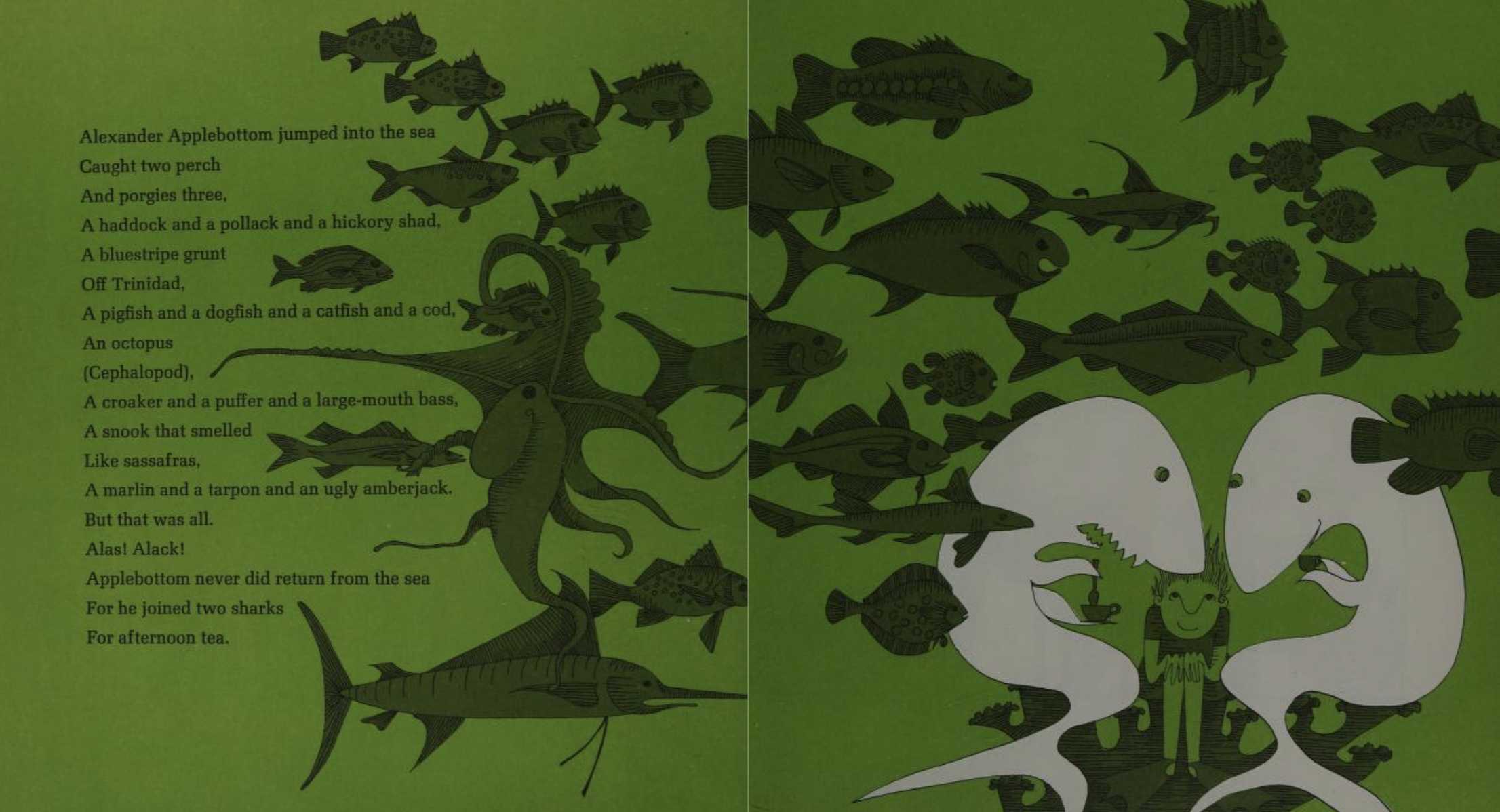
Plus here’s a nice dark ending that kids can infer if they want to.
Book bio: “Ellen Raskin is a well-known illustrator and designer of books and book jackets. She has received awards for her work from the Art Directors’ Club of New York, the Society of Illustrators, and the American institute of Graphic Arts. Miss Raskin was born in Milwaukee, Wisconsin, and majored in art at the University of Wisconsin. She enjoys music and composes songs of the harpsichord and piano. She lives in New York City with her husband Dennis Flanagan and her daughter Susan.”
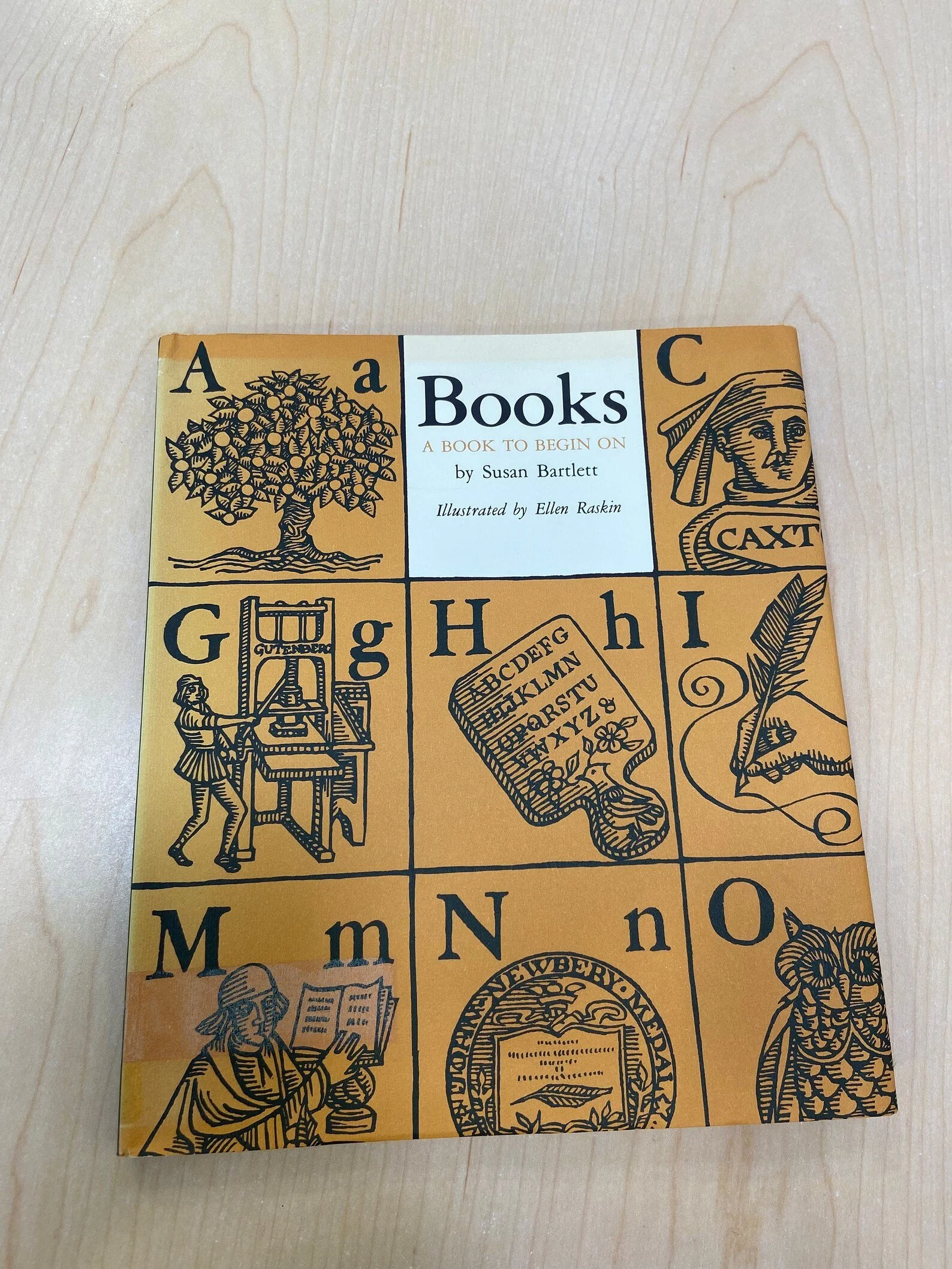
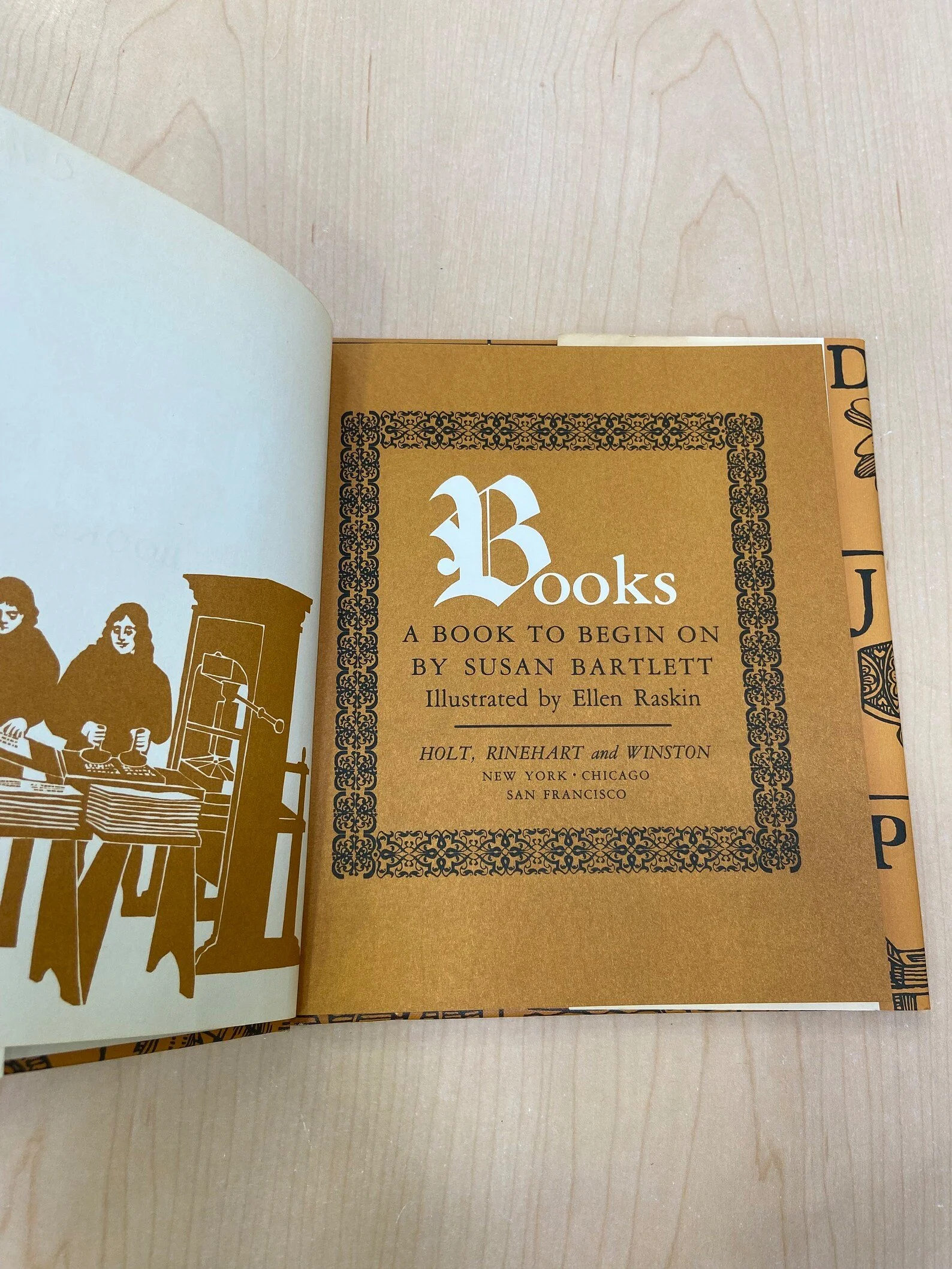
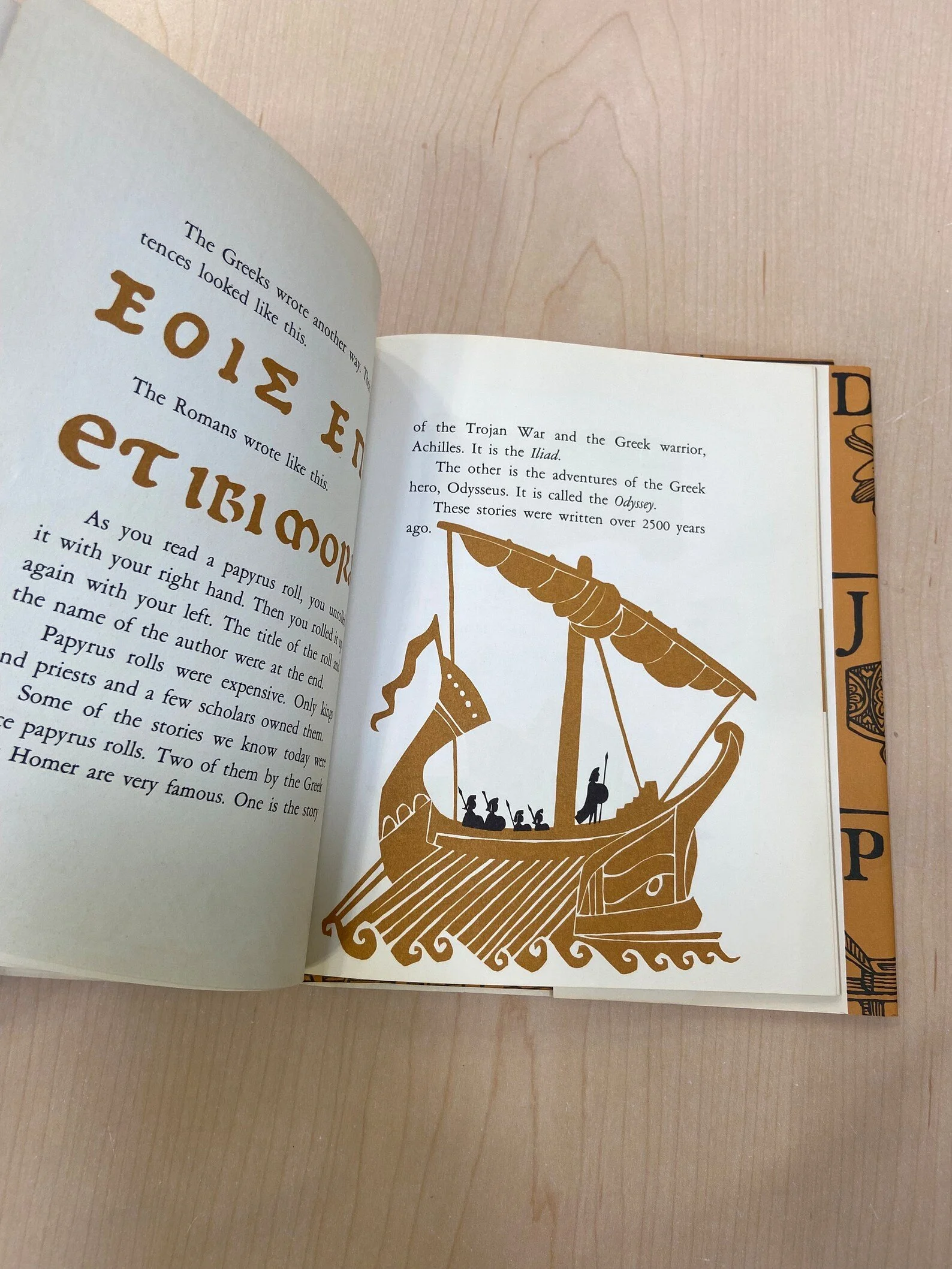
Books: A Book to Begin on. By Susan Bartlett. Holt, 1968 (illustrator only)
Haven’t been able to find this one except a few photos on Etsy.
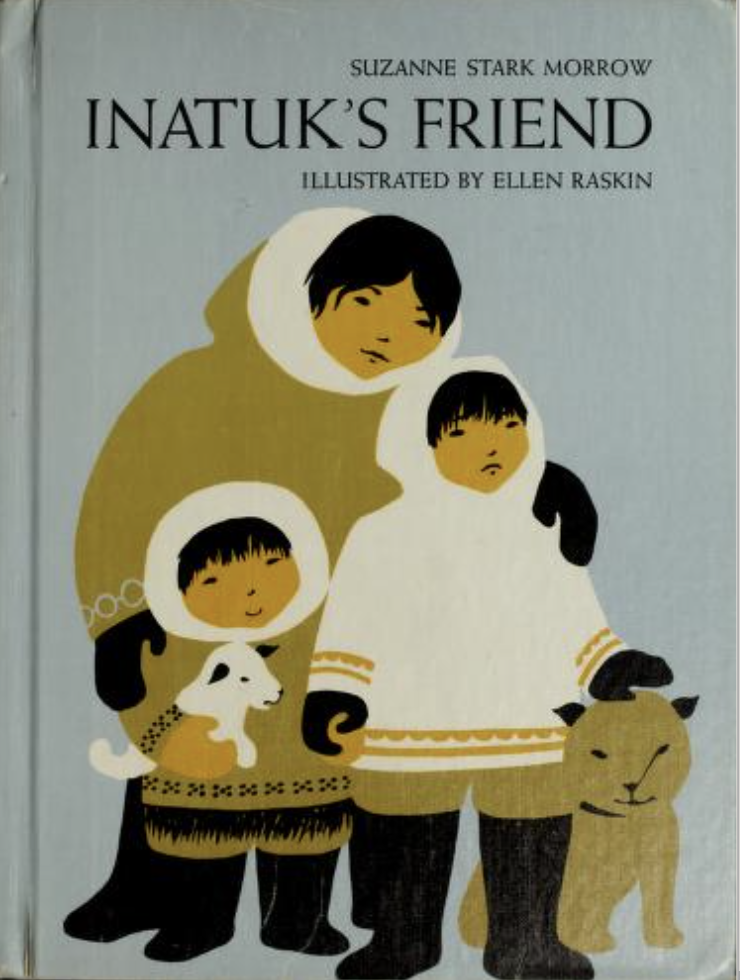
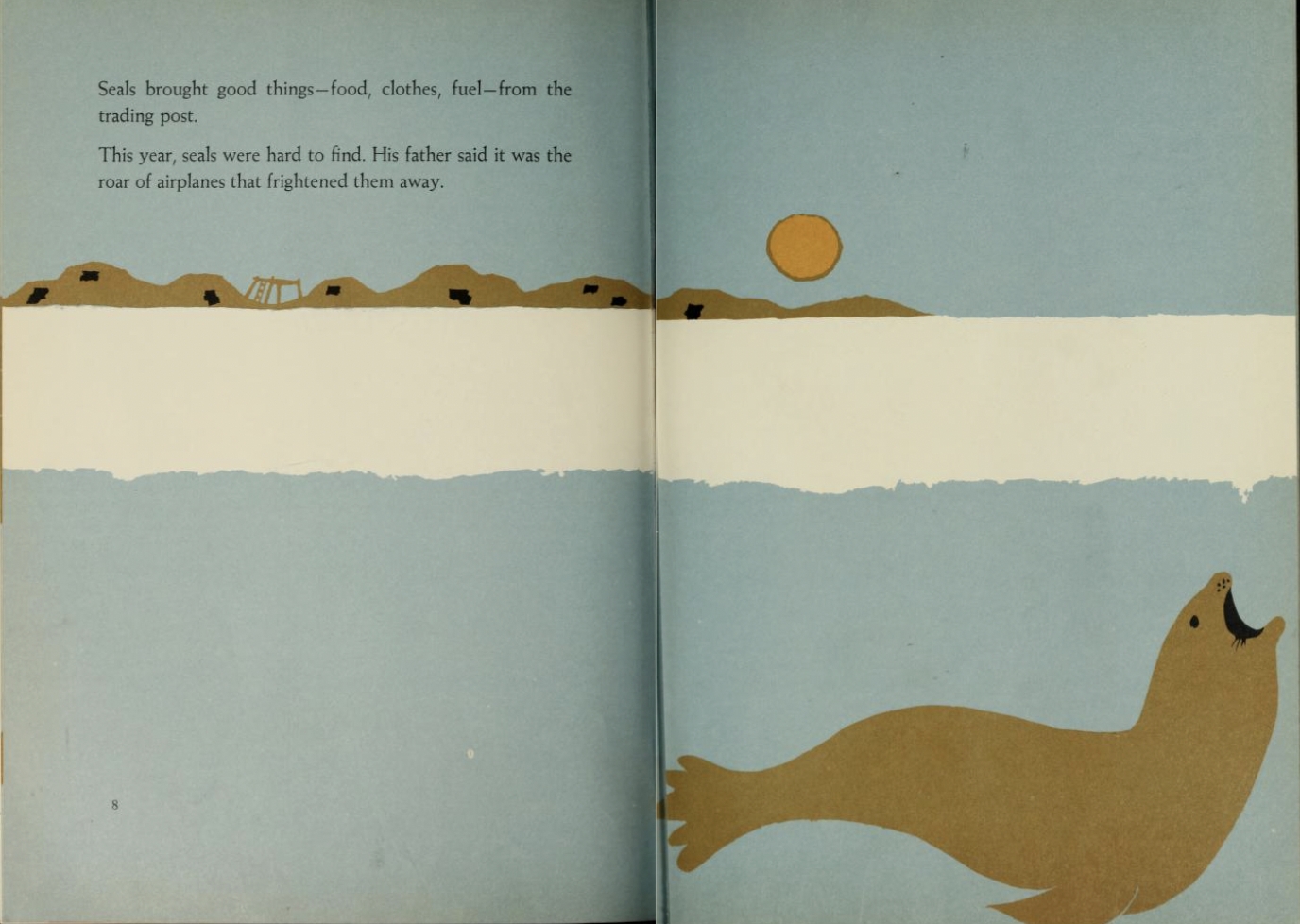
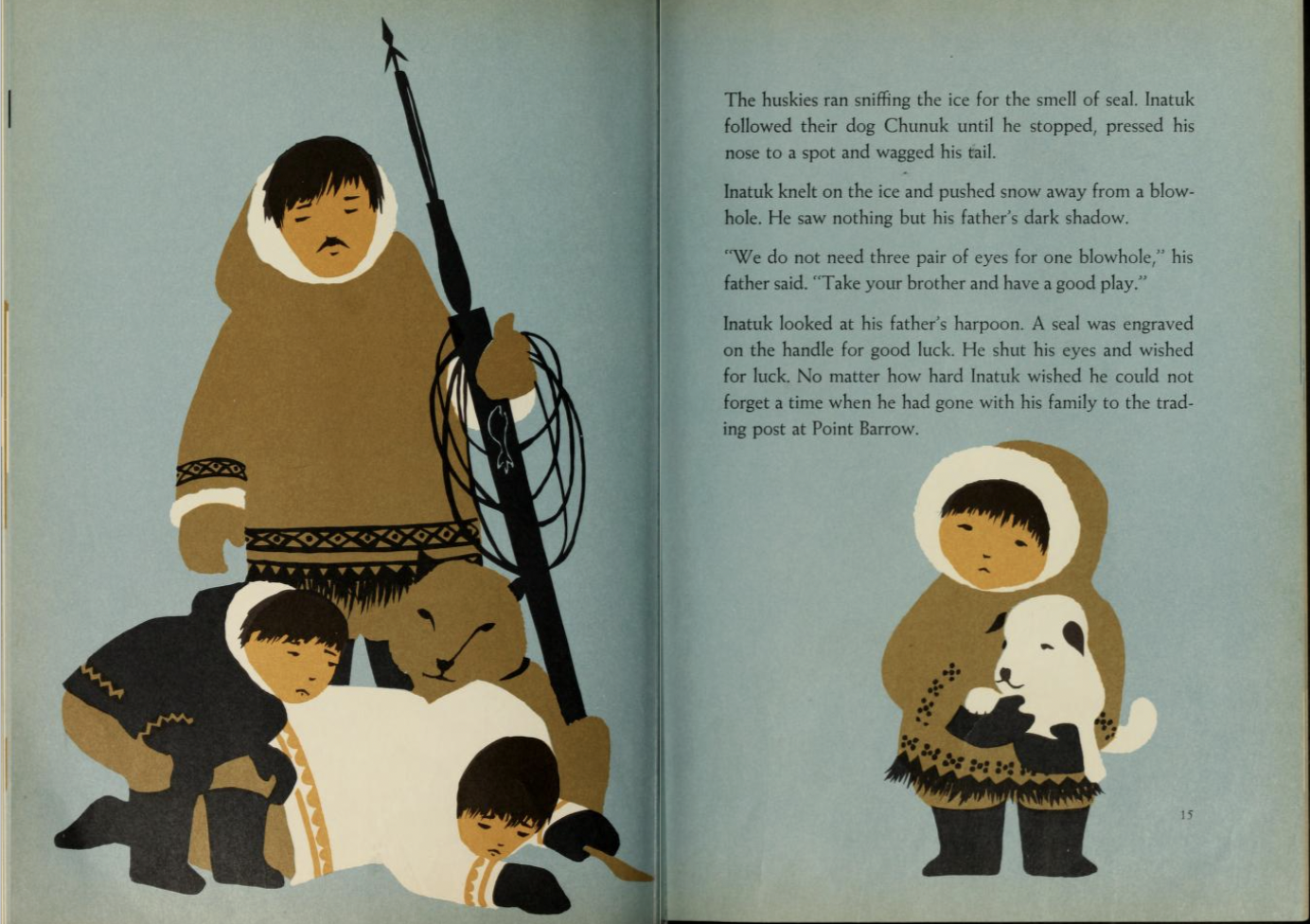
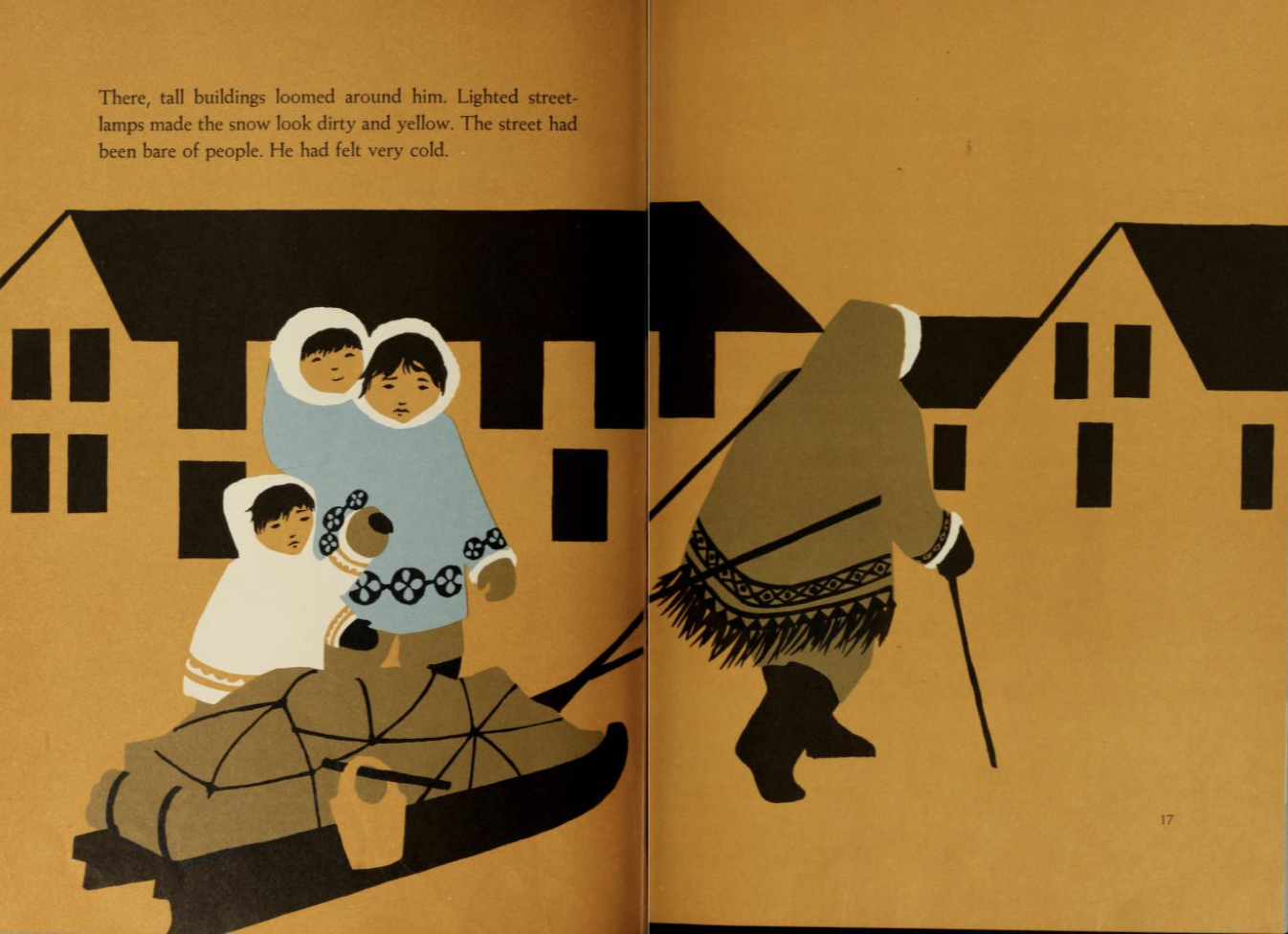
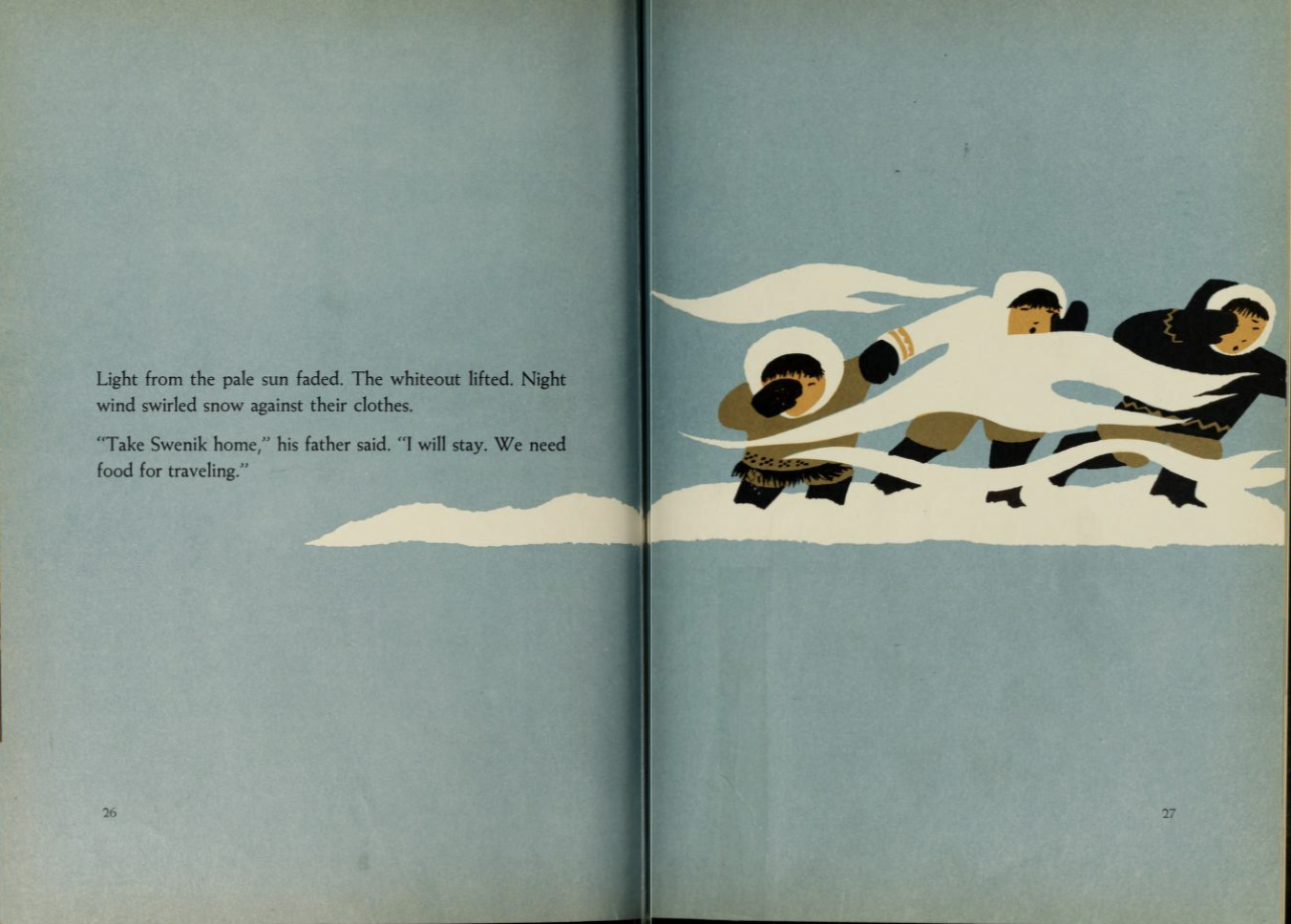
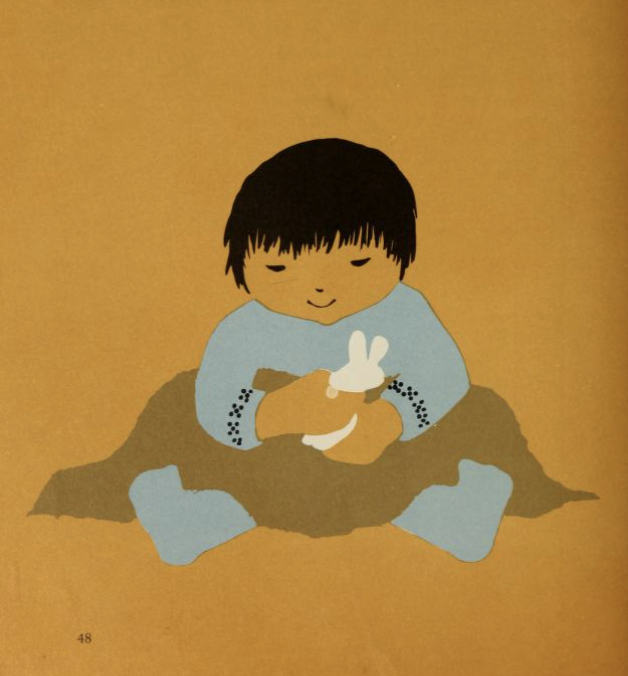
Inatuk’s Friend. By Suzanne Stark Morrow, 1968 (illustrator only)
Here are some illustrations from this picture book illustrated by Raskin.
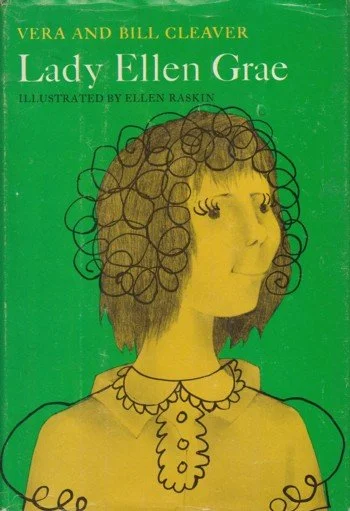
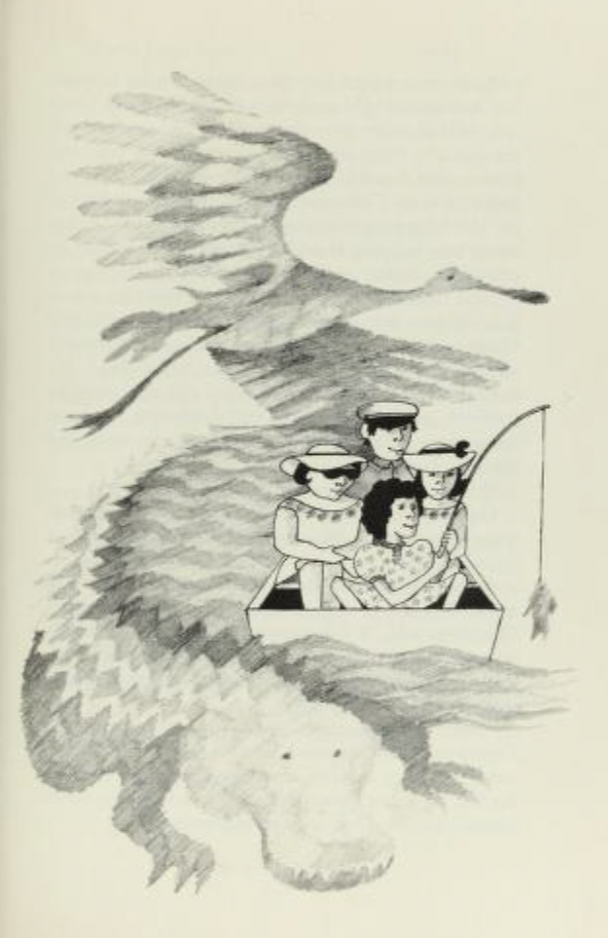
Lady Ellen Grae. By Vera and Bill Cleaver, 1968 (illustrator only)
This is a novel with a few illustrations by Raskin in there plus the cover.
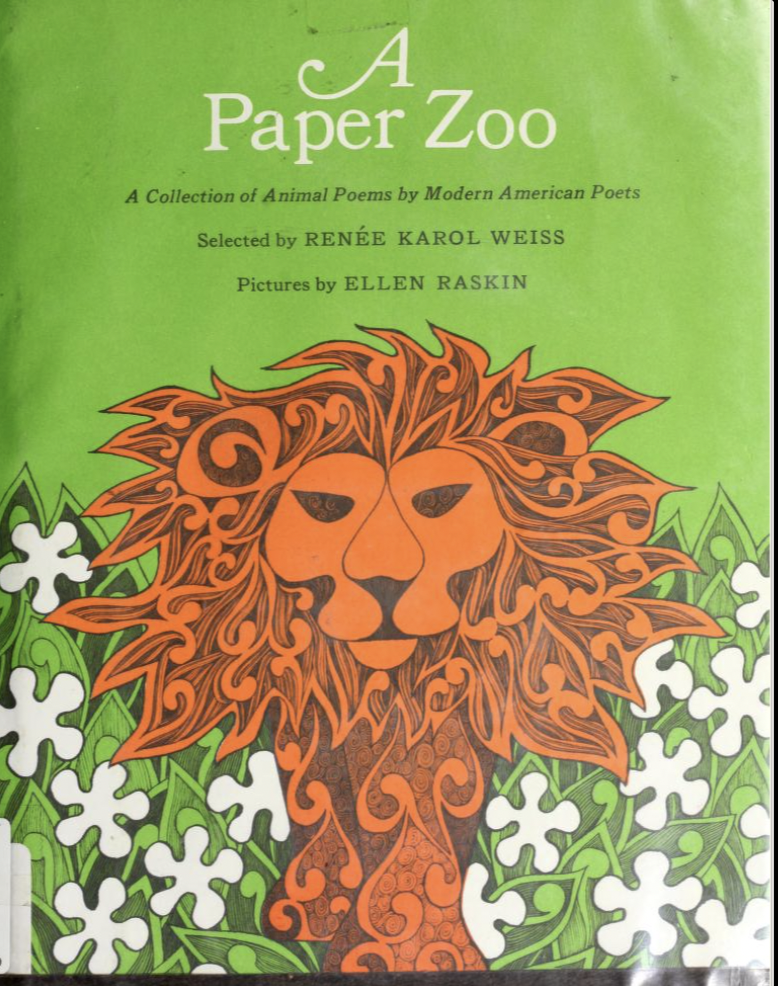
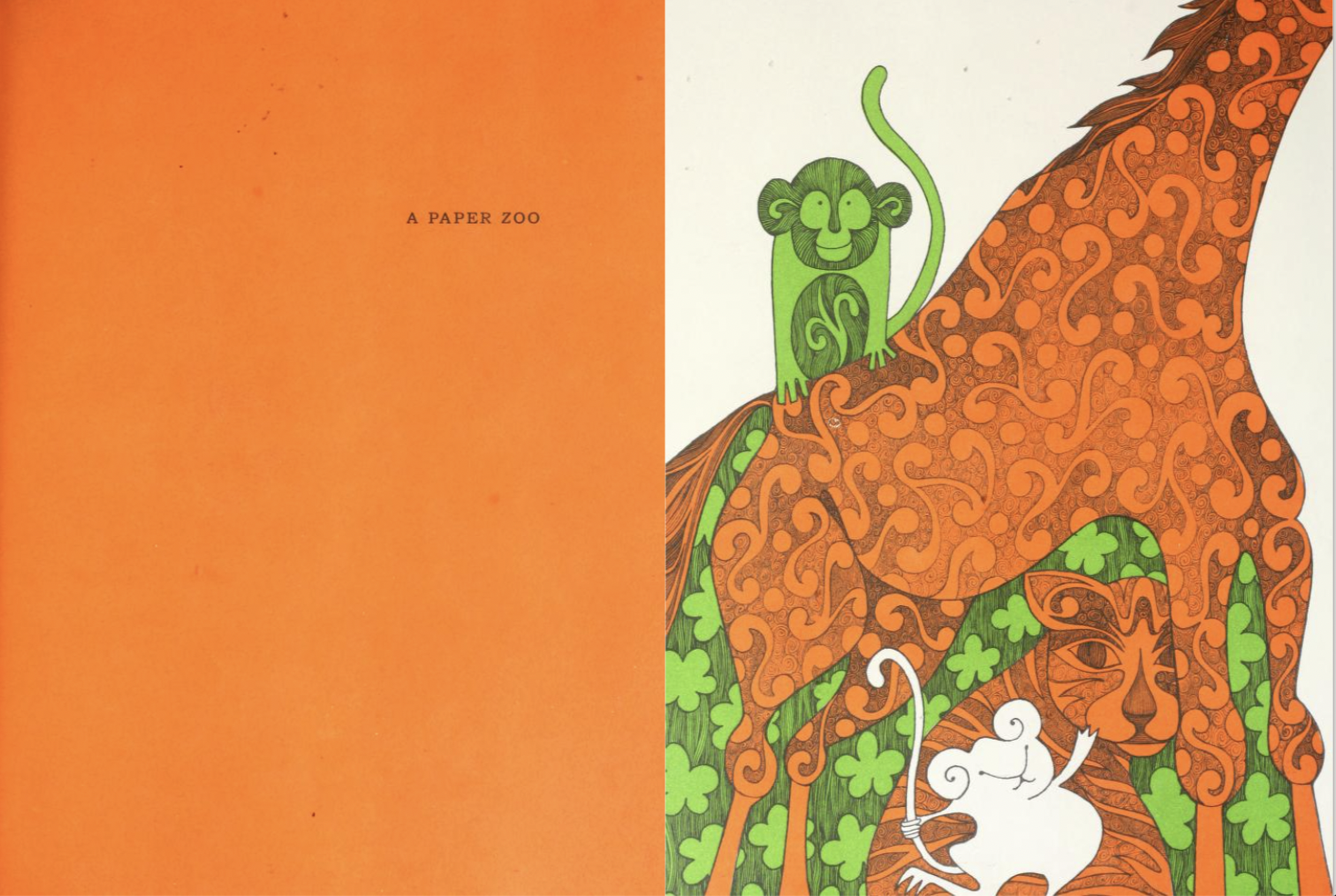
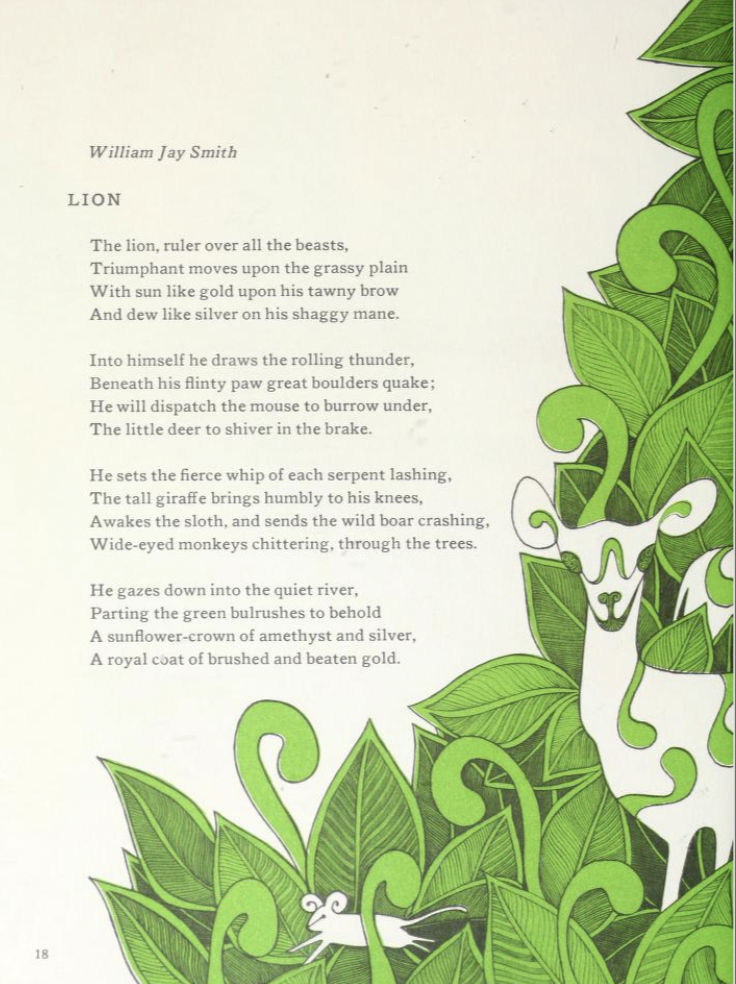
A Paper Zoo: A Collection of Animal Poems by Modern American Poets. Edited by Renee K. Weiss, 1968 (illustrator only)
A picture book of poems with lots of illustrations with green and orange
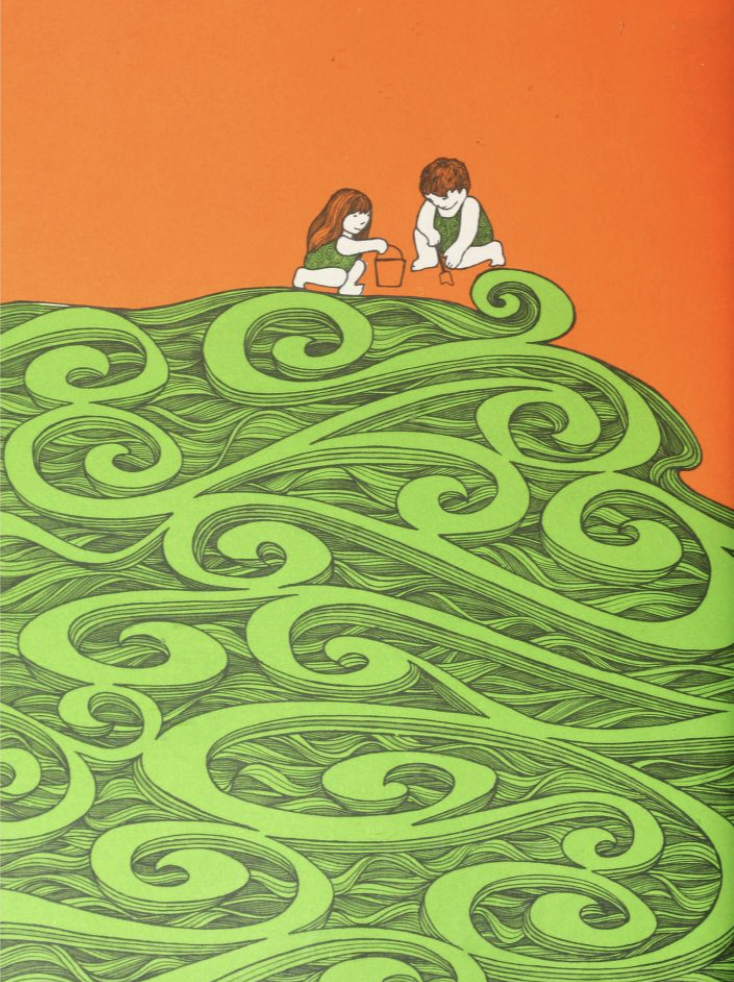
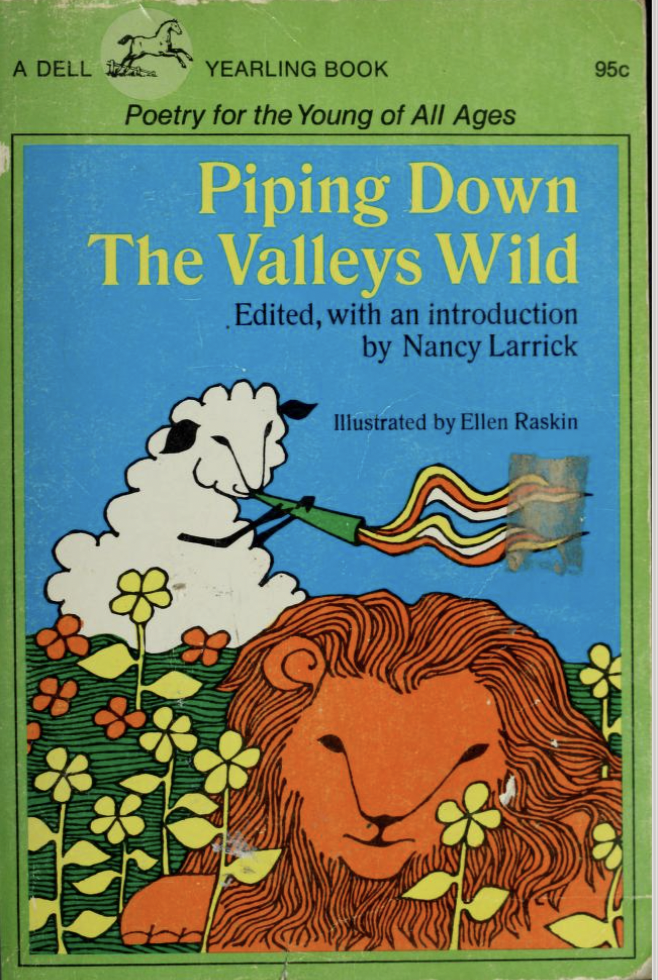
Piping Down the Valleys Wild: Poetry for the Young of All Ages. Edited by Nancy Larrick, 1968 (illustrator only)
Another illustrated book of poems but this one is mainly text with black and white illustrations
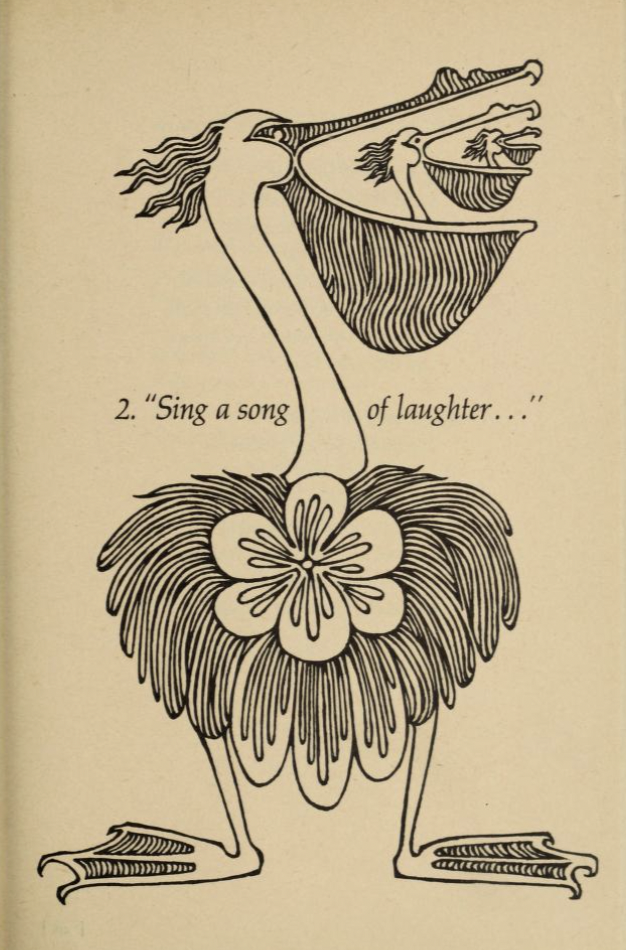
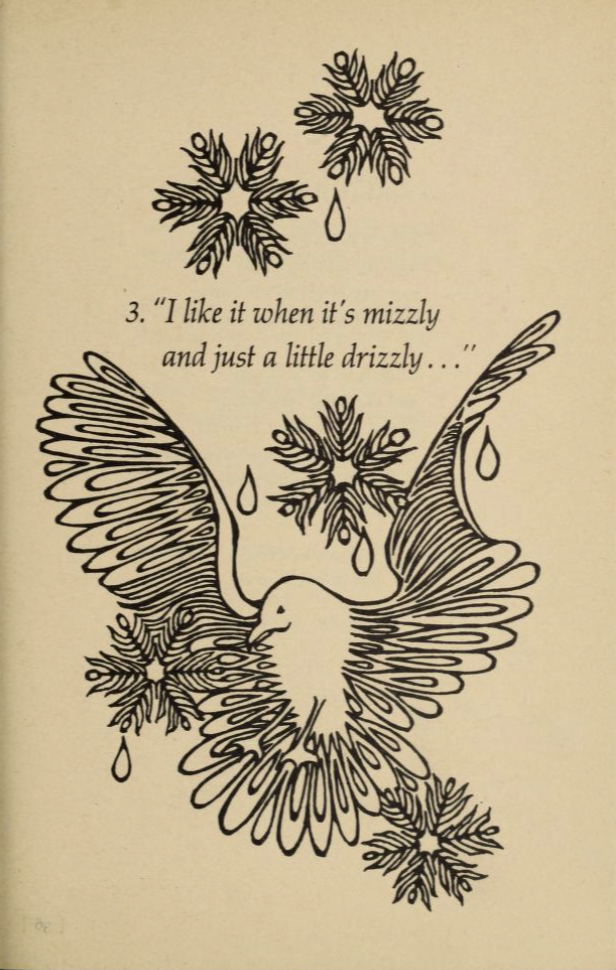
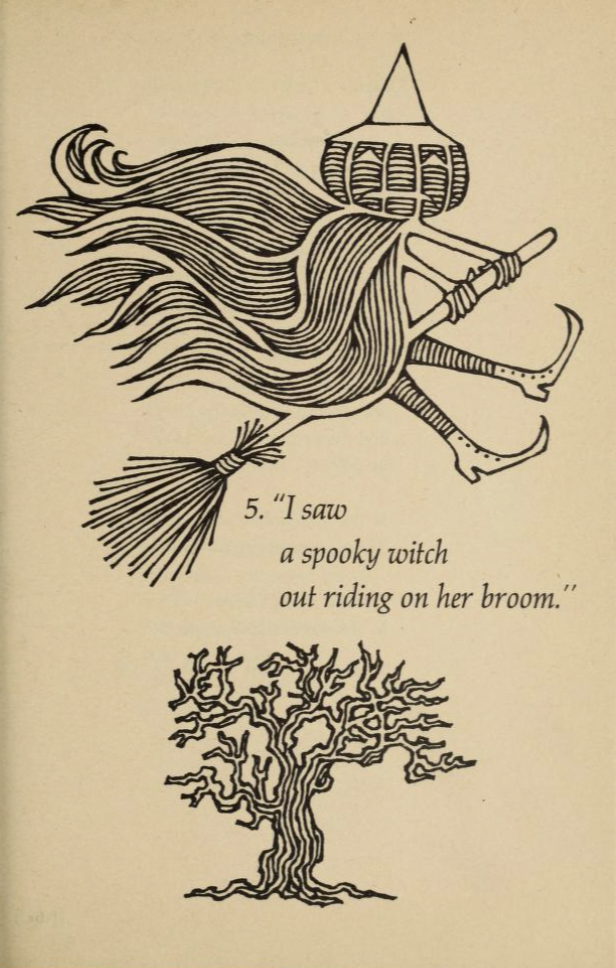
Raskin always surprises — like her awesome depiction of a witch!
Symmetry. By Arthur G. Razzell and K. G. Watts, 1968 (illustrator only)
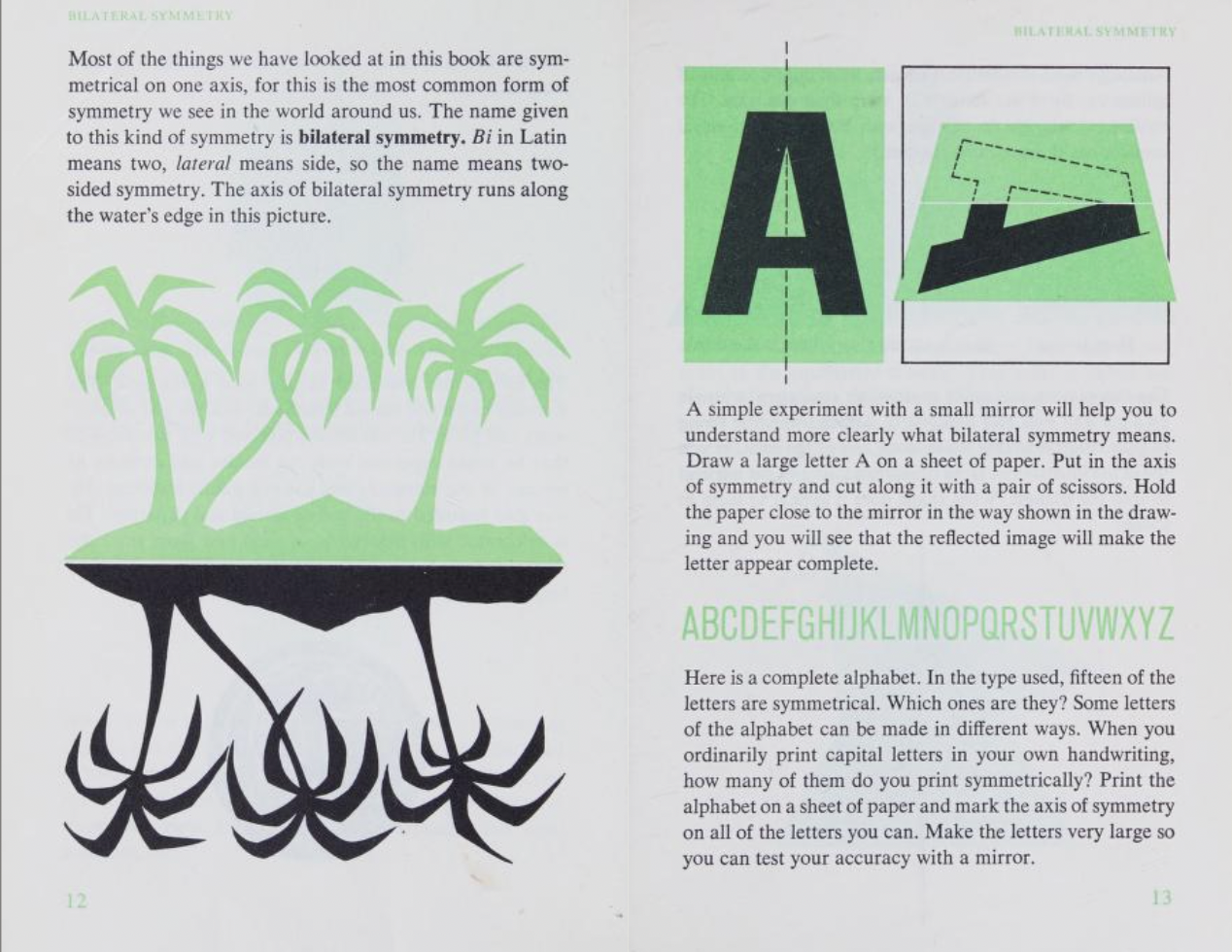
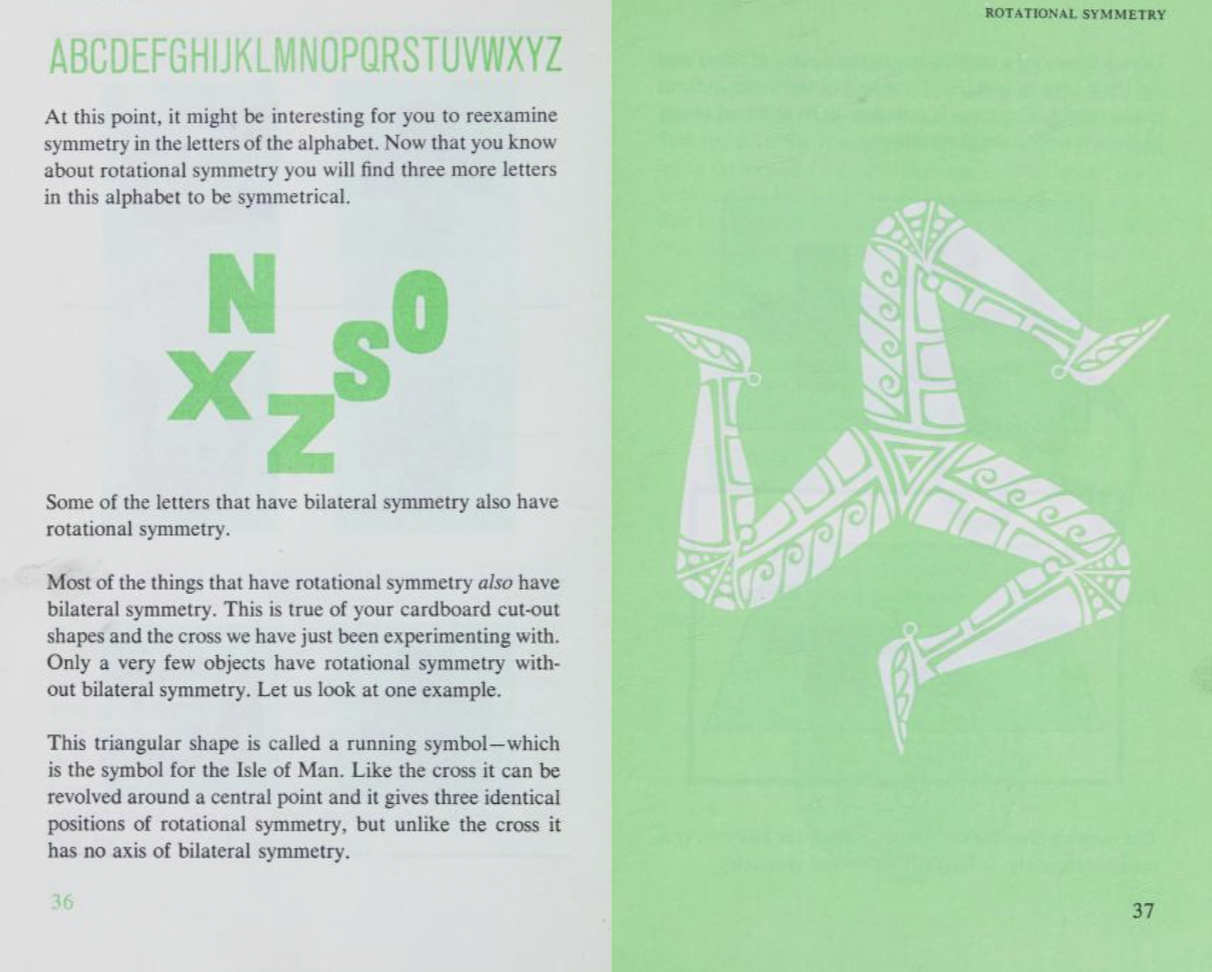
A textbook exploring symmetry with some designs by Raskin
We Alcotts. By Aileen Fisher and Olive Rabe, 1968 (illustrator only)
A novel with just a few chapter heading illustrations
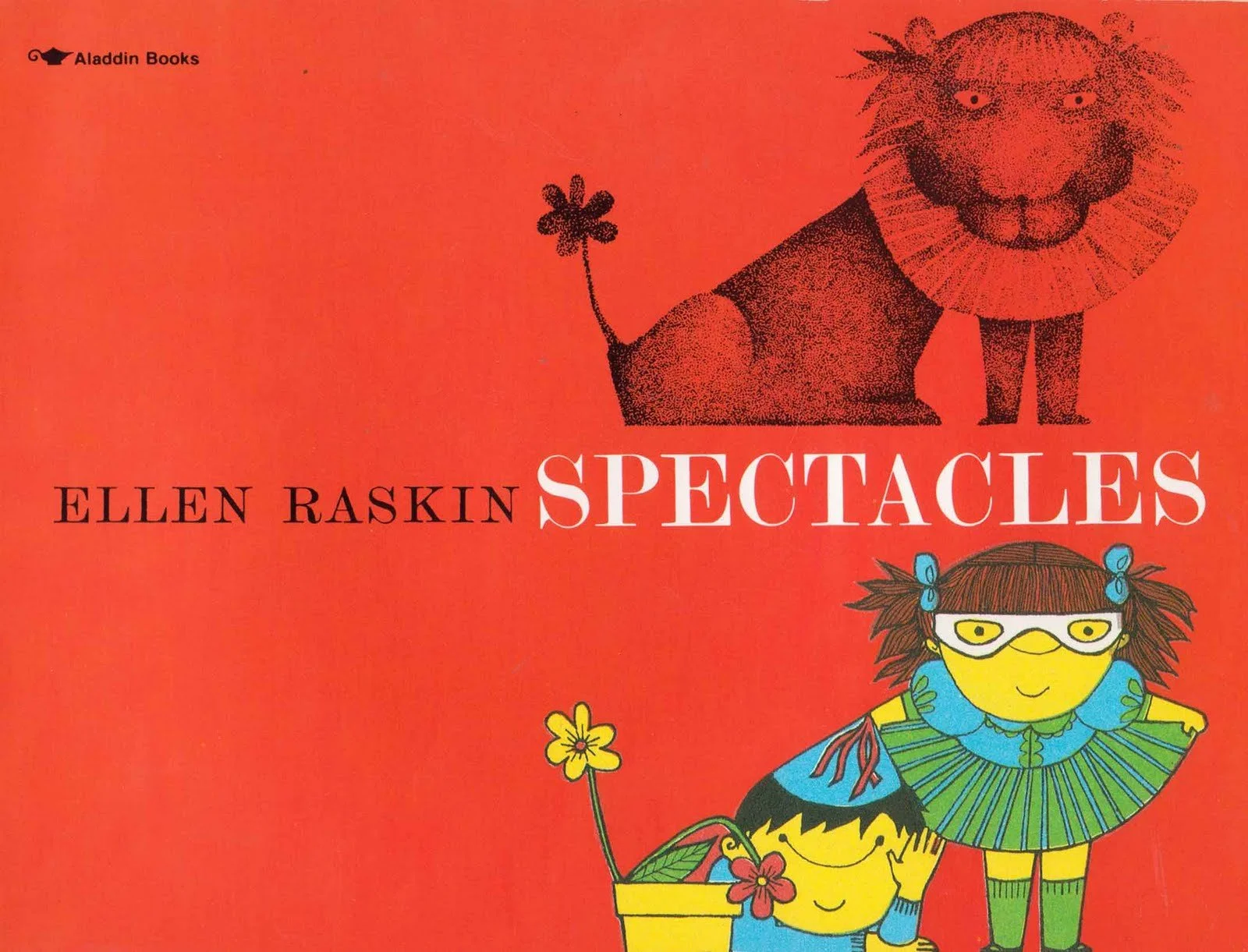
Spectacles, 1968 (author and illustrator)
I was a glasses kid, and this picture book is such a fun way to represent that whole experience.
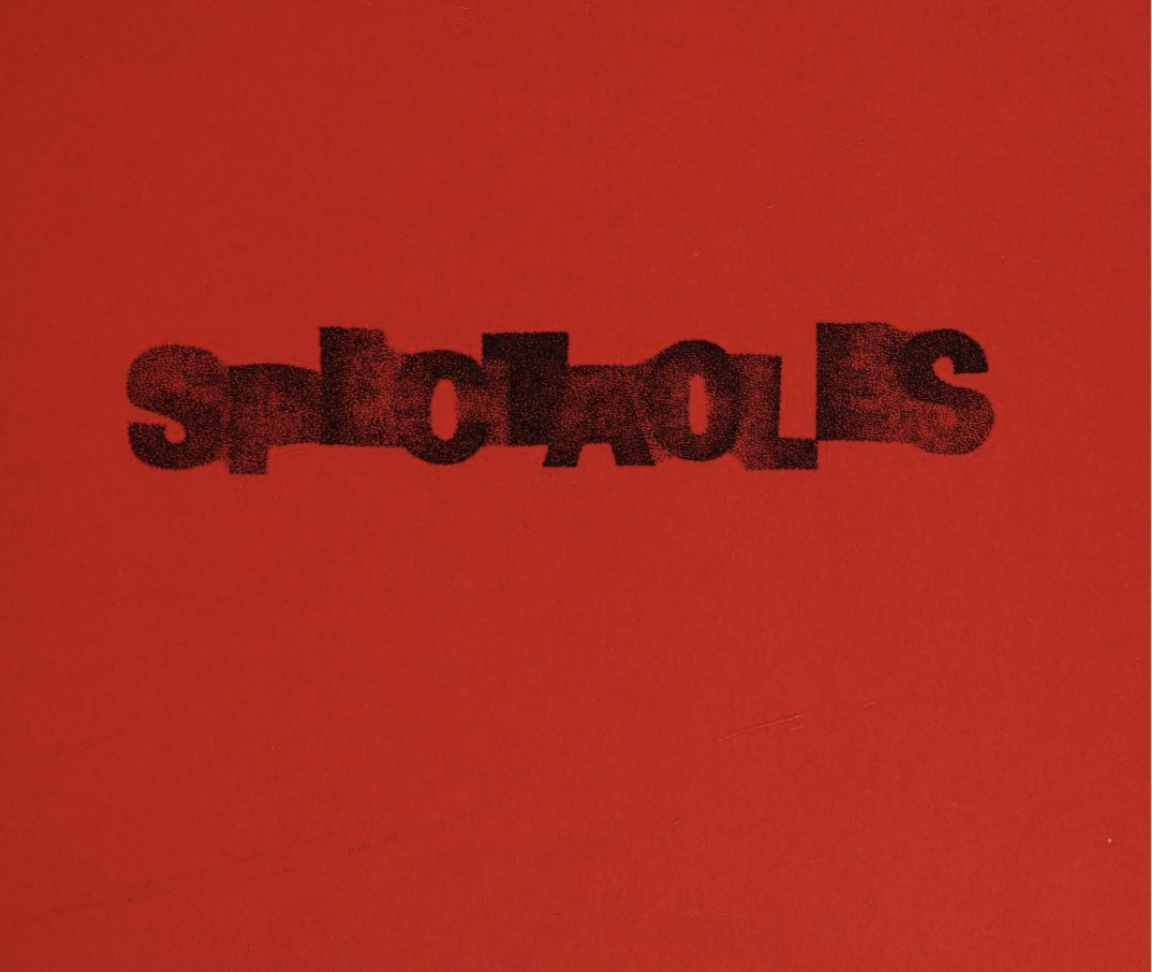
Raskin sets up the visual rules of the book in a genius way. The first title shows what things look like without glasses.
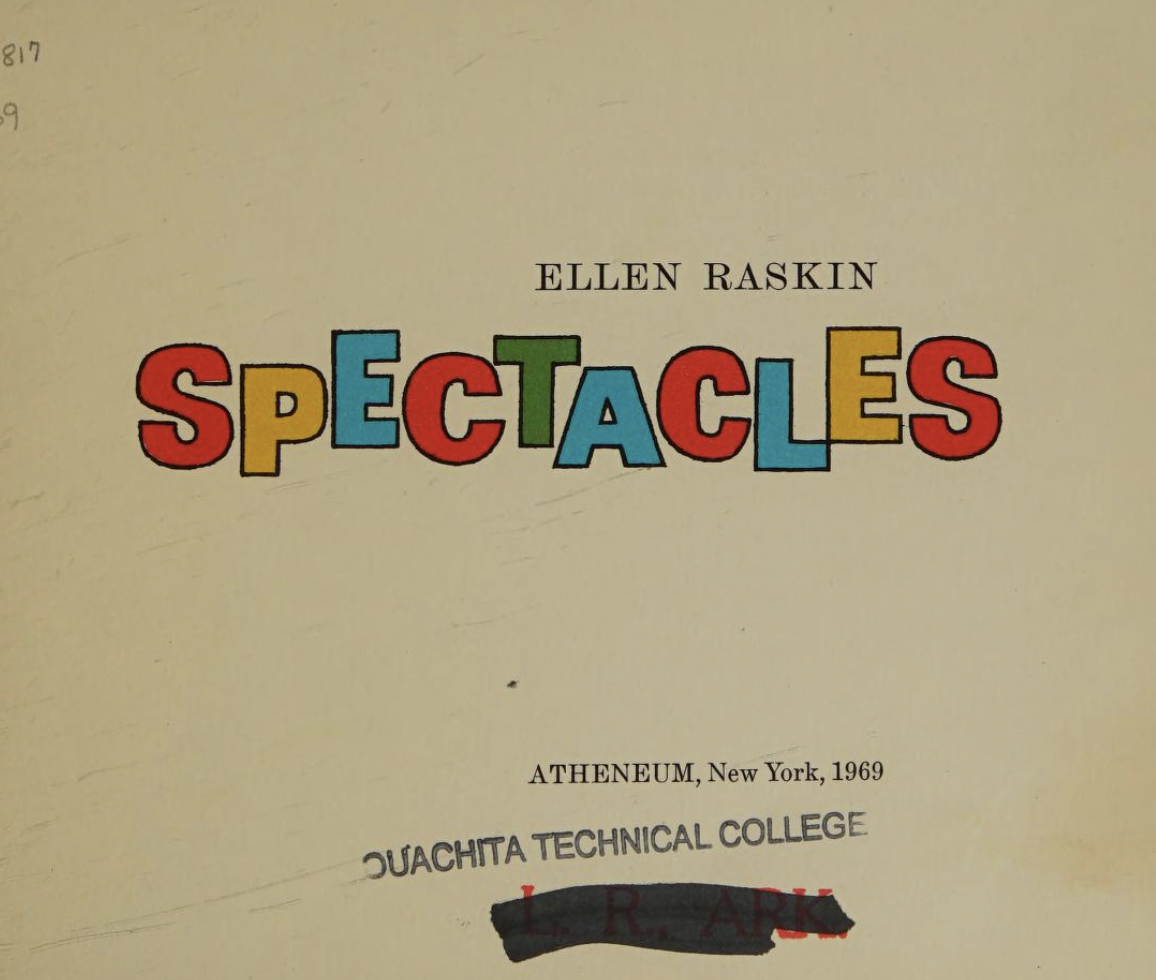
And then with glasses.
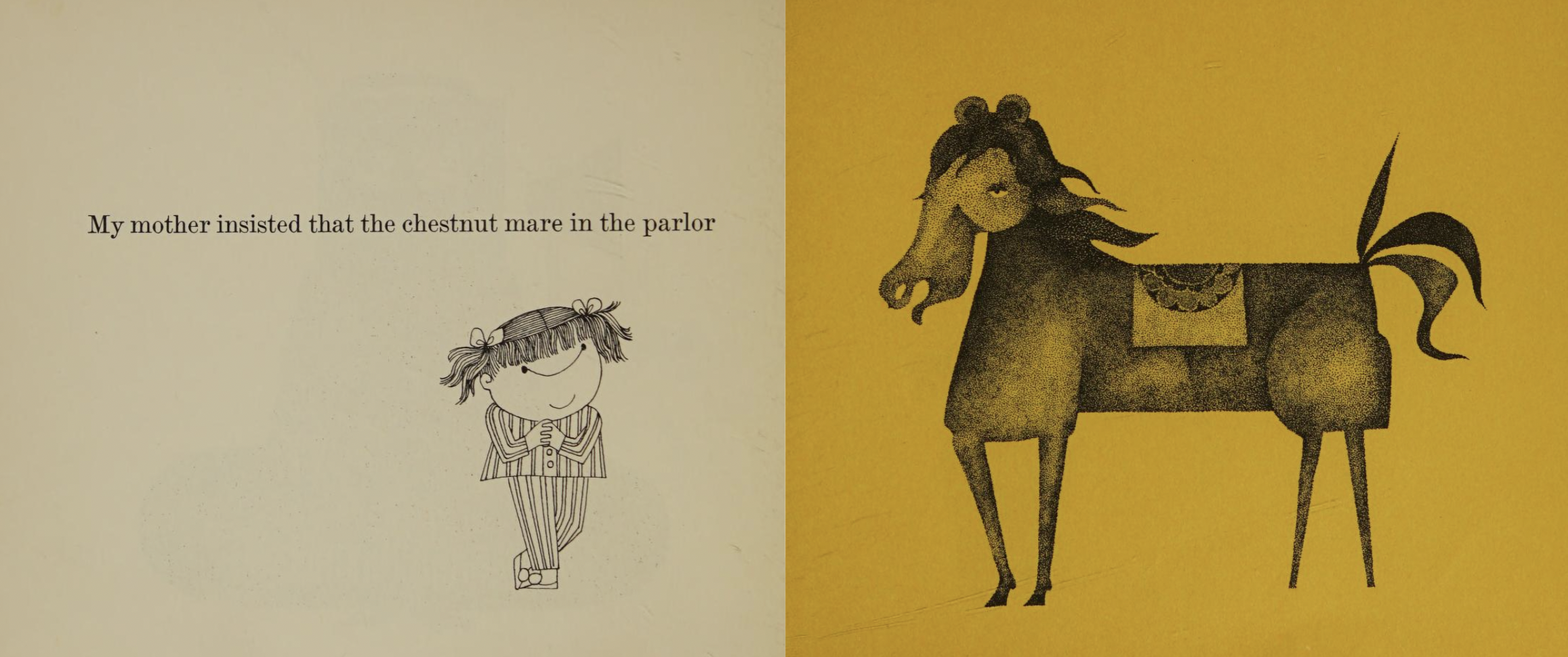
We meet a little girl who didn’t always need glasses. Rather than tell us why she needs them now , Raskin shows us through the comparison between spreads. This is one of my faves because…
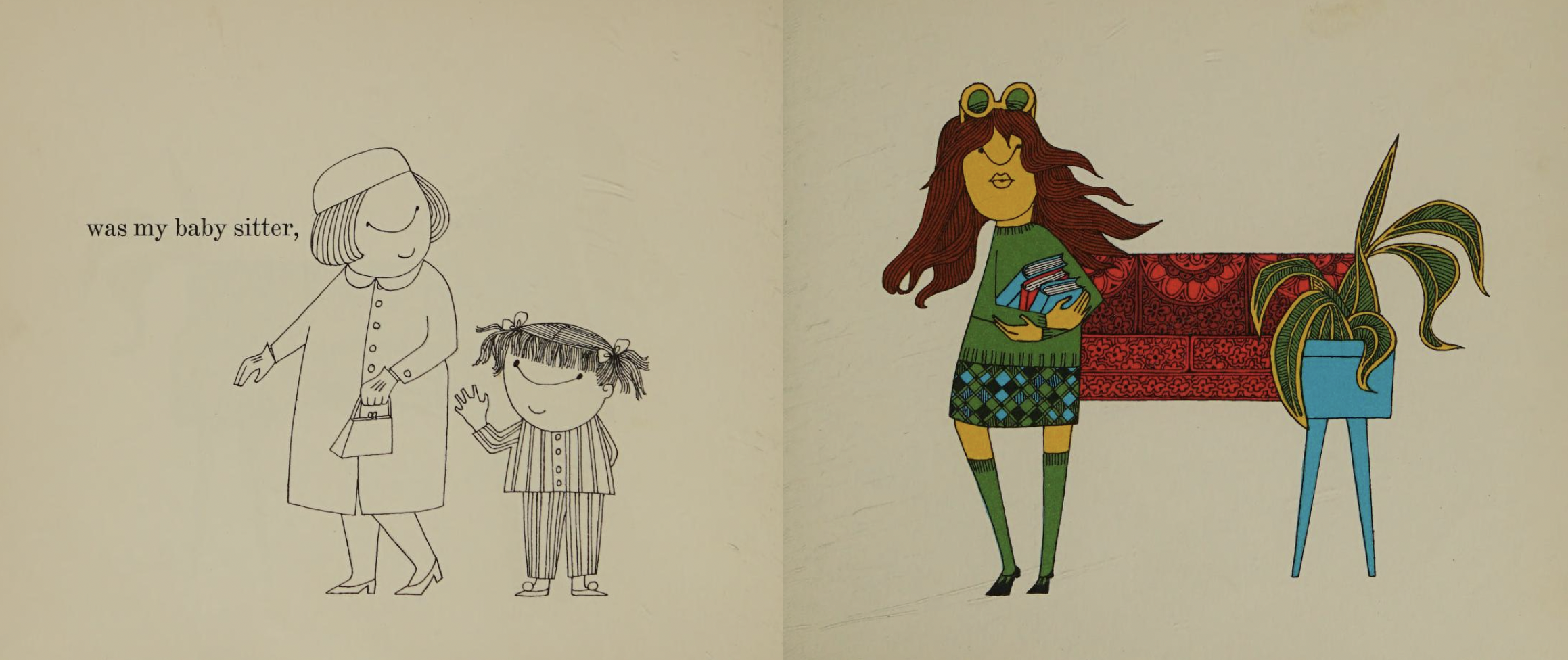
The babysitter is just so cool.
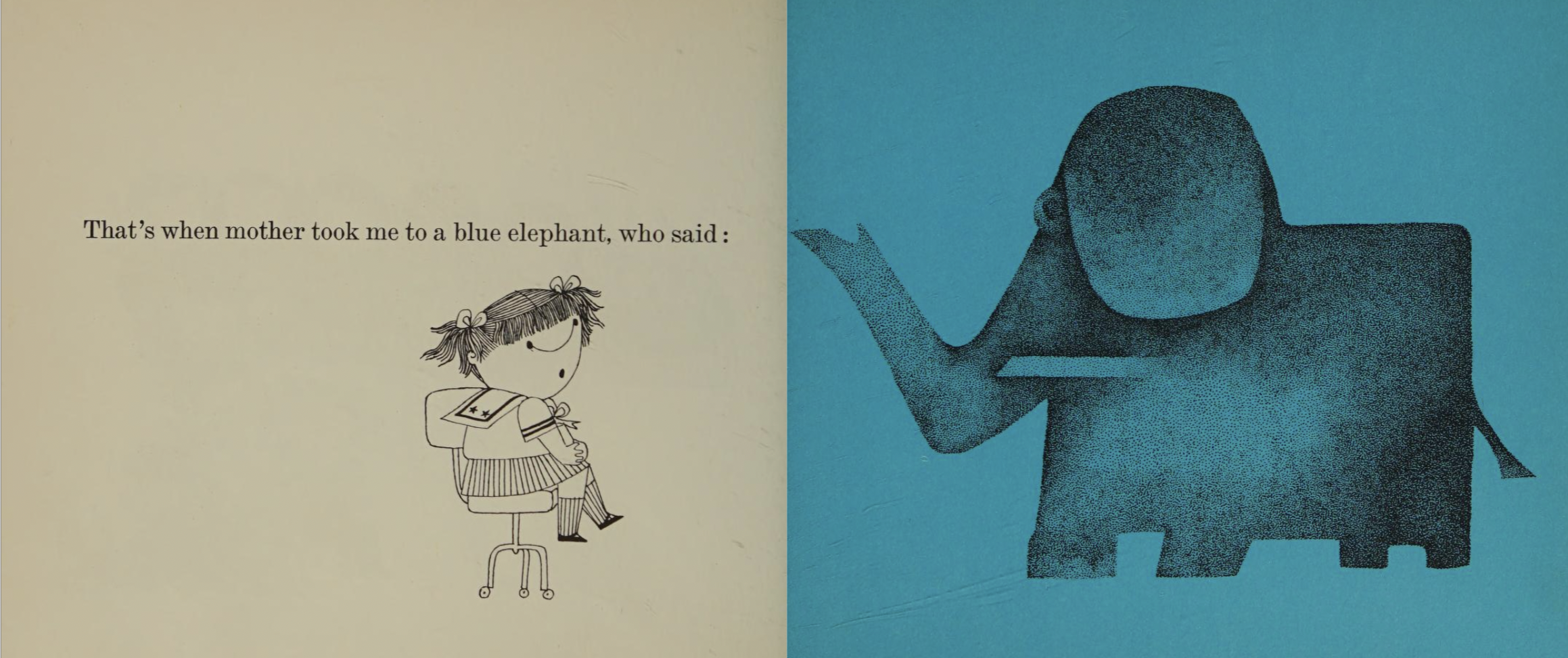
I love how Raskin sets up the turning point for her character.
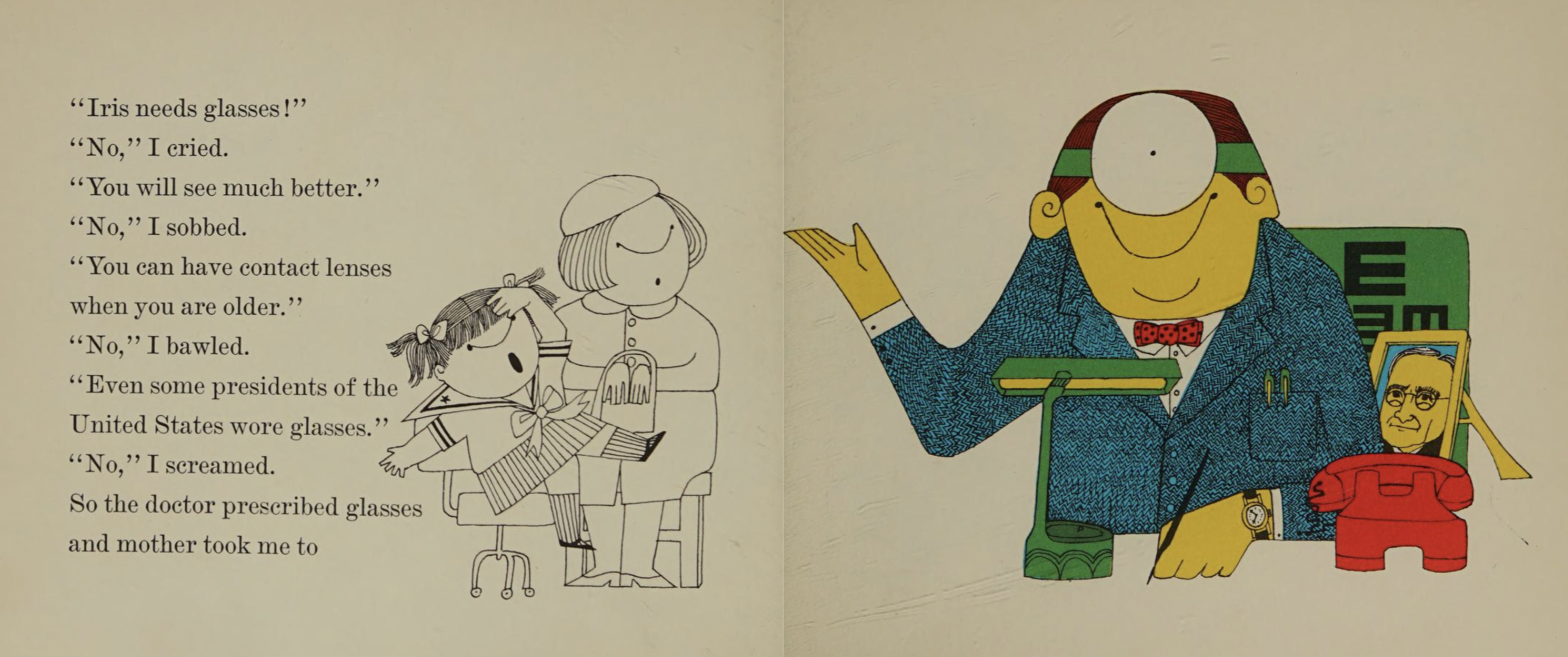
When she finds out she needs glasses.
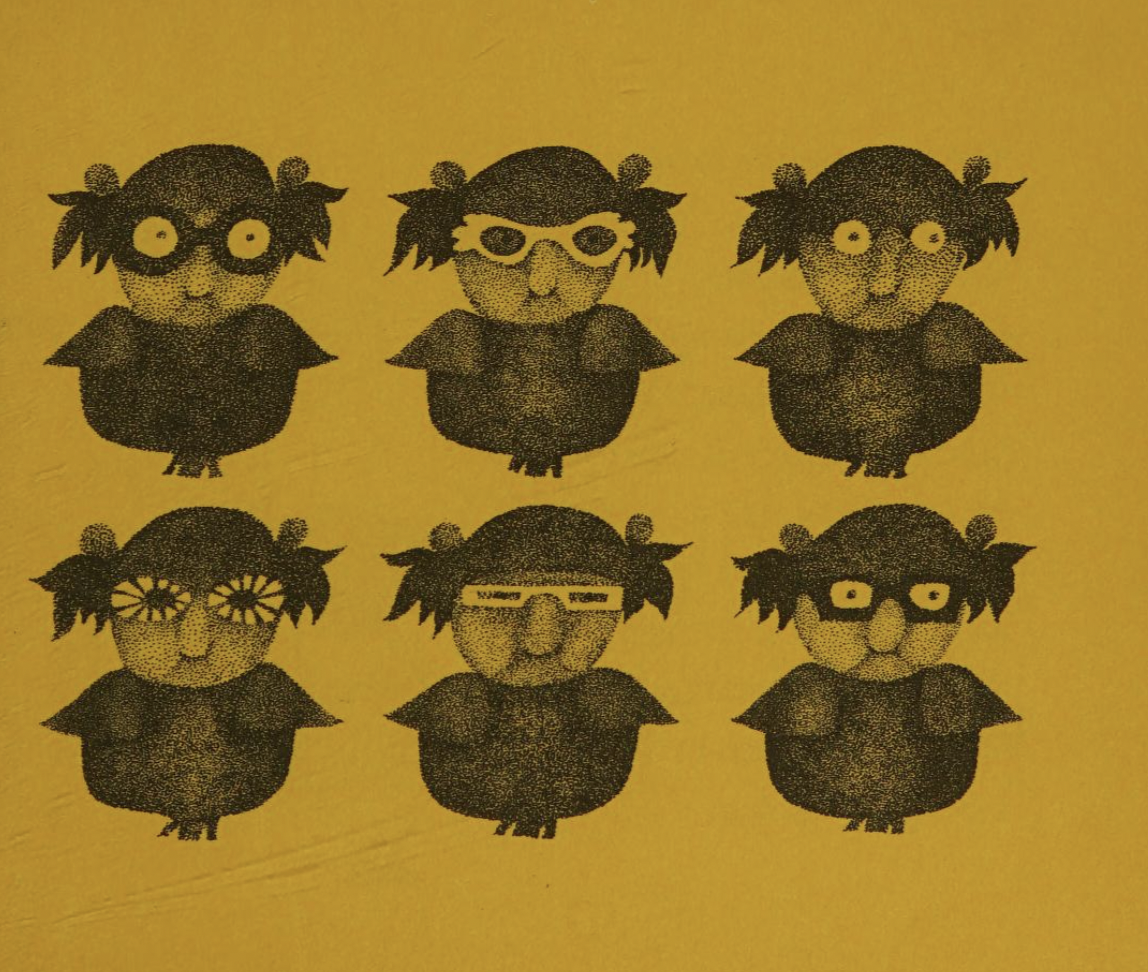
I love this page.
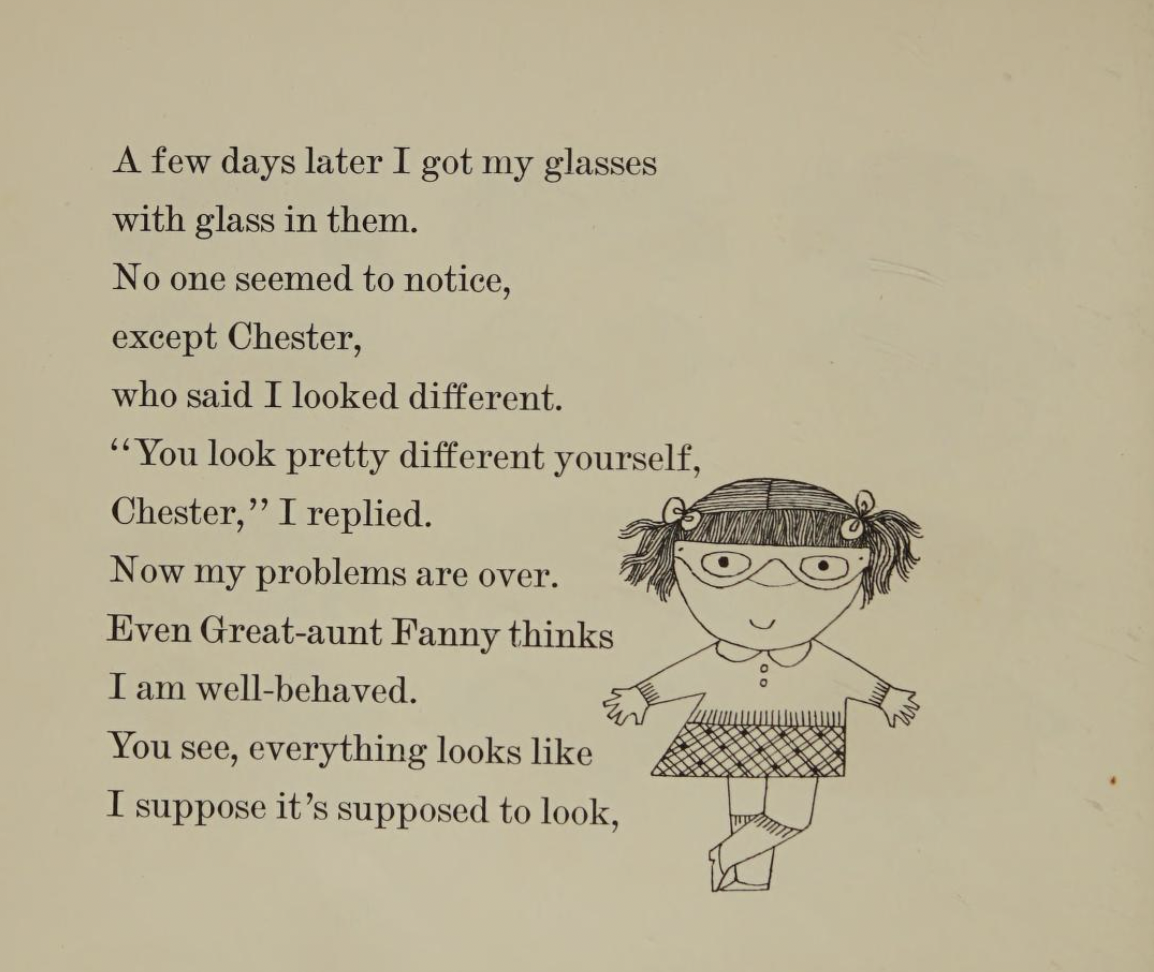
The line, “You look pretty different yourself, Chester.” is perfect. And then Raskin reverses the pattern just a bit for the ending when the main character removes her glasses in a way that lets kids guess what the shape might become.
Book dedication: “This book is dedicated to Lila, Melvin and me, and to all boys and girls who wear glasses, either some of the time or all of the time. (Sun glasses don’t count.)“
Book bio: “Ellen Raskin is a well-known nearsighted illustrator and author of children’s books. She lives in New York City with her husband Dennis, her daughter Susan, and a pair of reading glasses, a pair of working glasses with bifocals and prisms, a pair of prescription sun glasses, and an everyday pair with black rims. She doesn’t mind wearing glasses at all, except when it is very warm and they slip down her nose.”
Awards: ALA Notable Children’s Book (1968) and New York Times Best Illustrated Children’s Books (1968).
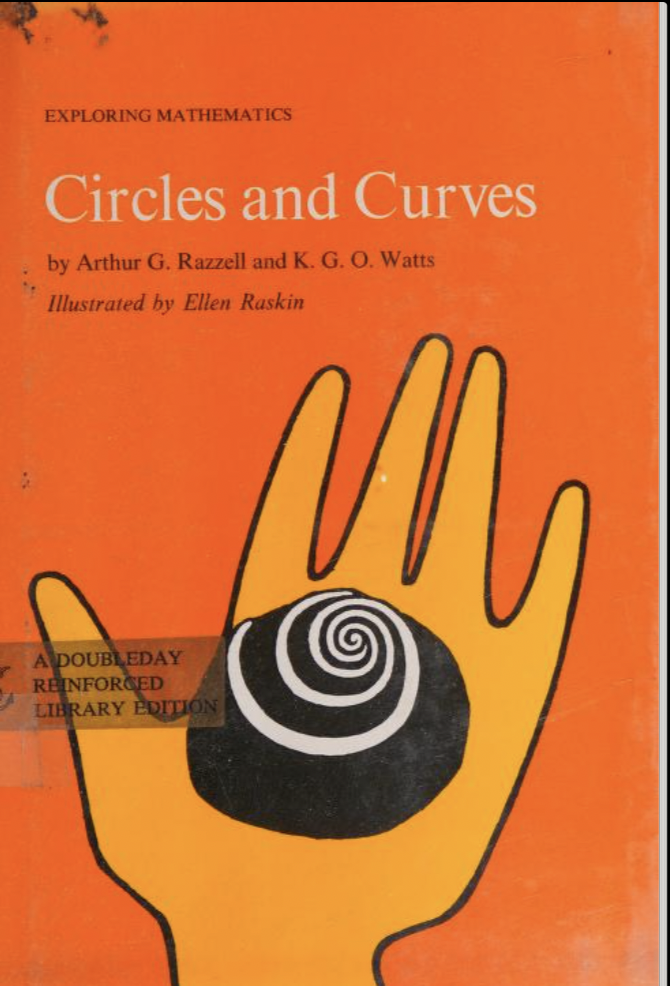
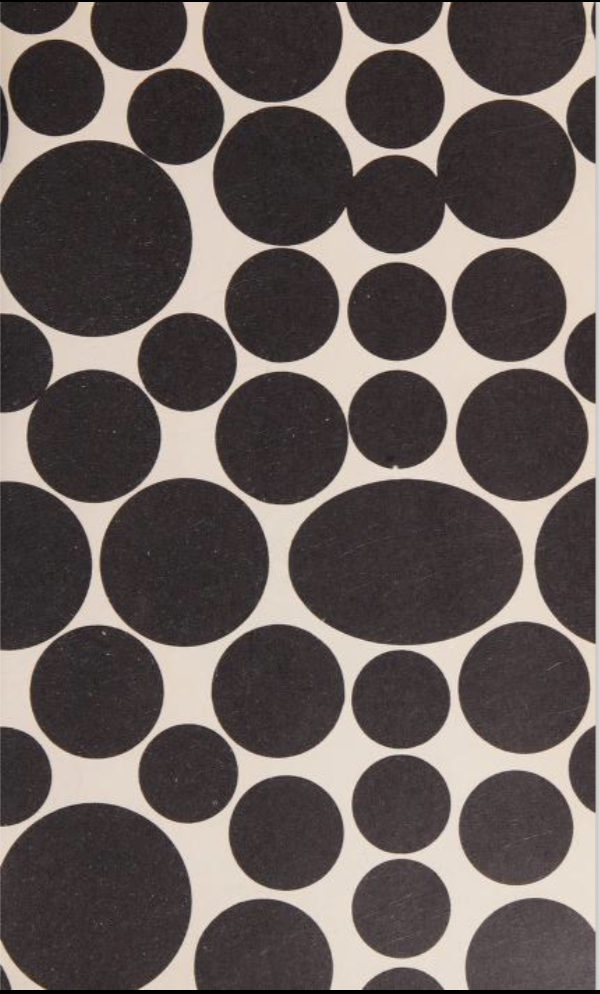
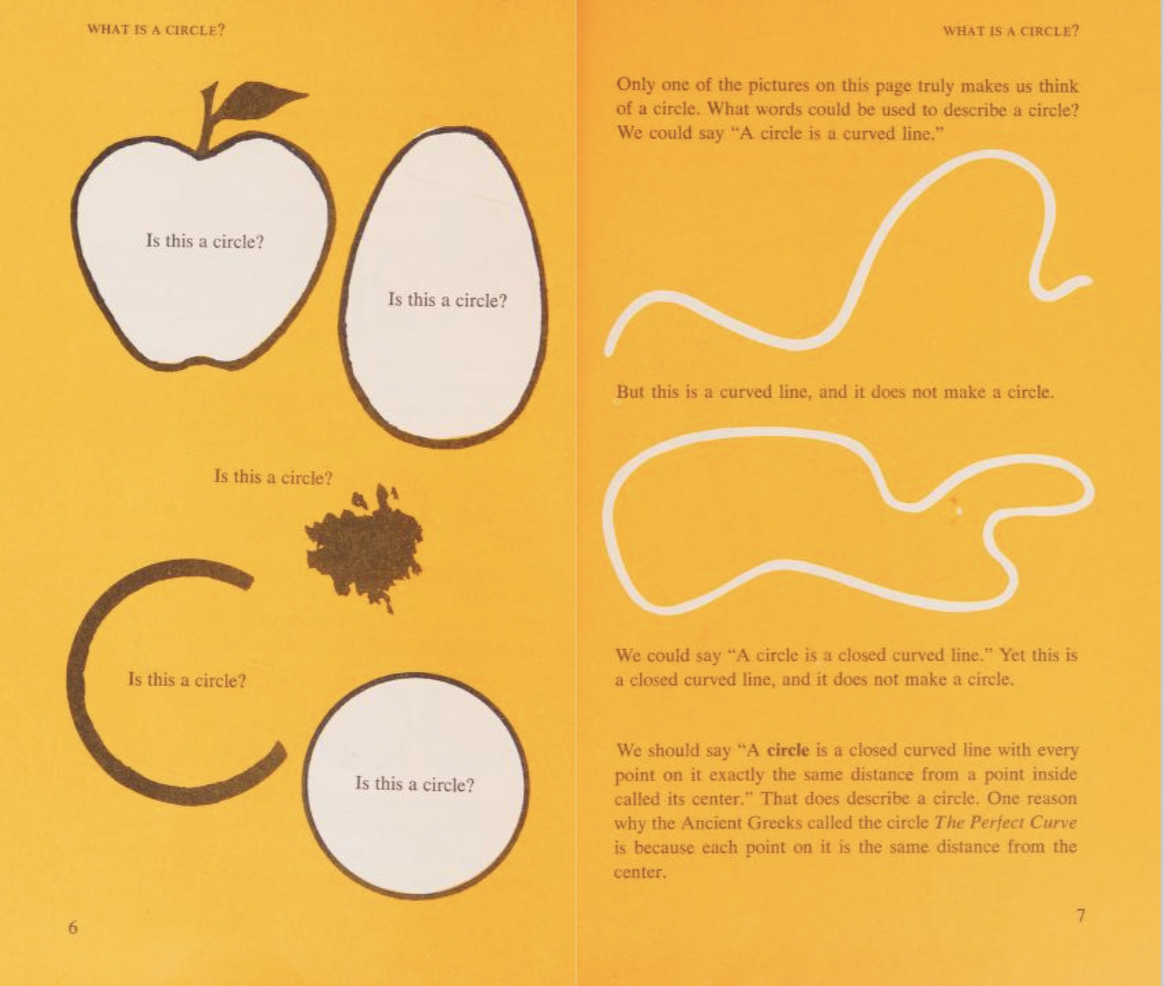
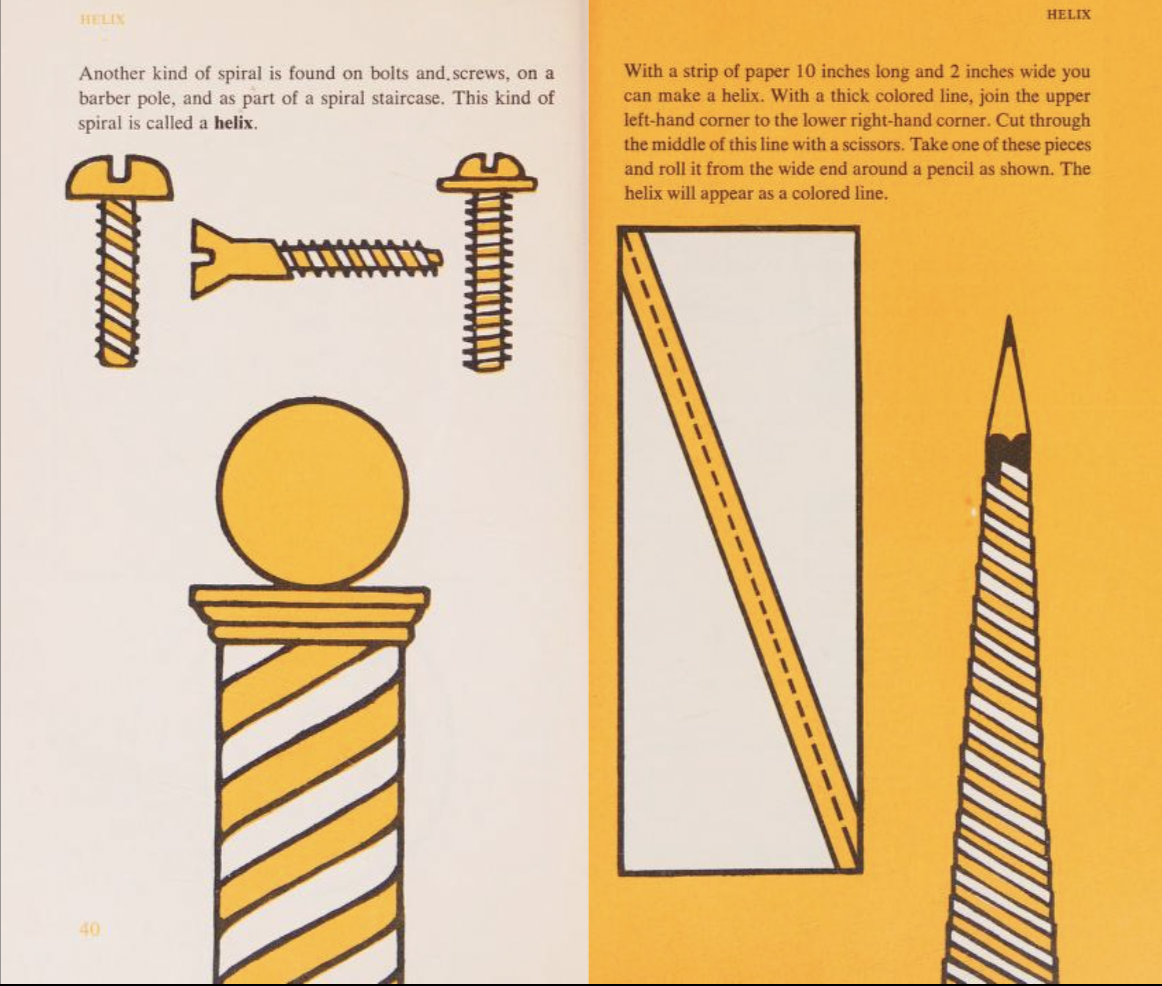
Circles and Curves. By Arthur G. Razzell and K. G. Watts, 1969 (illustrator only)
A book of math and puzzles with illustrations by Raskin
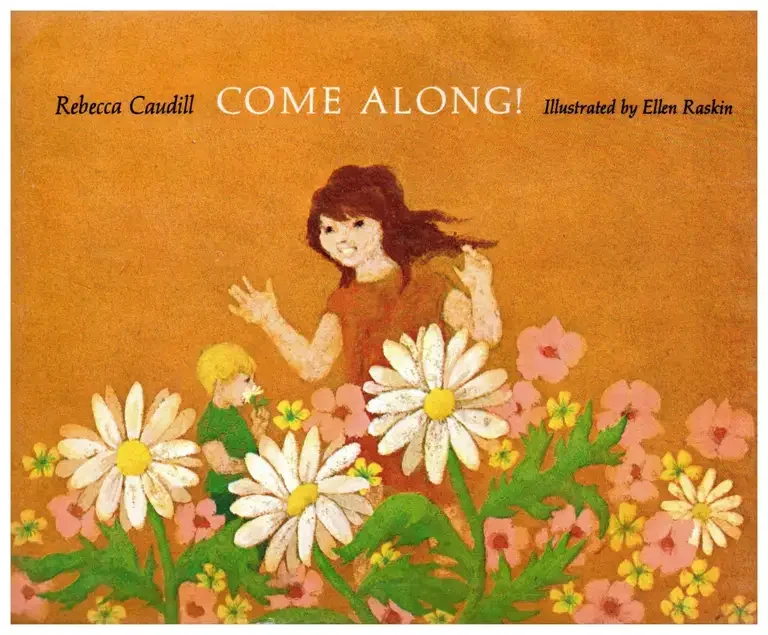
Come Along! By Rebecca Caudill. Holt, 1969 (illustrator)
A picture book of poems about collecting the small moments through the seasons
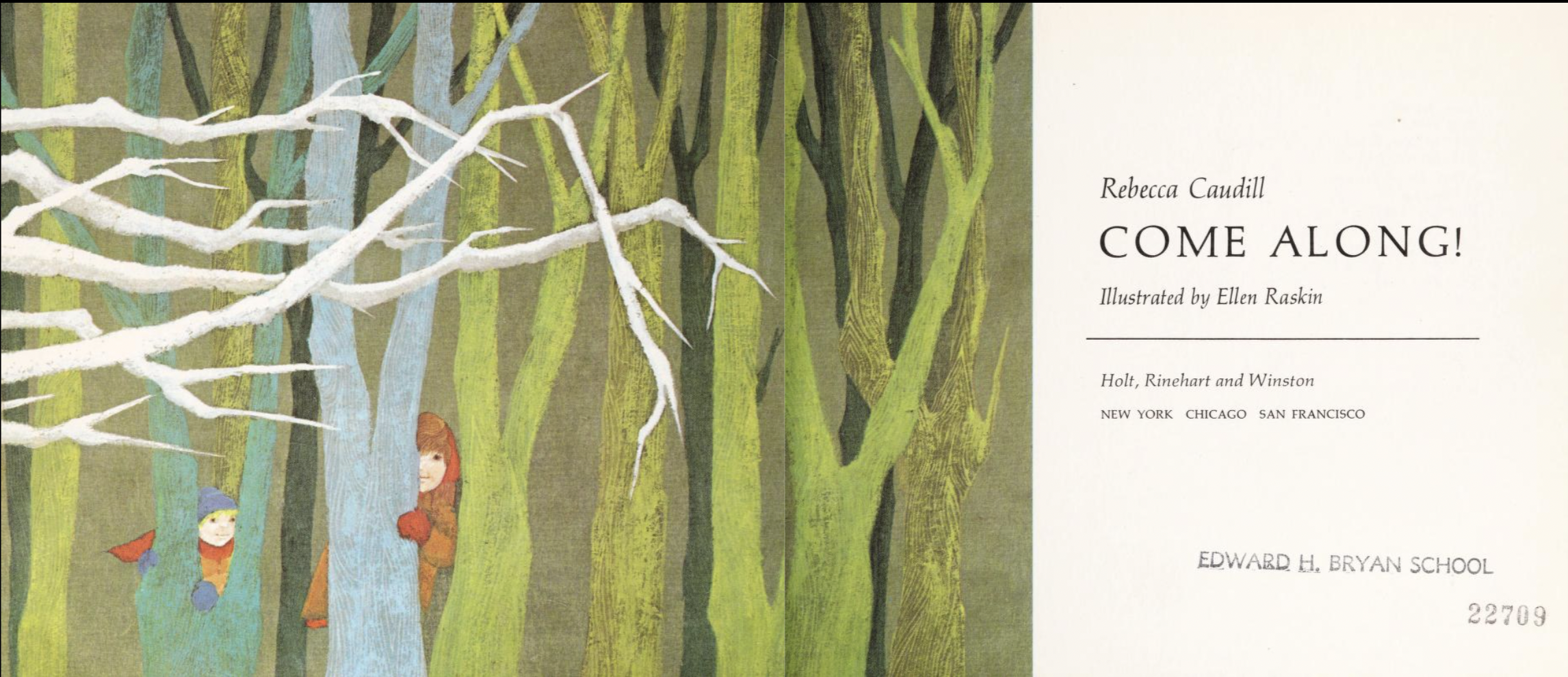
I didn’t love all of the illustrations but I thought this opener was stunning
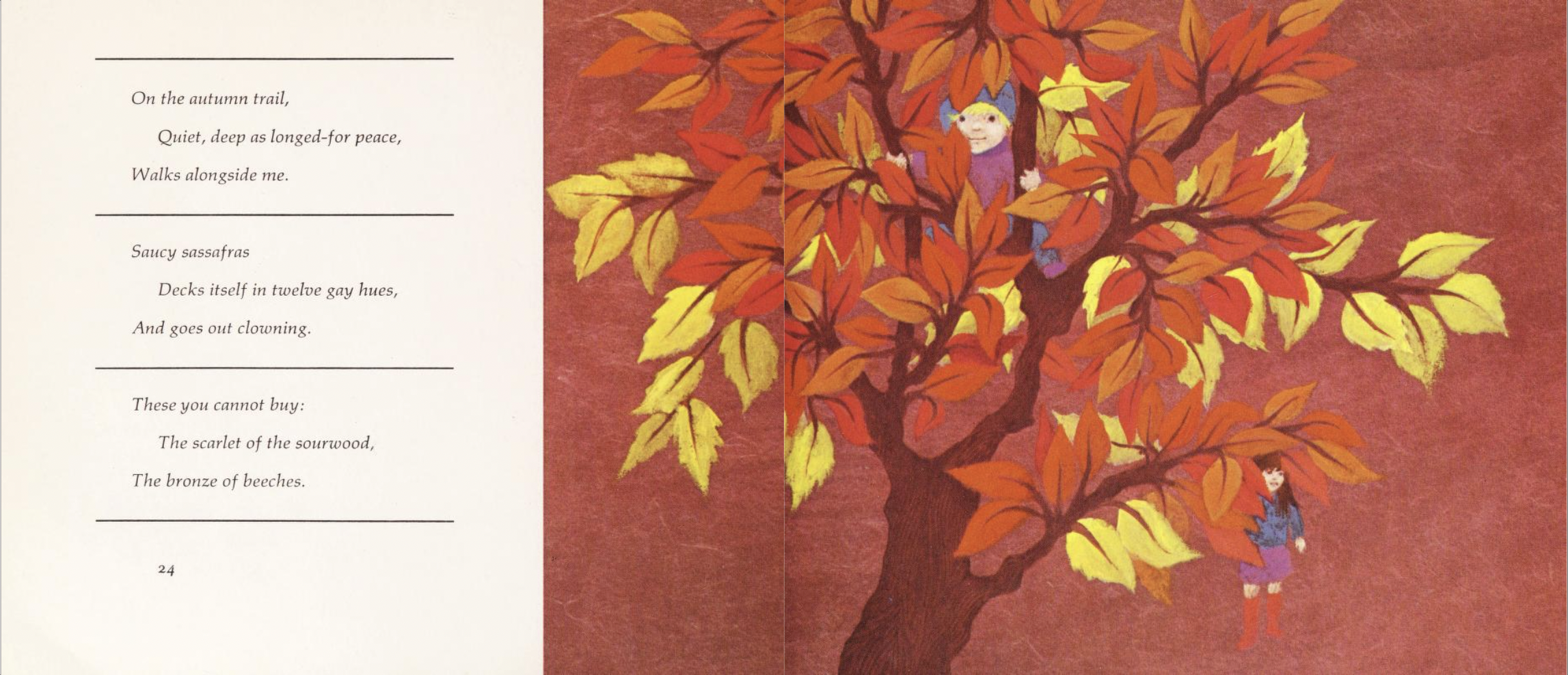
And same with this fall one.
Illustrator bio: Ellen Raskin’s work as illustrator and designer has brought her many awards, including the New York Herald Tribune Spring Book Festival Award for Nothing Ever Happens on My Block (1966), and the American Institute of Graphic Arts award for Songs of Innocence as one of the Fifty Books of the year (1966). Author-illustrator of several children’s books, Miss Raskin makes her home in New York City.
Shrieks at Midnight: Macabre Poems, Eerie and Humorous. Edited by Sara and John E. Brewton, 1969 (illustrator only)
A book that gave Raskin a chance to explore her darker side
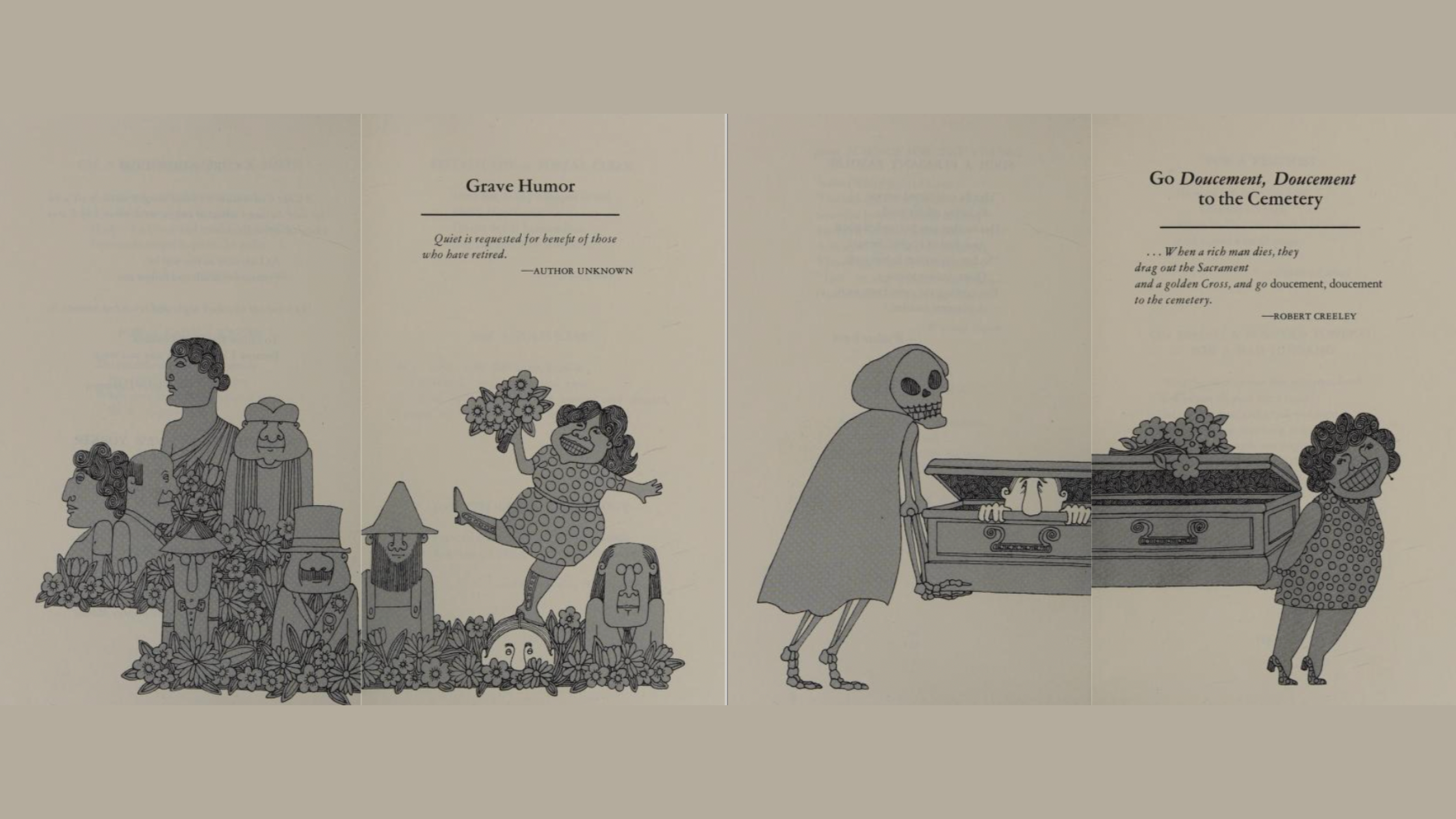
We’ve got a lady dancing on her husband’s head in a graveyard. And a casket carried by death.
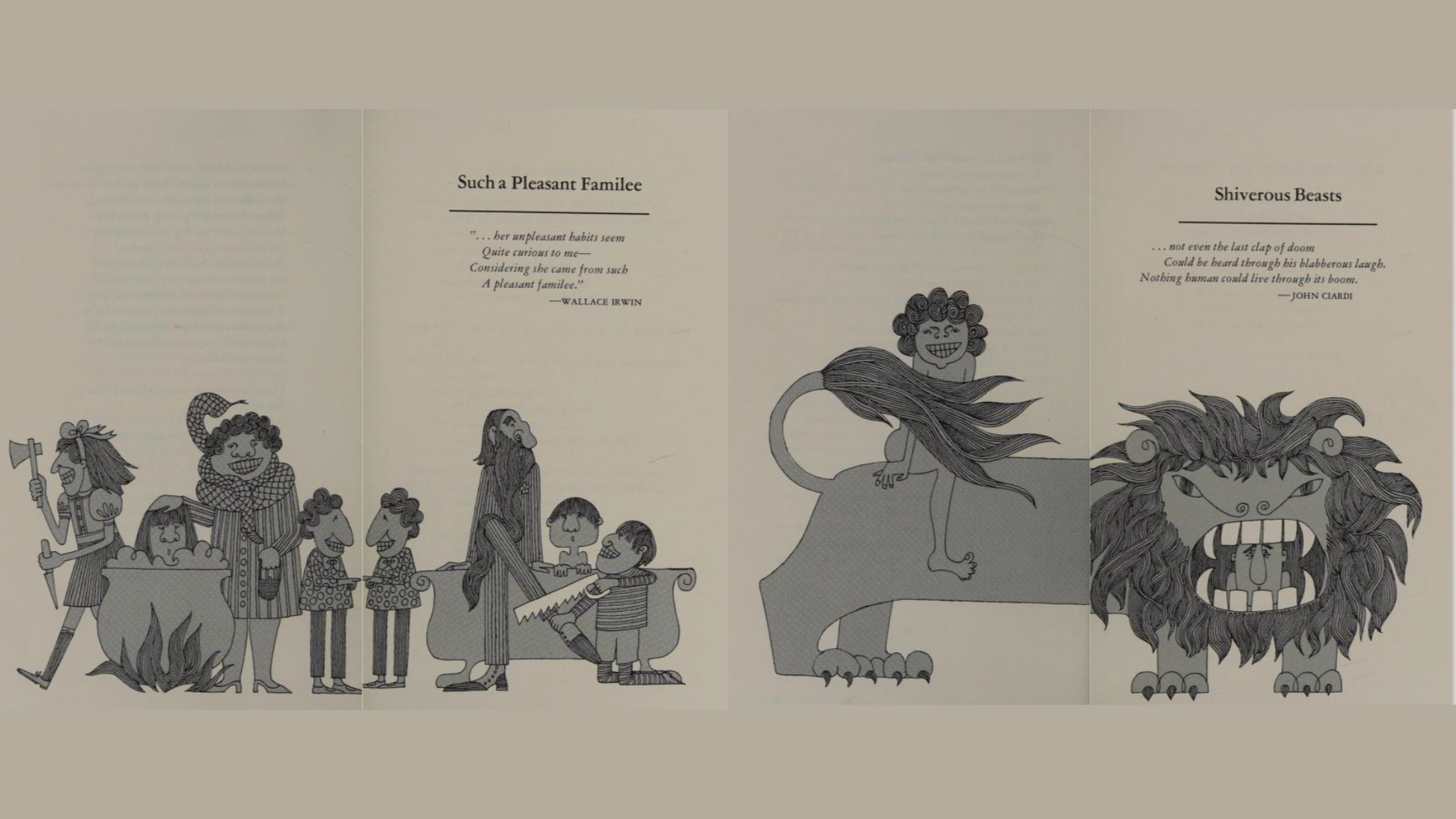
We’ve got a kid sawing off a leg and a lion and (gasp) nakedness.
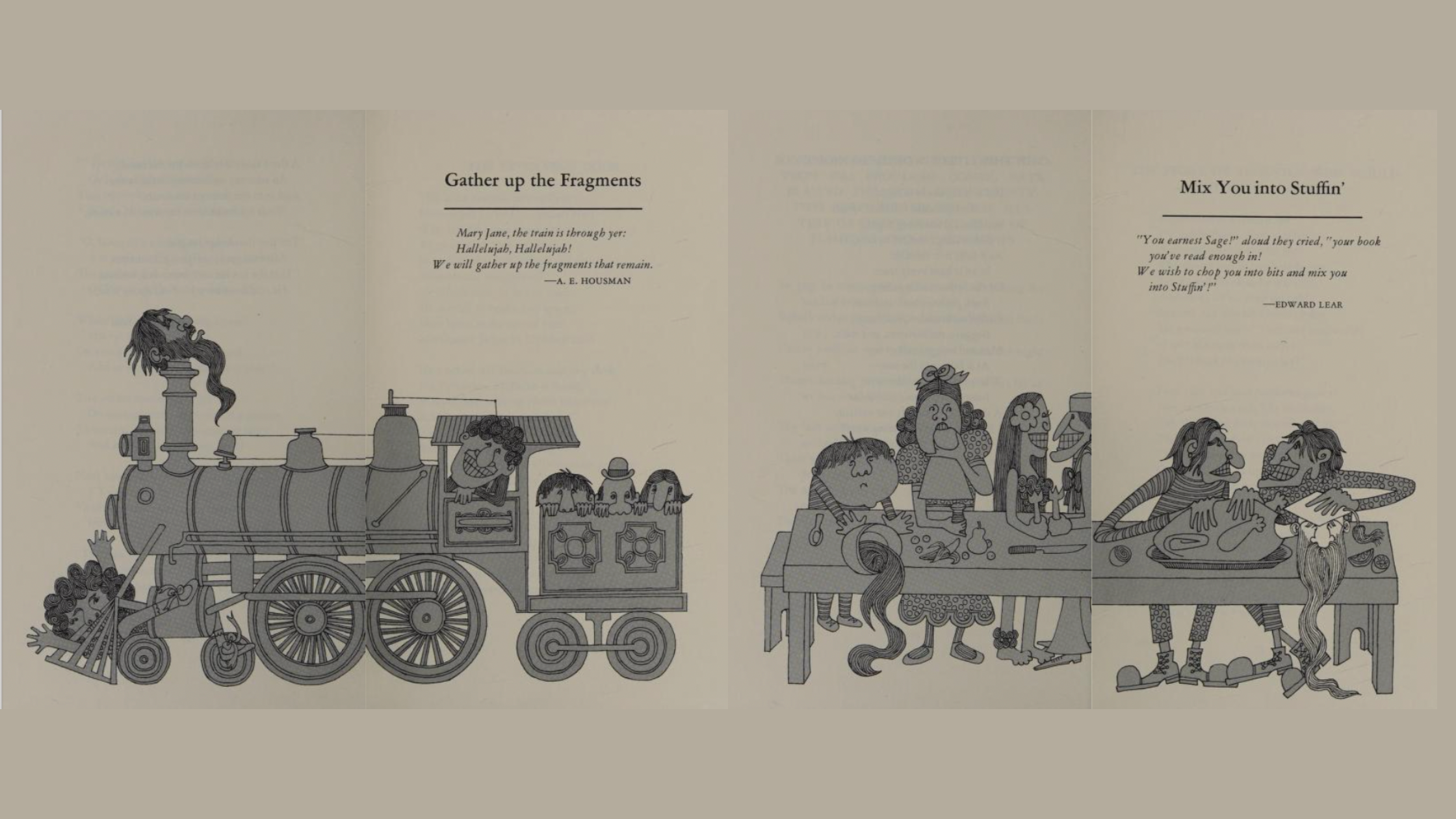
Someone being run over by a train and cannibalism…
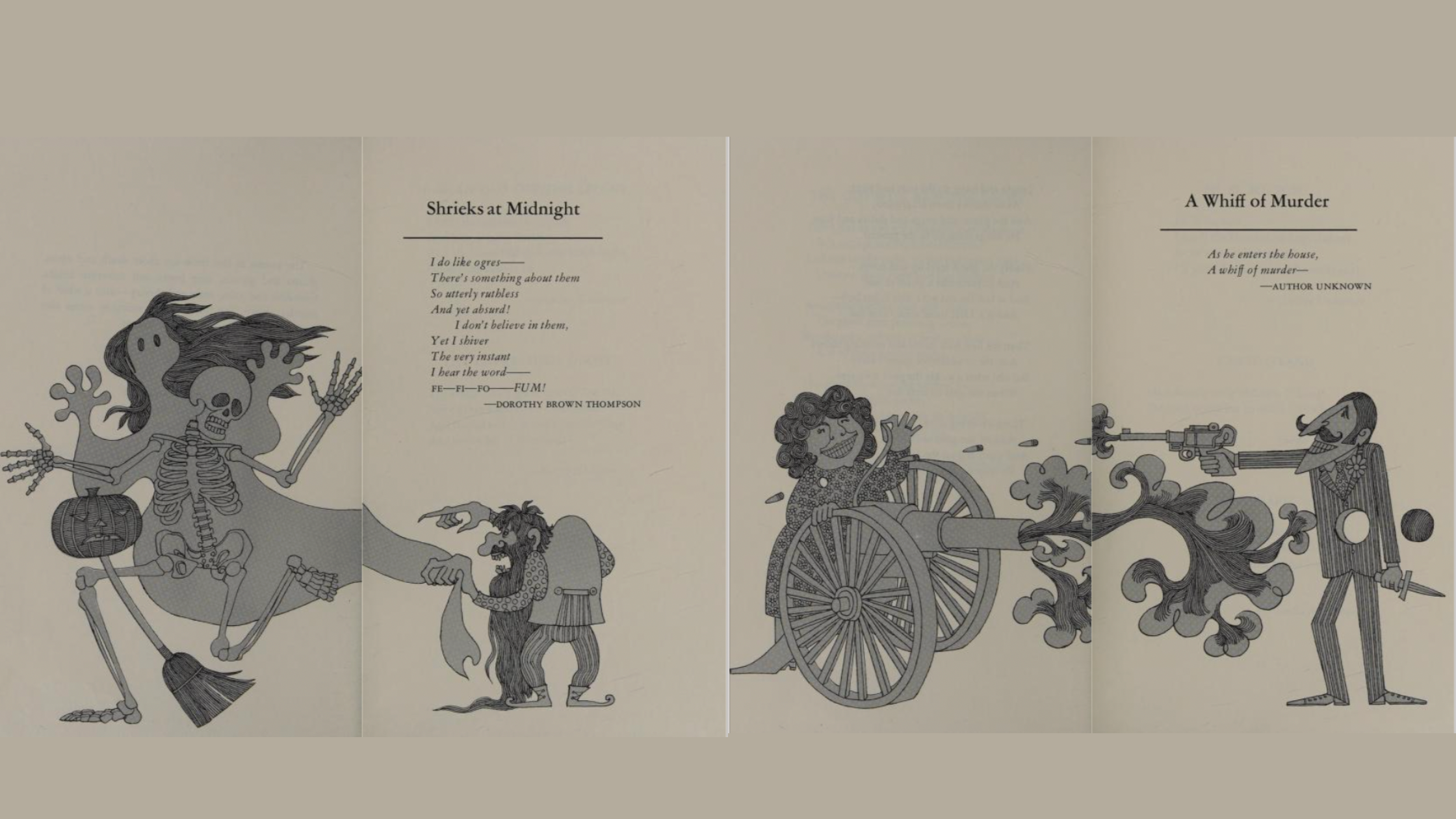
Creepy things and violence. I think she had fun.
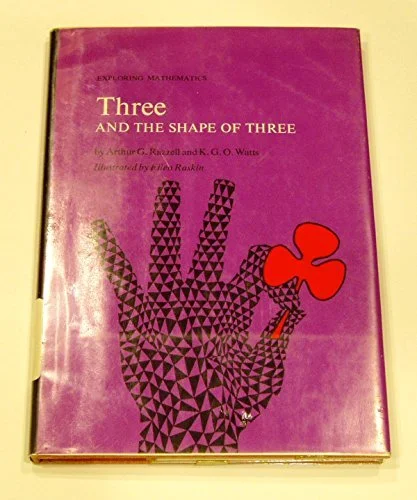
Three and the Shape of Three. By Arthur G. Razzell and K. G. Watts, 1969 (illustrator only)
Could only find the cover
Ghost in a Four-Room Apartment, 1969 (author and illustrator)
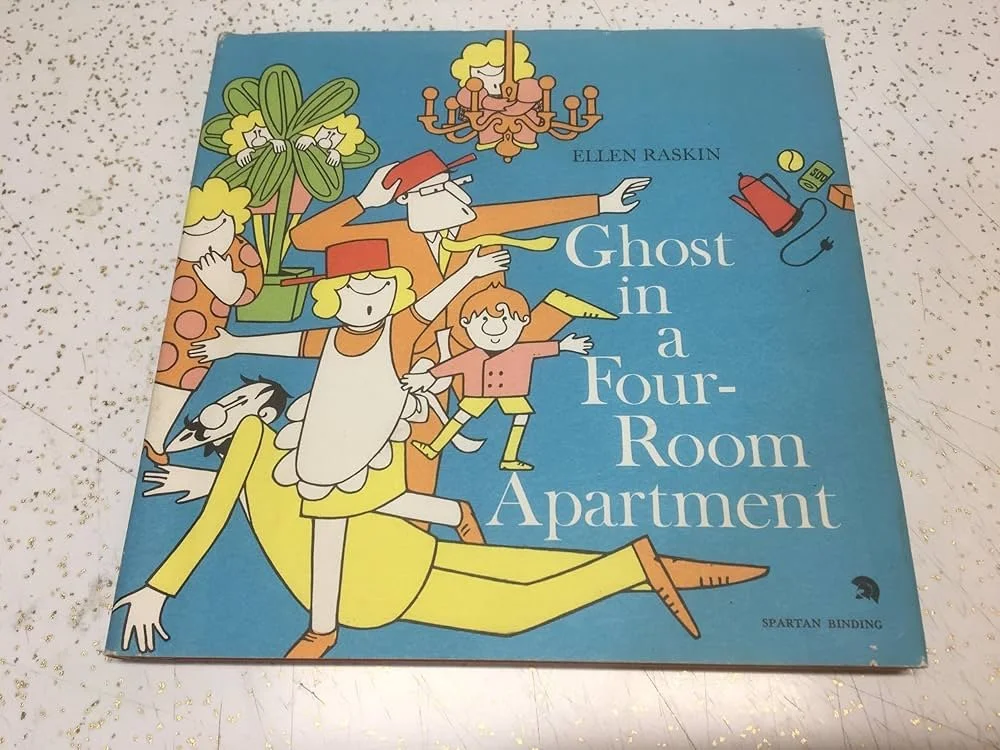
This picture book is a build-on story in the spirit of The House that Jack Built, but it has two contrasting viewpoints. The typical narrator and then the poltergeist that is messing with the family as they arrive. I was confused by the ending (if you have theories, please share), but I do love the interiors Raskin designed.
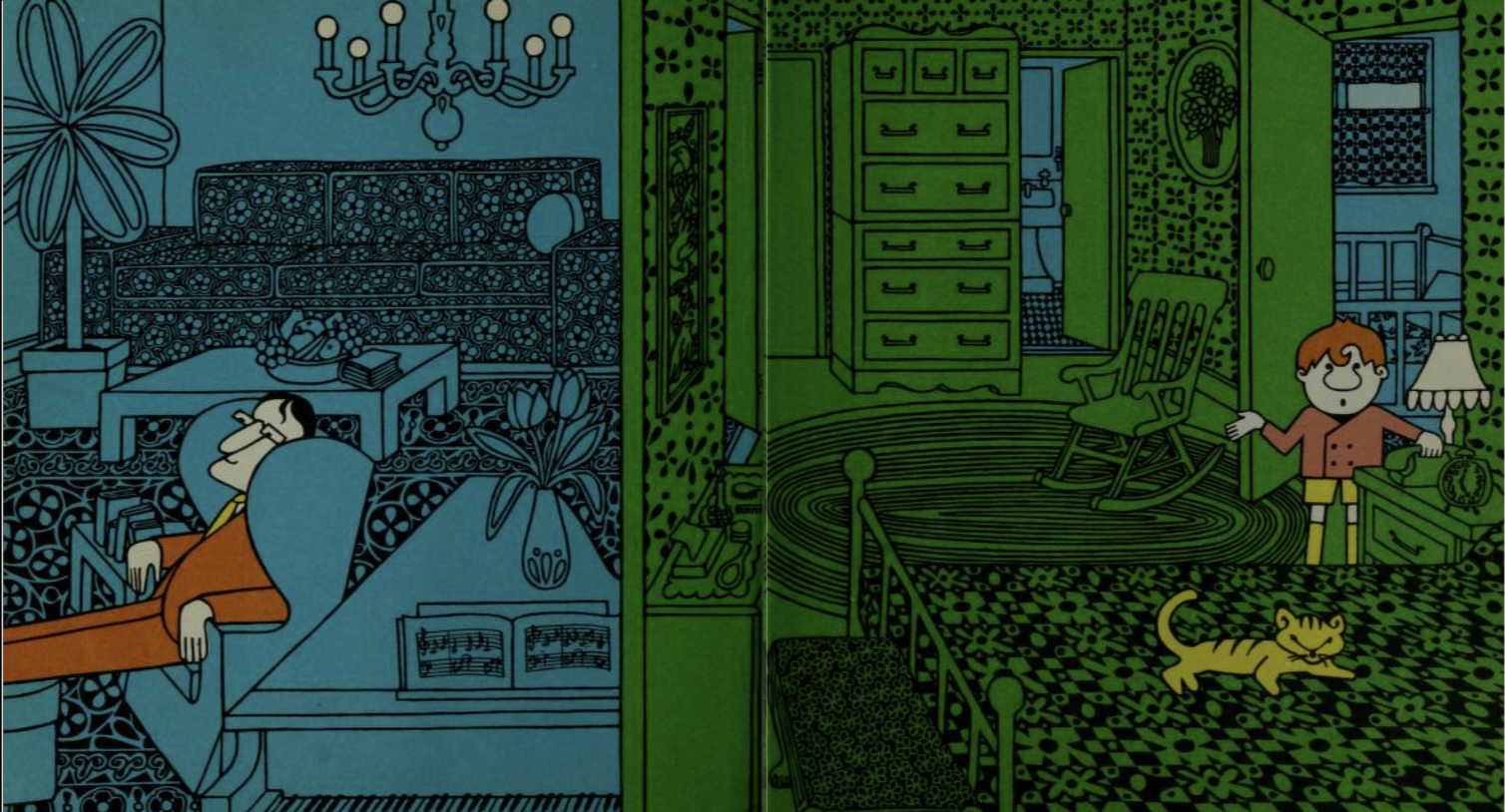
She first establishes the visual norm with these wonderful rooms.
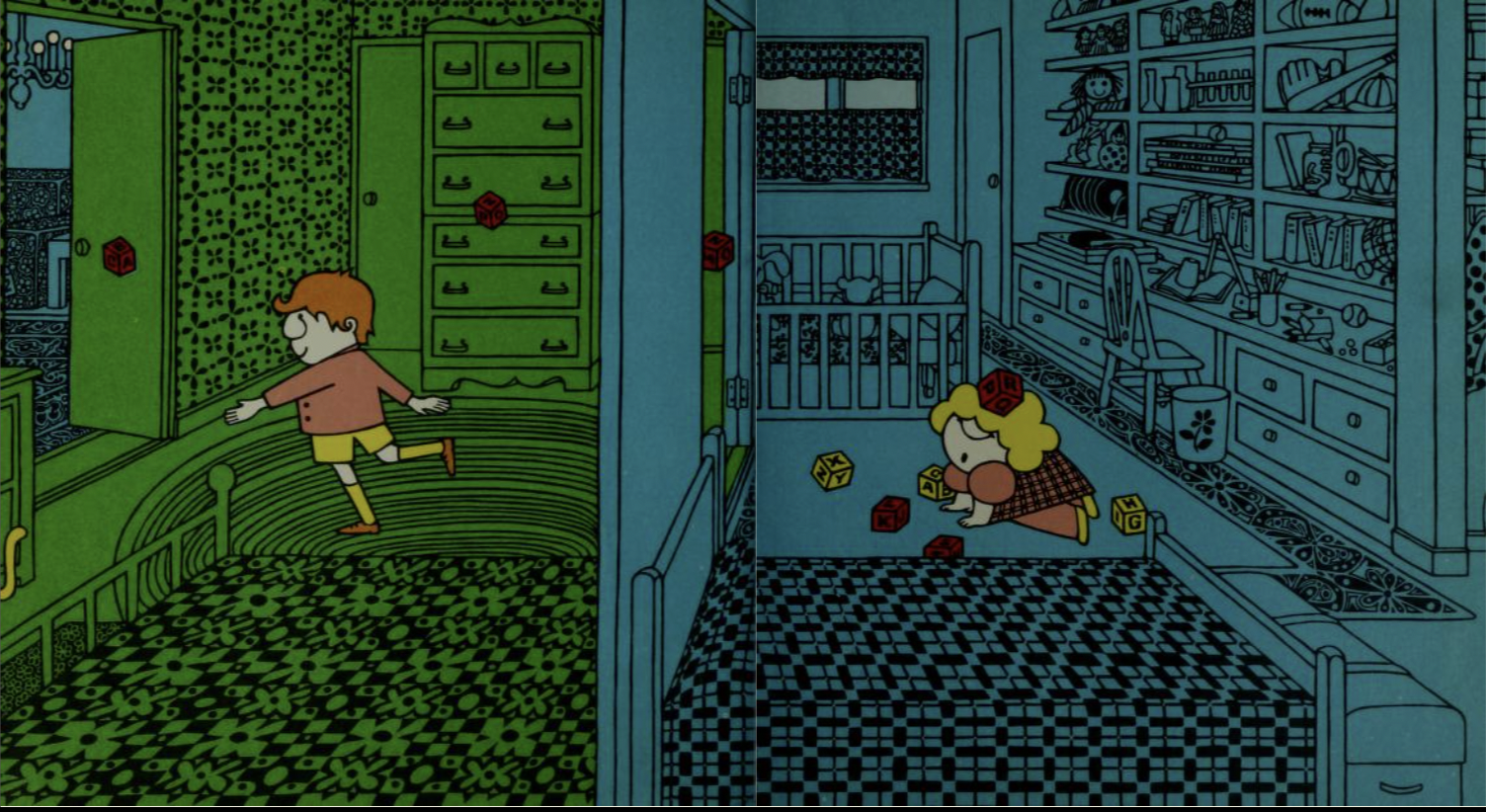
I want cool wallpaper and look at that book shelf!
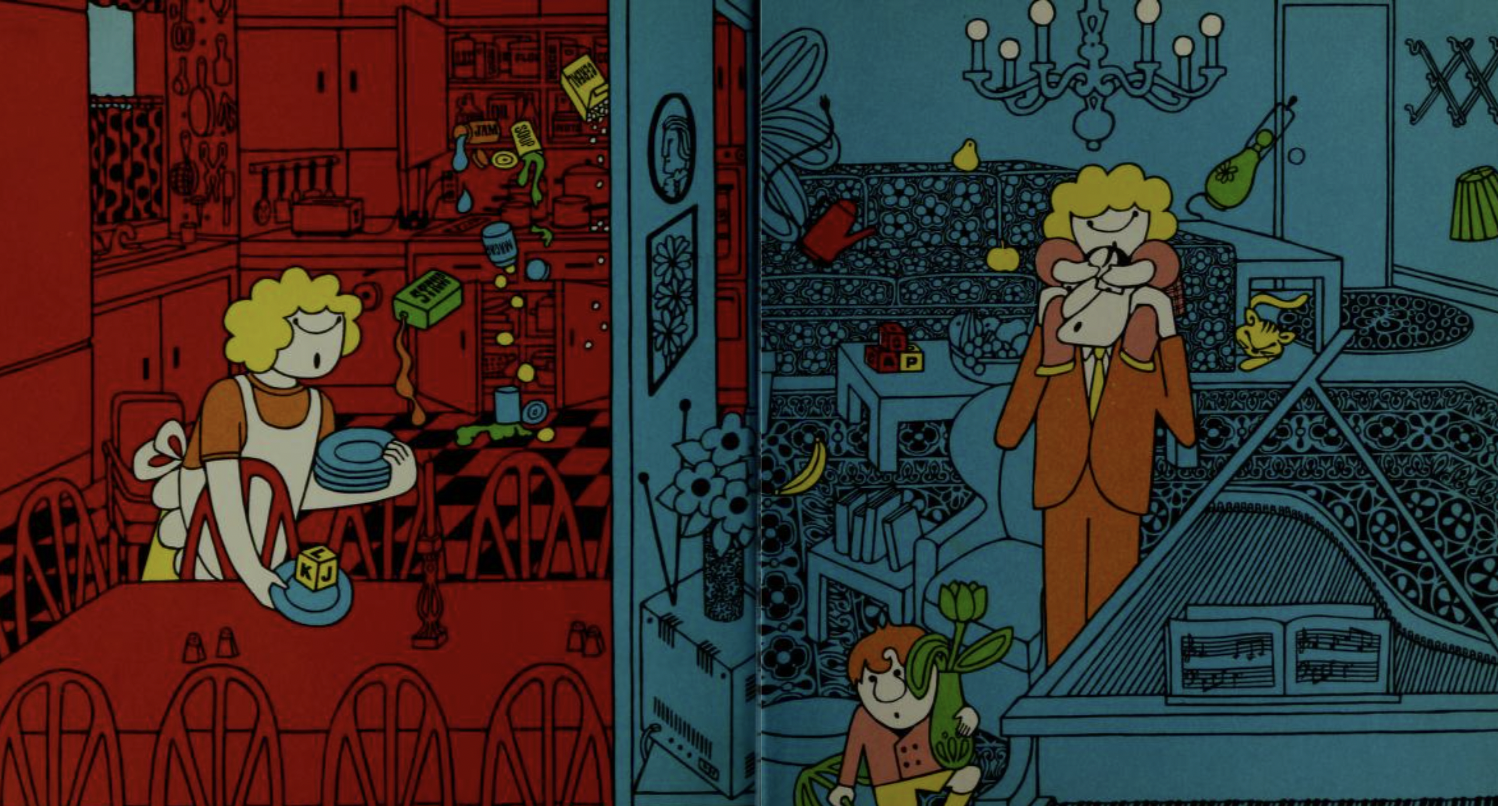
Then against the backdrop of color, we see the characters dealing with the shenanigans of the poltergeist.
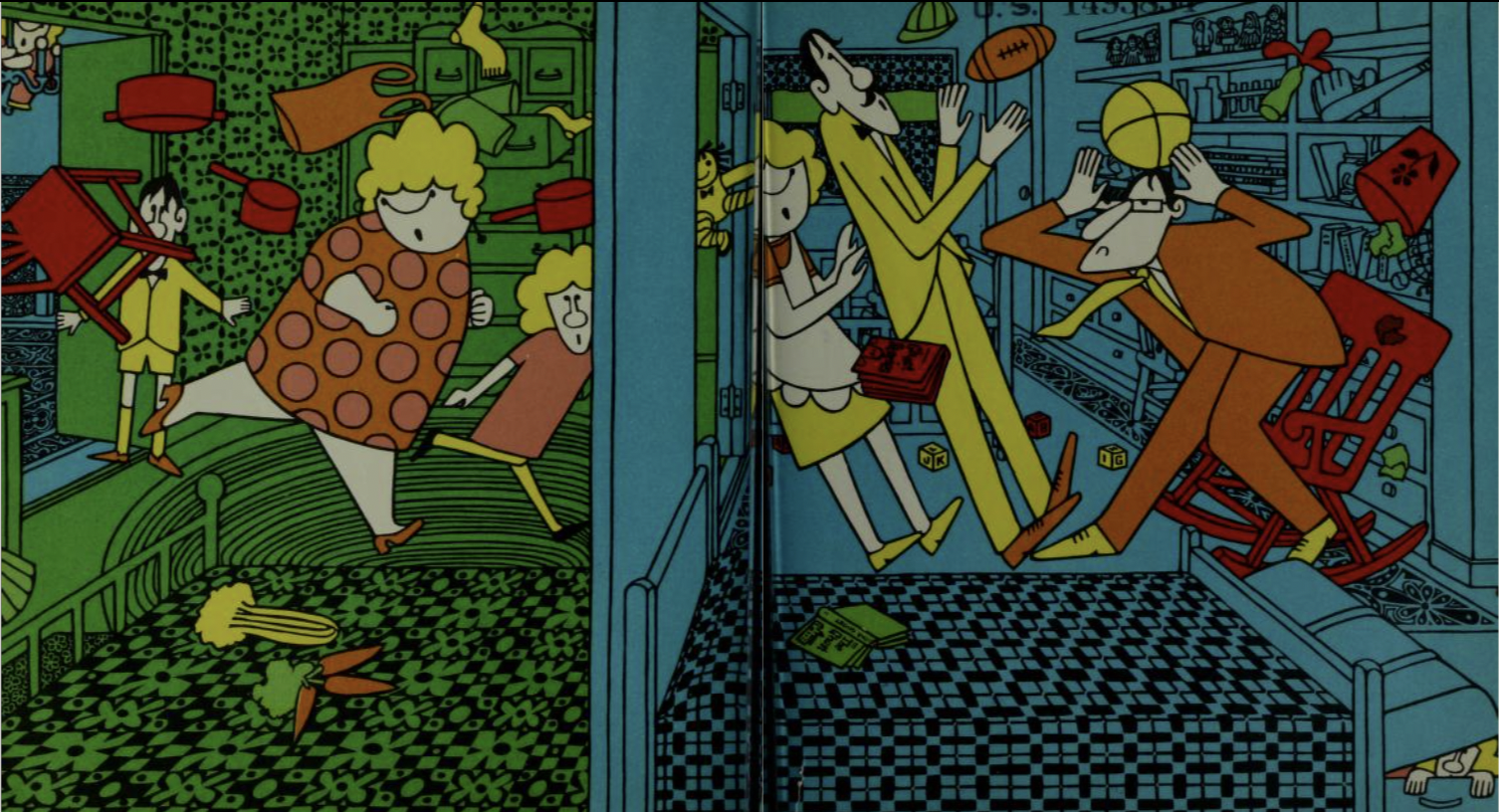
It keeps getting worse.
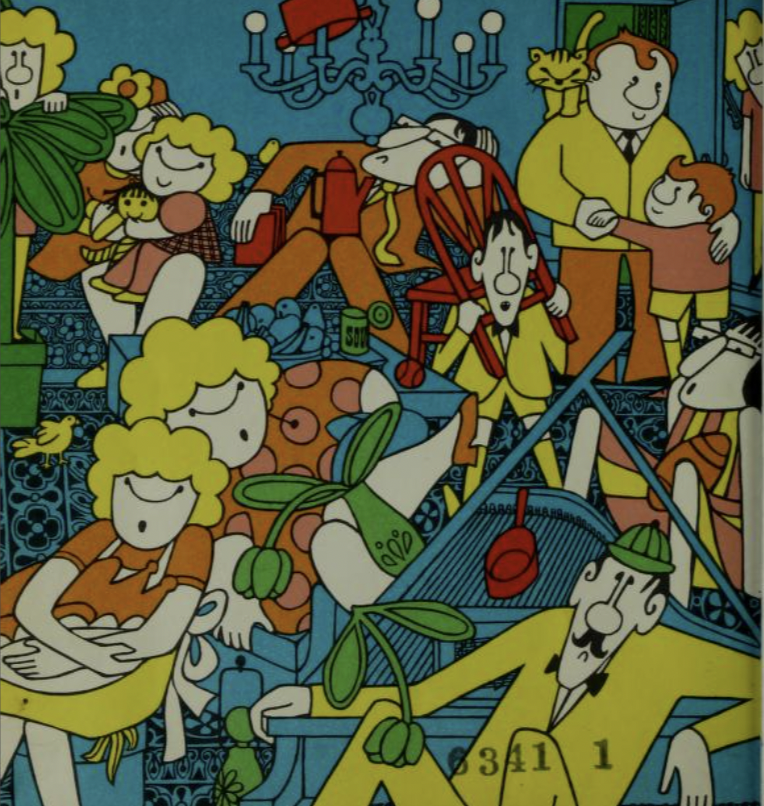
And stays that way until the end. The ending feels like a mystery to me. Is it implying the poltergeist is actually Boris who loves the main character Horace? But that also wouldn’t make sense because the poltergeist was saying they were going to leave to not get Horace in trouble. Anyway, please help.
Dedication (which is in the two voices of the book like the poltergeist copying the reader): “This book is dedicated to all parents, librarians and teachers who will read this story aloud in two voices.” “This book is dedicated to all parents, librarians and teachers who will read this story aloud in two voices.”
And It Rained, 1969 (author and illustrator)
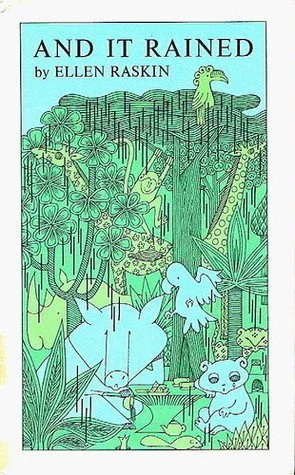
This picture book is about a cast of animal characters who have a tea party that keeps getting ruined by the rain. After each character comes up with an idea, the tea party is saved (mostly).
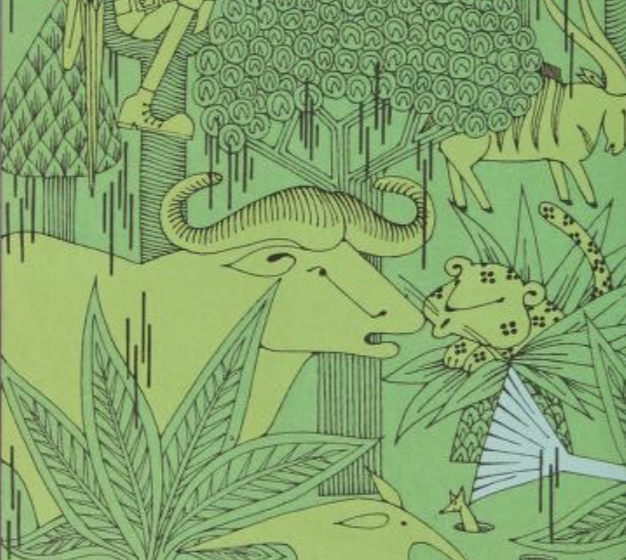
To be honest with you, though it won awards, the story was not my cup of tea. But I love the colors and patterns, and isn’t this the cutest little leopard you’ve ever seen?
On the title page: “Ellen Raskin presents the pig, the parrot, the potto, and an all-star cast of characters in And It Rained.”
Dedication: “This book is for Claire, Irene and Marianne”
Bio: “Ellen Raskin does not have to worry about weak tea at four, because she does not live in a tropical rain forest. Instead she lives in New York City with her husband, Dennis, and sometimes with her daughter, Susie, who is sometimes away at college.”
Awards: ALA Notable Children’s Book (1969) and Library of Congress Children’s Book (1969)
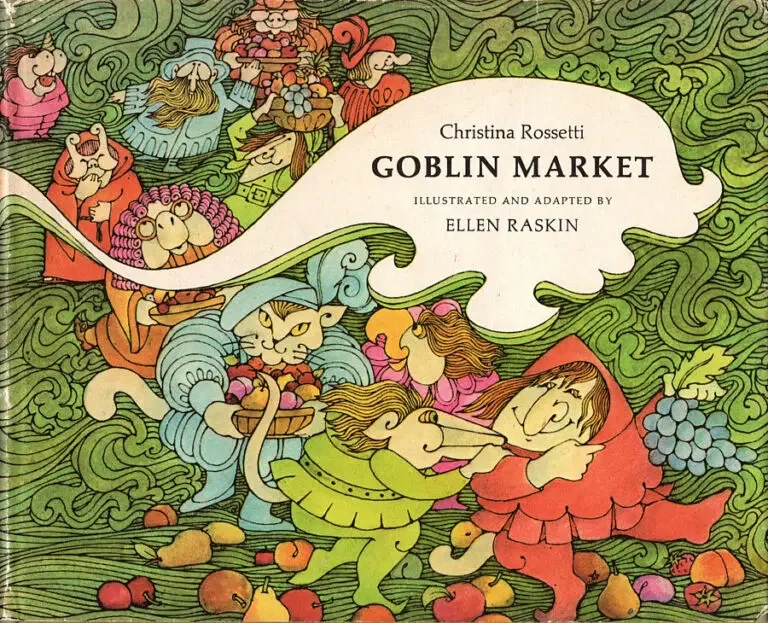
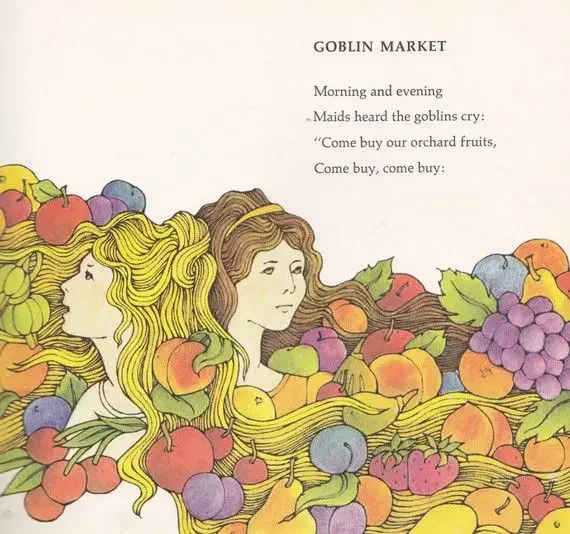
Goblin Market. By Christine Rosetti, 1970 (illustrator only)
Only found a few images
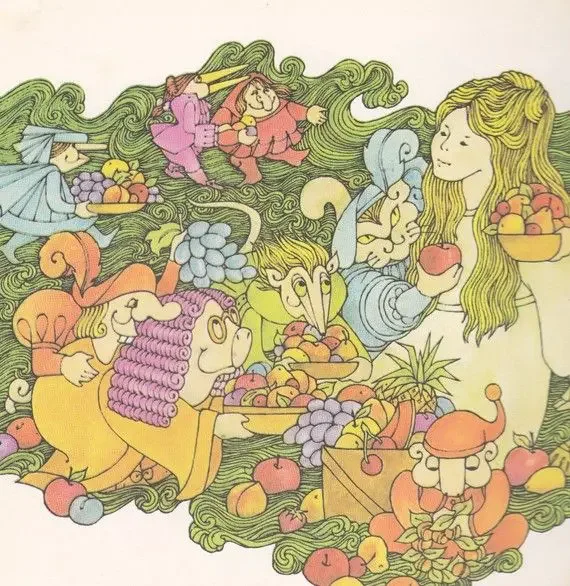
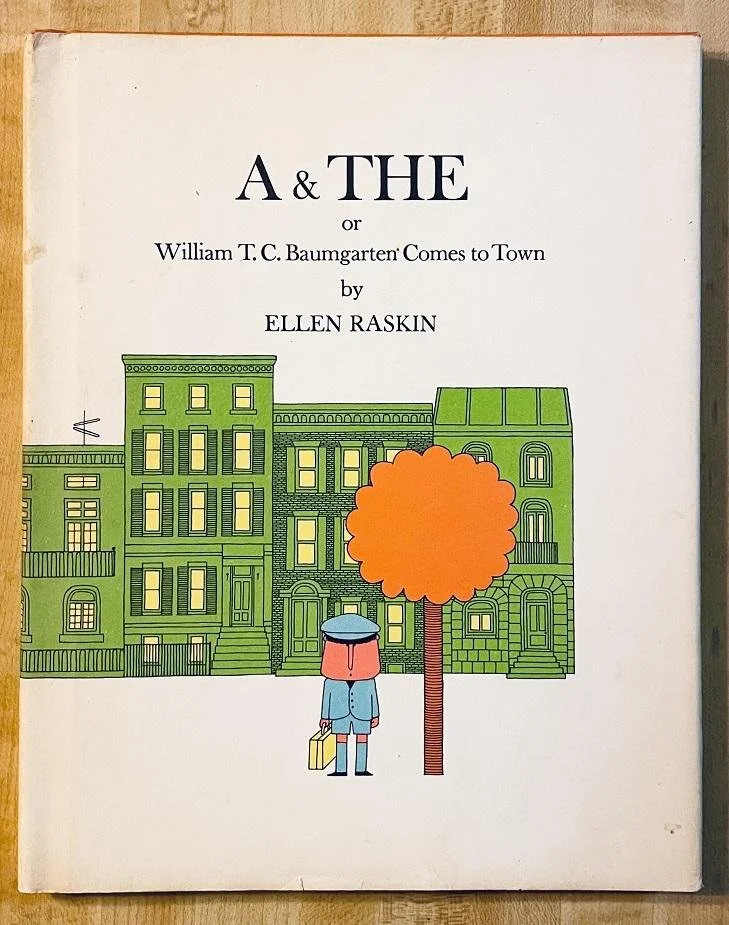
A & The, or, William T. C. Baumgarten Comes to Town, 1970 (author and illustrator)
In this picture book, a group of kids learn that their new neighbor is named William T. C. Baumgarten and are determined to find out what those letters stand for. Along the way, readers are encouraged to recognize “the” and “a.”
Now I may be wrong, but I think there was a shift in picture books around the 1970s as people were exploring how to help kids learn how to read in more interesting ways (especially because the old “learn how to read” books were super boring!). I can see Raskin made this book with so much love for readers, and she wanted to give kids moments of celebration on each page. Plus a way to not be scared when they saw big blocks of text.
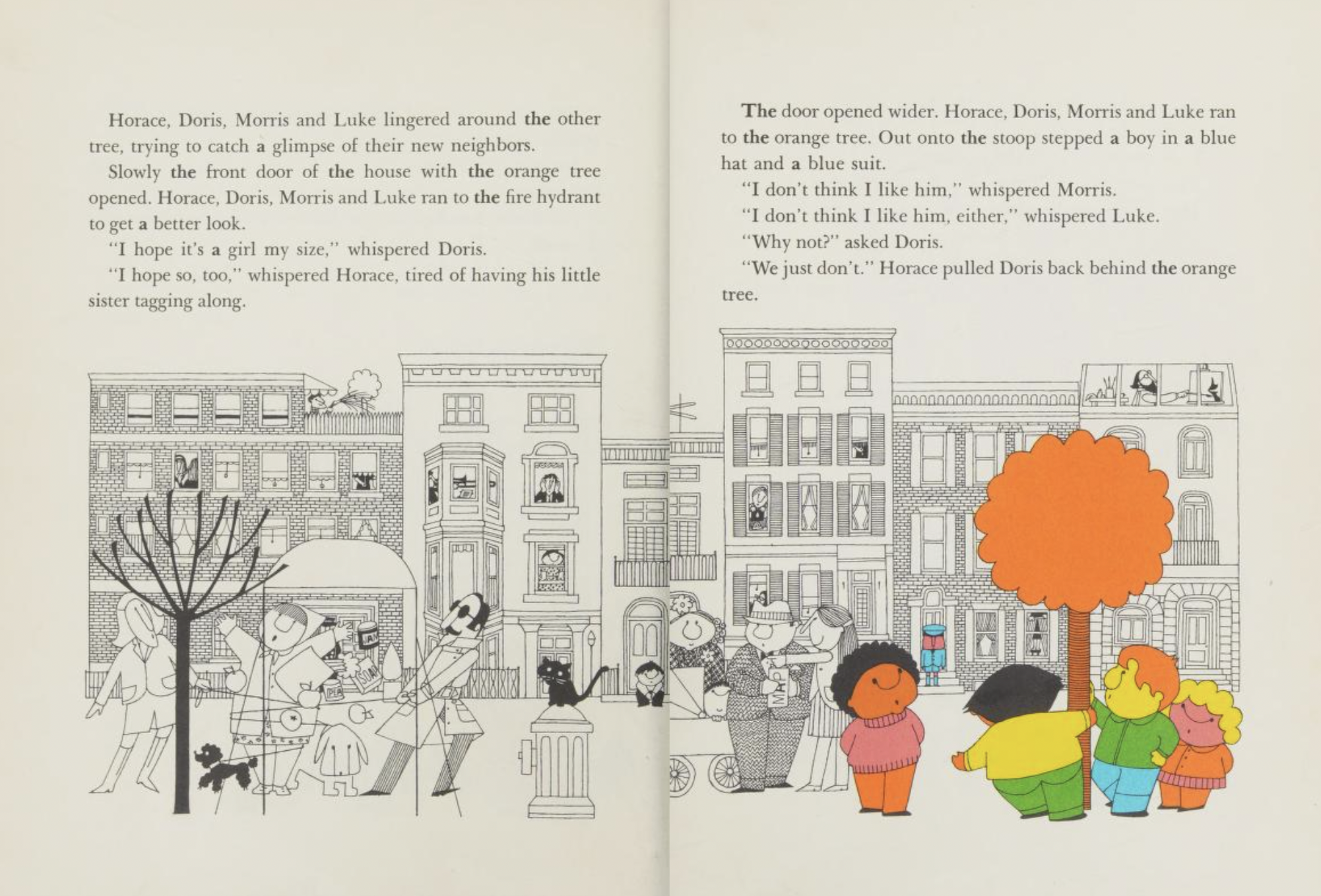
What a pitch perfect moment when they’re asked why they don’t like the new kid they don’t even know, and they say, “We just don’t.”
With all that in mind, if I were to evaluate this as an early reader of that time period, I’m guessing it would be a WAY better experience than a lot of kids were having in school. Still, as a picture book, the story didn’t feel like it fit the form very well. But I DO appreciate the experimentation, and I love seeing Raskin playing with the boundaries between formats all throughout her books. It’s really cool to see creators push the boundaries of what picture books are, because it is still a fairly new form with so many untapped possibilities.
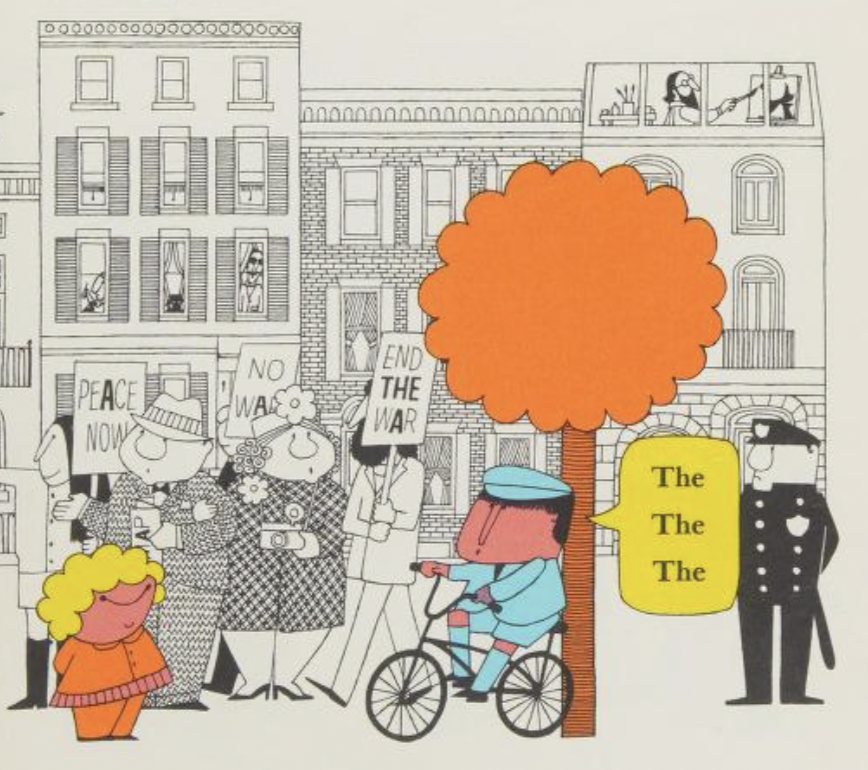
William’s lil’ outfit is the cutest! I love his long nose!
Dedication: “This book is dedicated to everyone who can read an and the. “A looks like this a or like this A or like this a.” “THE looks like this The or like this the or like this The or like this the.”
Bio: “Ellen The Author Raskin has also written Nothing Ever Happens on My Block, Silly Songs and Sad, Spectacles, Ghost in a four-Room Apartment and And It Rained.
Ellen The Artist Raskin has illustrated many other books by various authors. She studied at the University of Wisconsin and was an award-winning commercial artist before she began making children’s books.
Ellen The A. Raskin was born in Milwaukee and now lives in New York City with her husband Dennis Flanagan and her daughter Susan.”
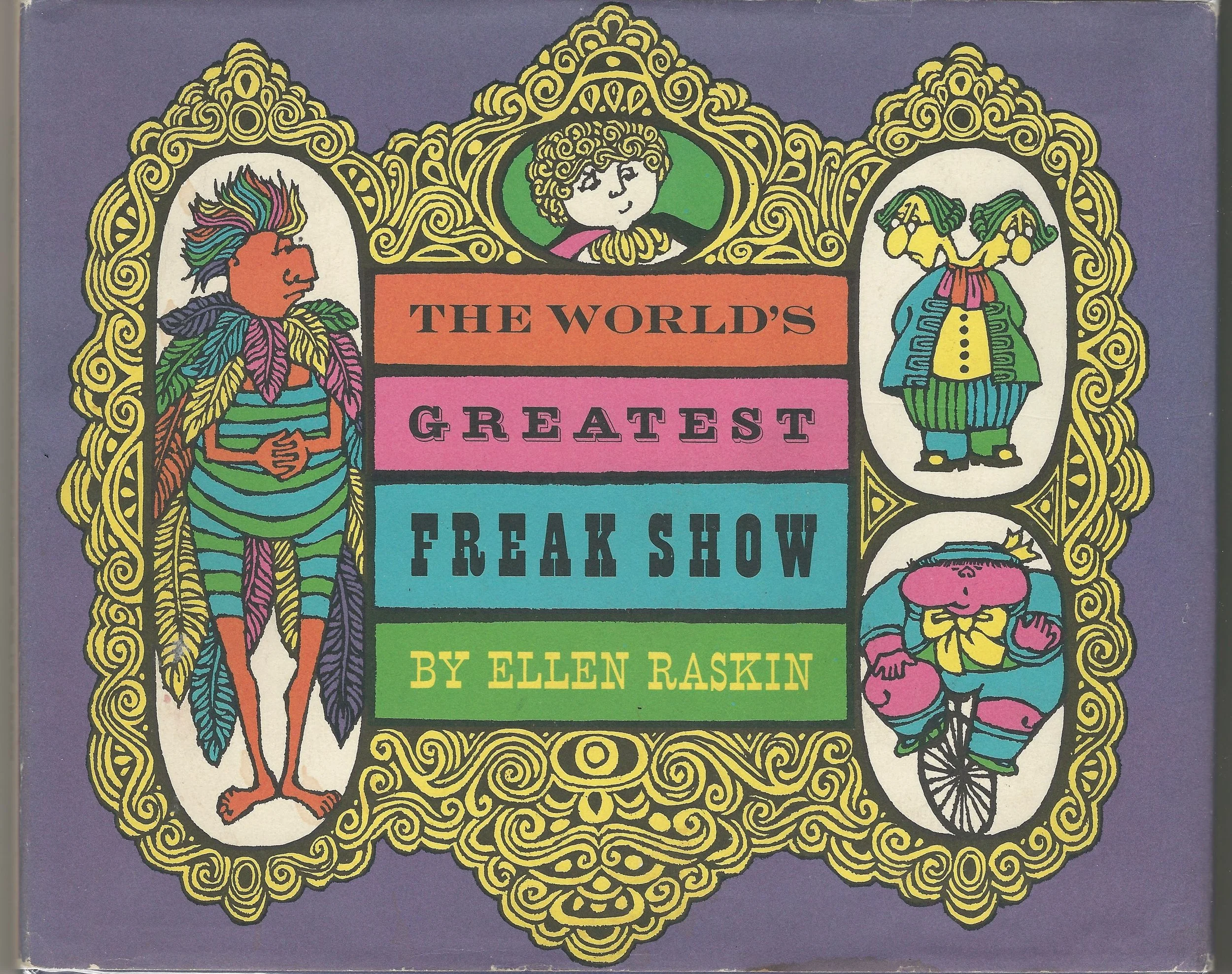
The World’s Greatest Freak Show, 1971 (author and illustrator)
Haven’t been able to find this one yet, but here is the cover!
The Mysterious Disappearance of Leon (I Mean Noel), 1971 (author)
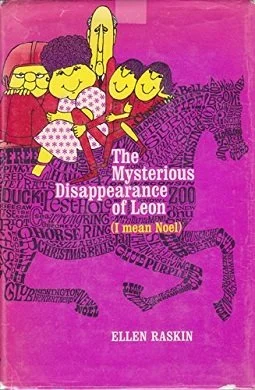
I’ve never read another novel like this! Okay, so the story starts with two families who are very poor and come up with a genius soup that changes everything. To make sure the money stay between the two families, they end up legally marrying their two children. The girl is called Mrs. Carillon from then on, and her husband Leon goes to boarding school. They don’t see each other for years, but they write letters until Leon writes her a letter to meet. During their meeting, he almost drowns while telling her an important message, she falls and hits her head, and she wakes up in the hospital to find out that he already left. She devotes the rest of her life to trying to find him by deciphering his final words to her. Along the way, she adopts twins and reconnects with an old friend who all help her solve the puzzle and reclaim her life.
Like I’ve said before in this post, Ellen Raskin is innovative and experimental; those qualities shine in this book. It is part puzzle, part story.
About the author: Ellen Raskin has three names. She has written seven books and illustrated twenty more under her first two names: Ellen Raskin. At other times she is known as Mrs. Flanagan because she is married to Dennis Flanagan, editor of Scientific American, who dumped her out of a sailboat on their honeymoon.
About the book: The word-pictures were drawn and lettered by the author in pen and ink. The display type is Craw Clarendon Condensed and the text type is Times roman. The book is printed by offset.
Book jacket copy: The Mysterious Appearance of Ellen Raskin (in long-book form) — Ellen Raskin, alias Ellen Flanagan. Height: 5’4” Weight: 108. Age: ? Hair: Yes. Eyes: Nearsighted. Occupation: Author/Illustrator of dhilern’s books. ILlustrator. Possible Disguise: Novelist. Last Seen: Running through Washingotn Square Park shouting, “I did it!” Dangerous! May be carrying a lion. Anyone wanting her to reappear should notify: E.P. Dutton & Co., INC.
Awards: ALA Notable Children’s Book, 1971; Children’s Book Showcase, 1972; Library of Congress Children’s Book, 1971
Franklin Stein, 1972 (author and illustrator)
I got so excited when I read this picture book, because I could see hints of The Westing Game. A group of imperfect characters who all stay themselves, though things in the book change their circumstances. Snappy dialogue. A witty twist at the end. Yes!
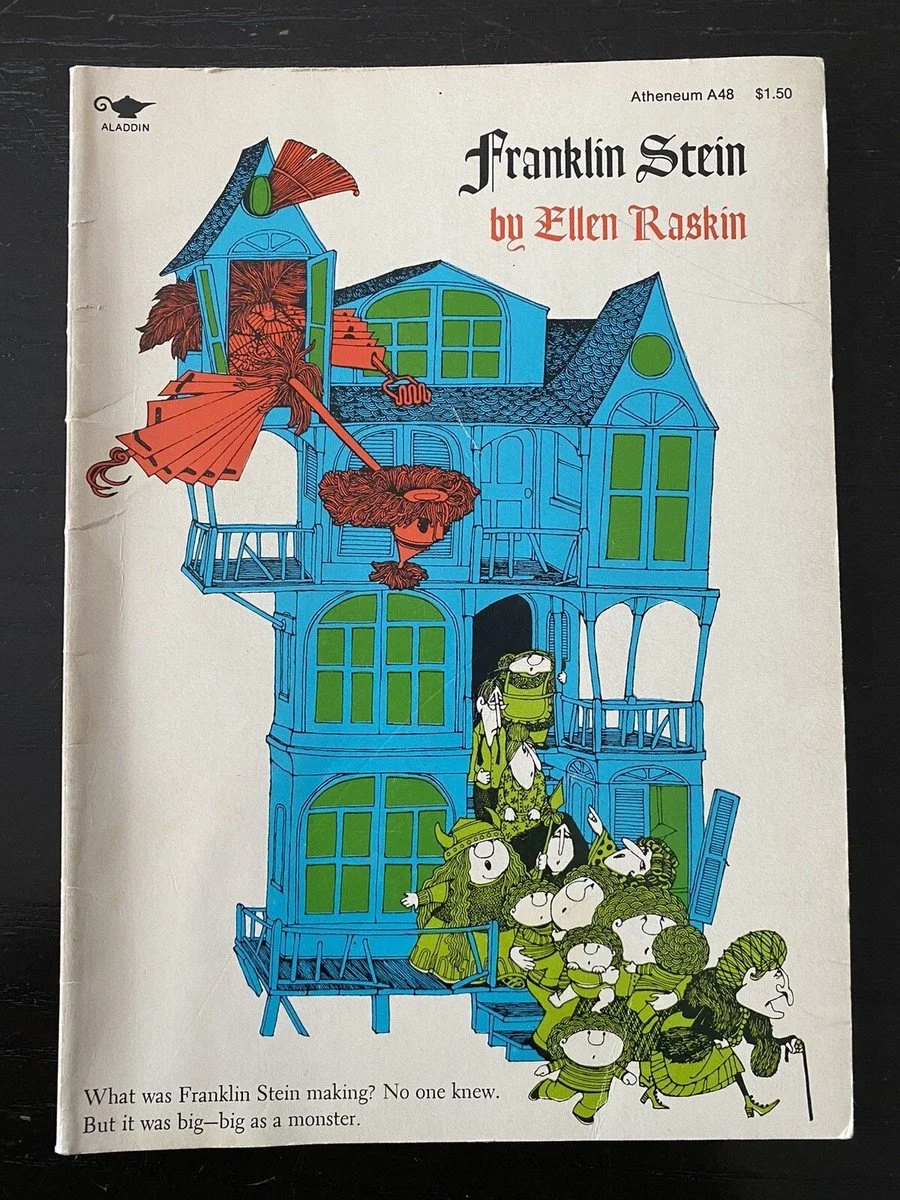
Franklin who builds something no one deems lovable except him—until it wins an award. But he eventually finds someone who sees him and his creation as lovable all along, and they embark on an adventure off the page that hints at another great work of literature. (It has to do with wordplay, of course.)
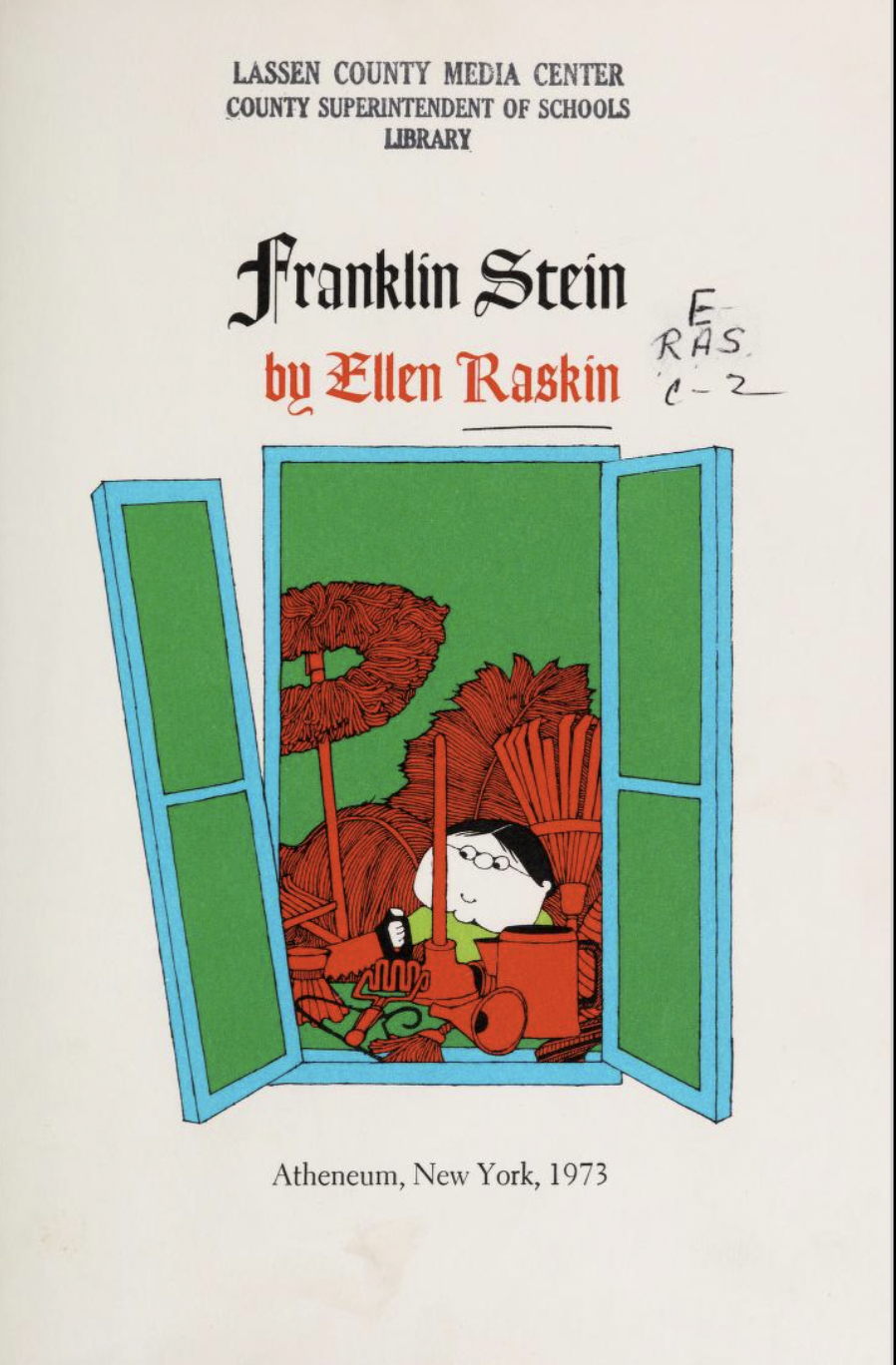
Just Franklin and his creation, all cute in the window
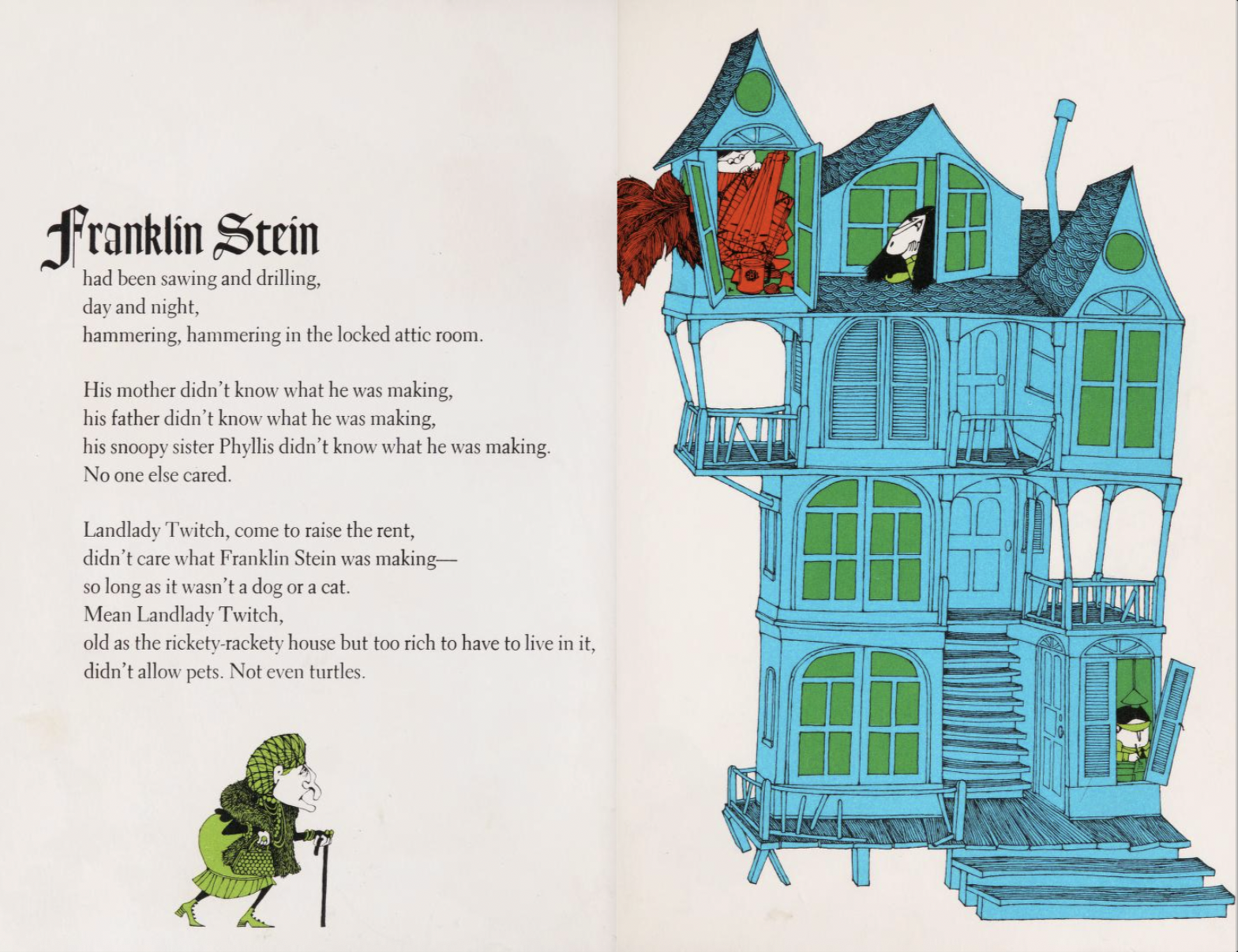
Then bam, the whole amazing house! (The rhythm of the language is so good.)
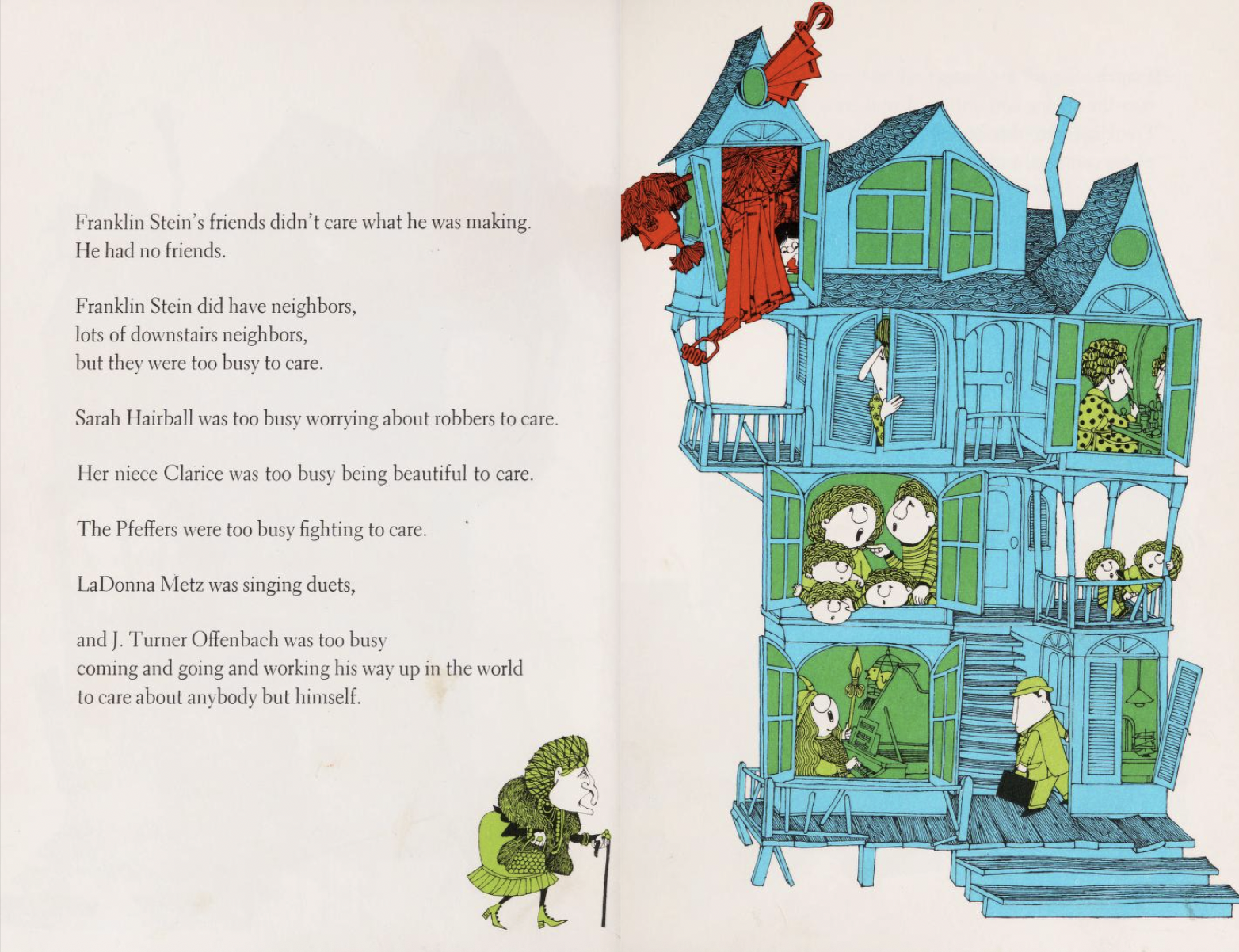
Raskin treats the page turn like an animation — the old lady has moved and now we get to see the window and doors flipped open with her quirky cast of characters.
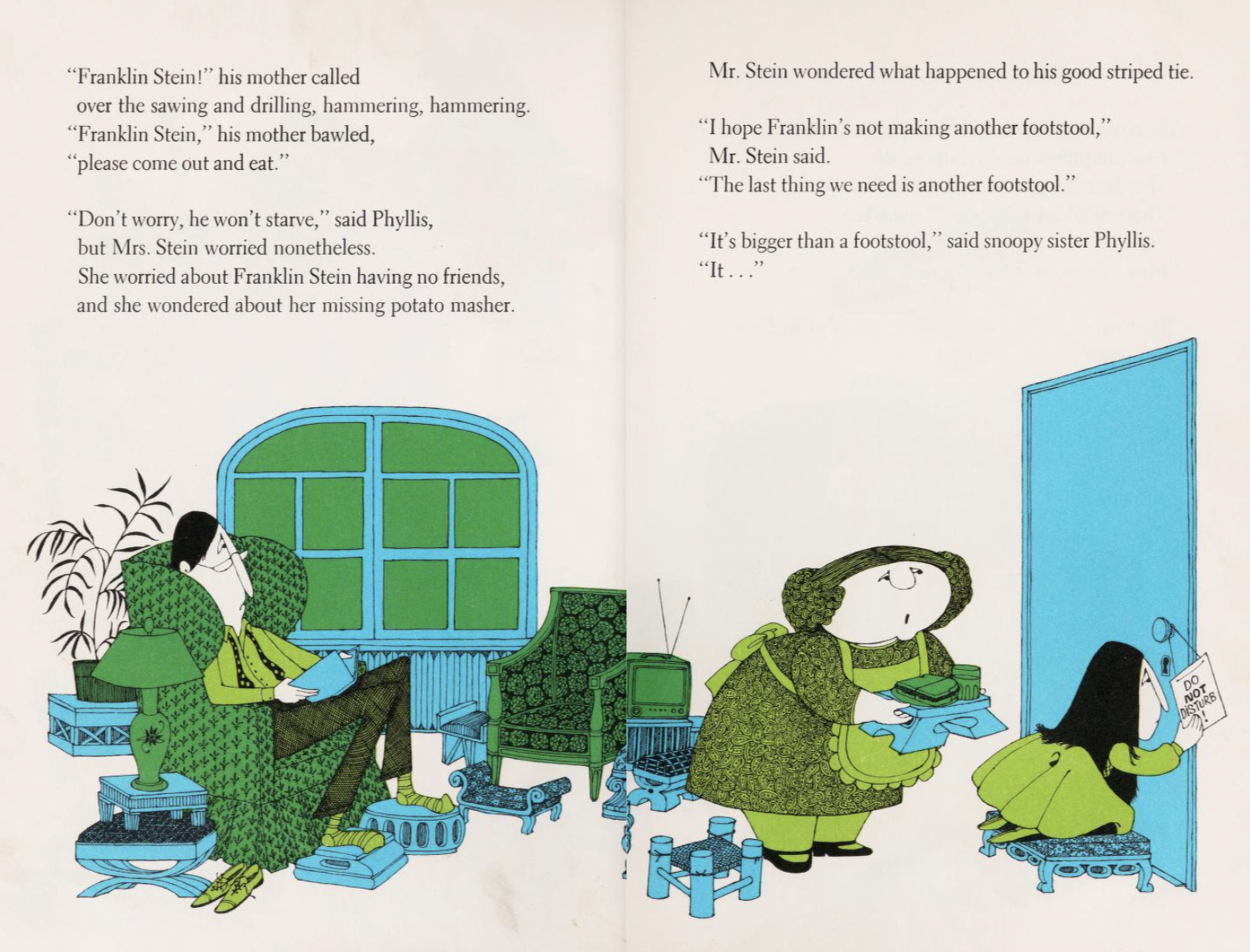
The older sister reminds me so much of the sibling relationship in The Westing Game.
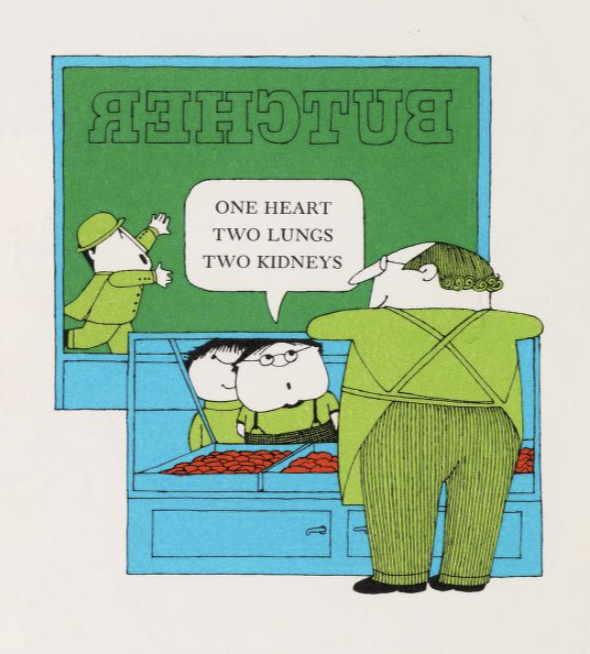
And the final image feels like an ending and a beginning. A big part of Raskin’s signature style.
Bio: “Ellen Raskin has made a Fred. He stood in her studio while she was working on this book—but not whole, in parts. Fred was in parts because Fred is very large and her studio is not. And sometimes the plumber’s helper was needed or her husband wanted to wear his striped tie.
In addition to Fred, Miss Raskin lives with her husband and her daughter. They have an apartment in New York City where she also created [her other books].”
Awards: ALA Notable Children’s Book, 1972
Moe Q. McGlutch, He Smoked Too Much, 1973 (author and illustrator)
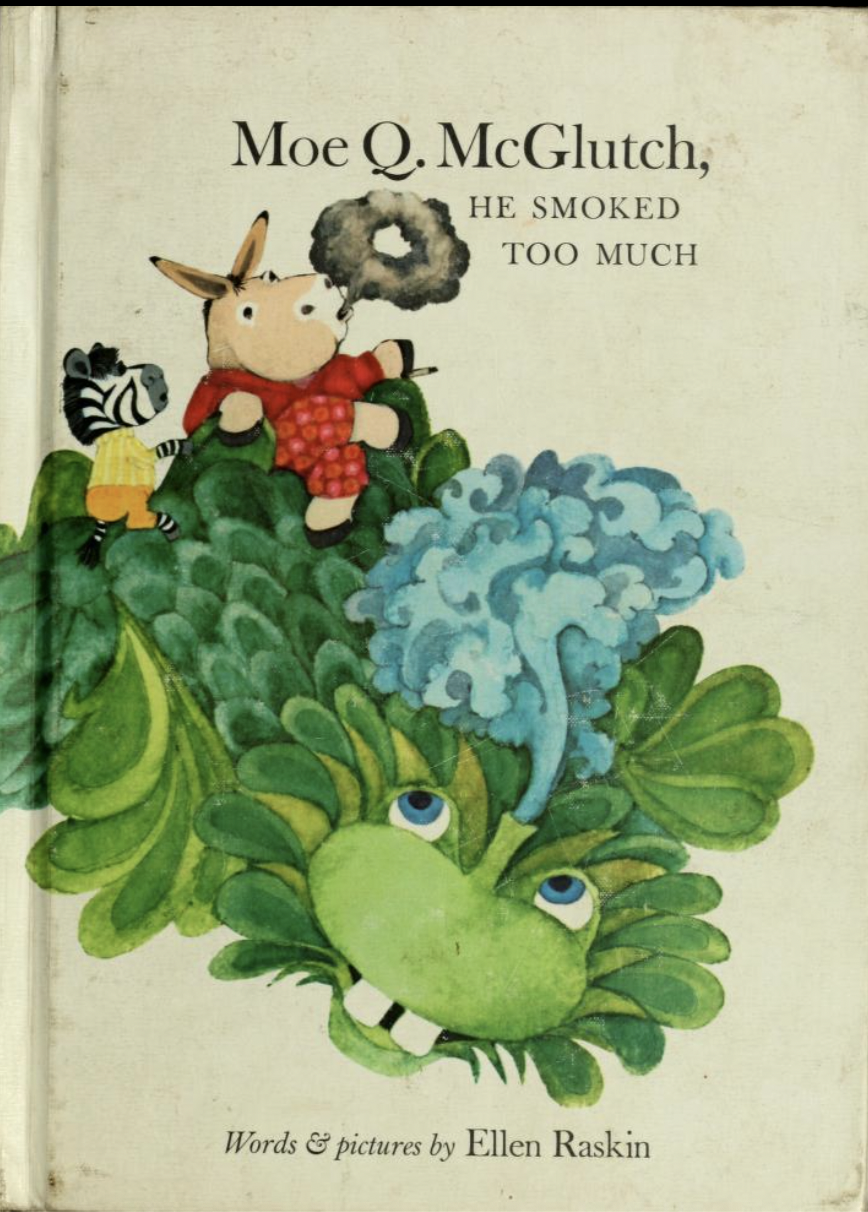
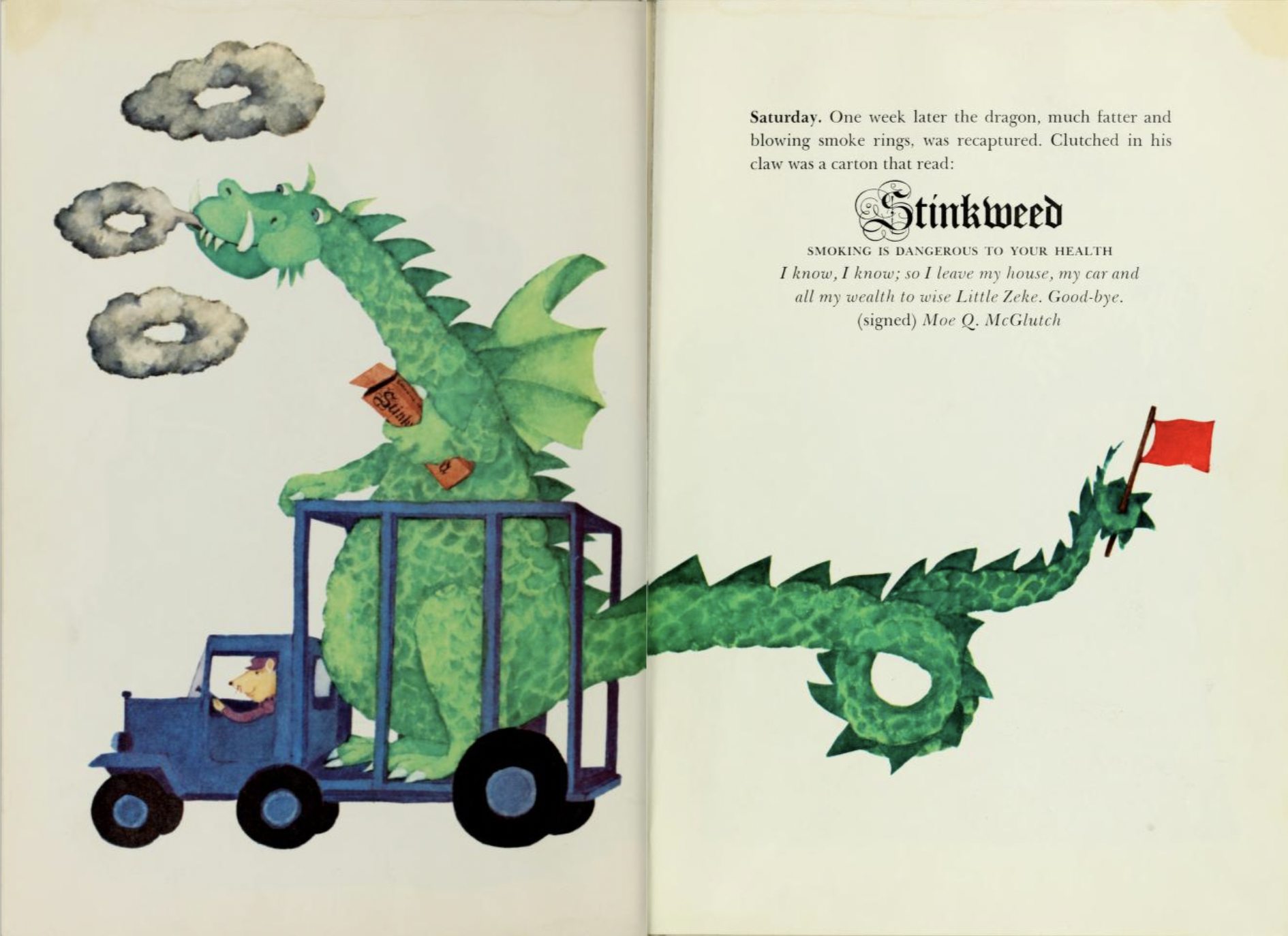
This picture book is about a family who goes on a trip to visit their fourth cousin once removed, Moe Q. McGlutch. The little guy Zeke tells Moe that he smokes too much as smoking causes all these problems for them. Eventually, Moe gets eaten by a dragon who holds a smoke warning sign at the end.
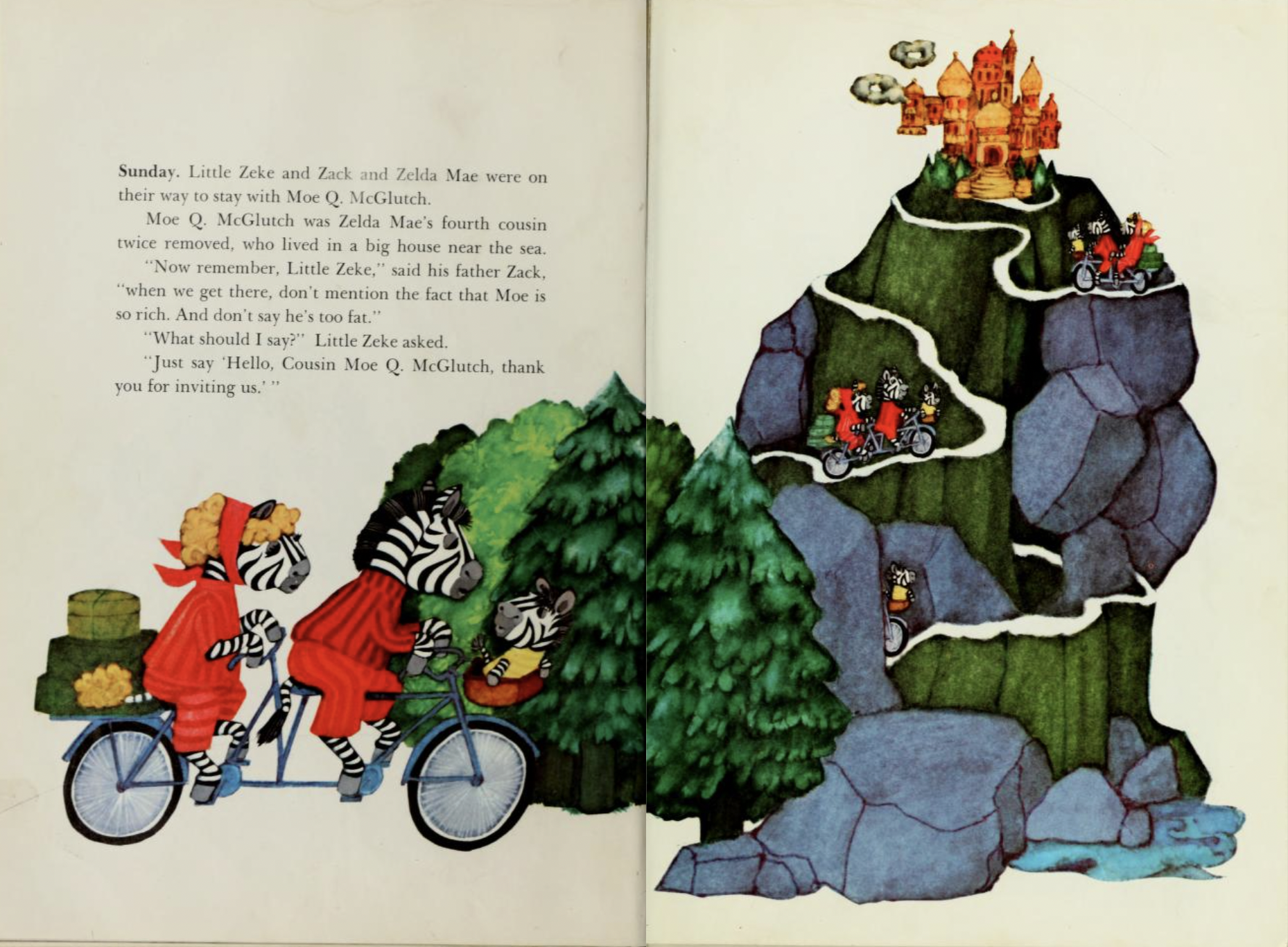
I don’t quite know what to say about this one other than I didn’t get the vision…so I’ll just leave a few images here for you.
Dedication: “For Susie and Jim Together”
Who, Said Sue, Said Whoo?, 1973 (author and illustrator)
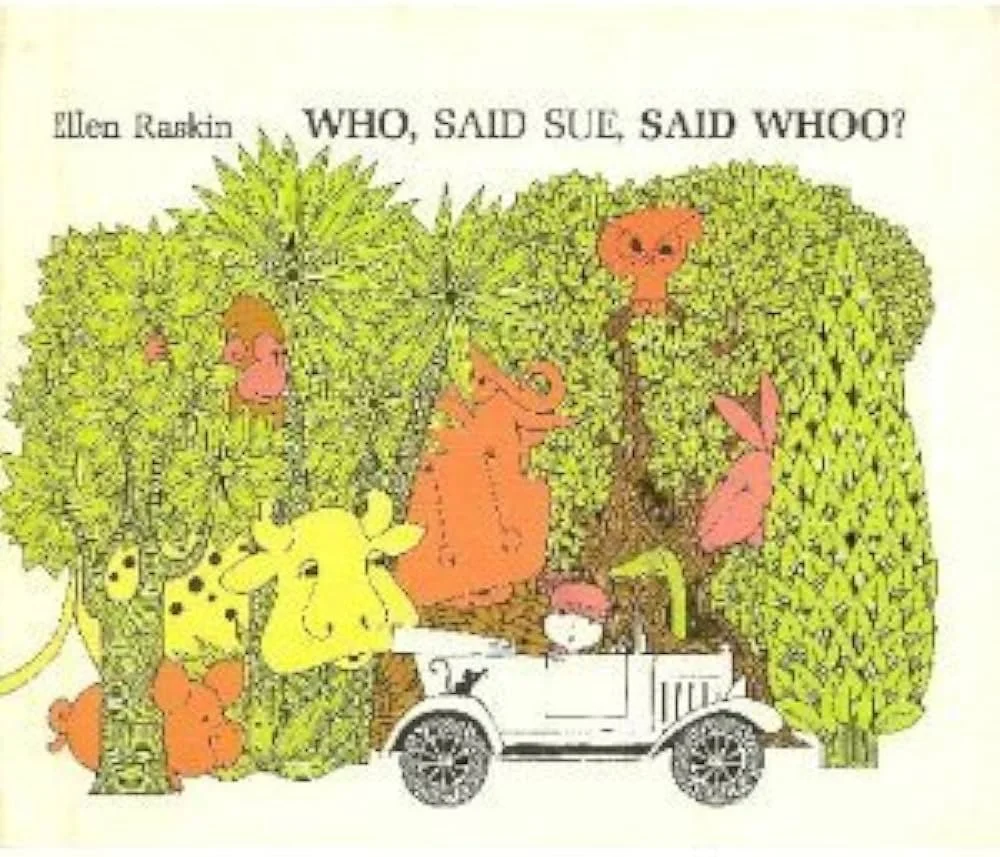
This picture book is an add on story.
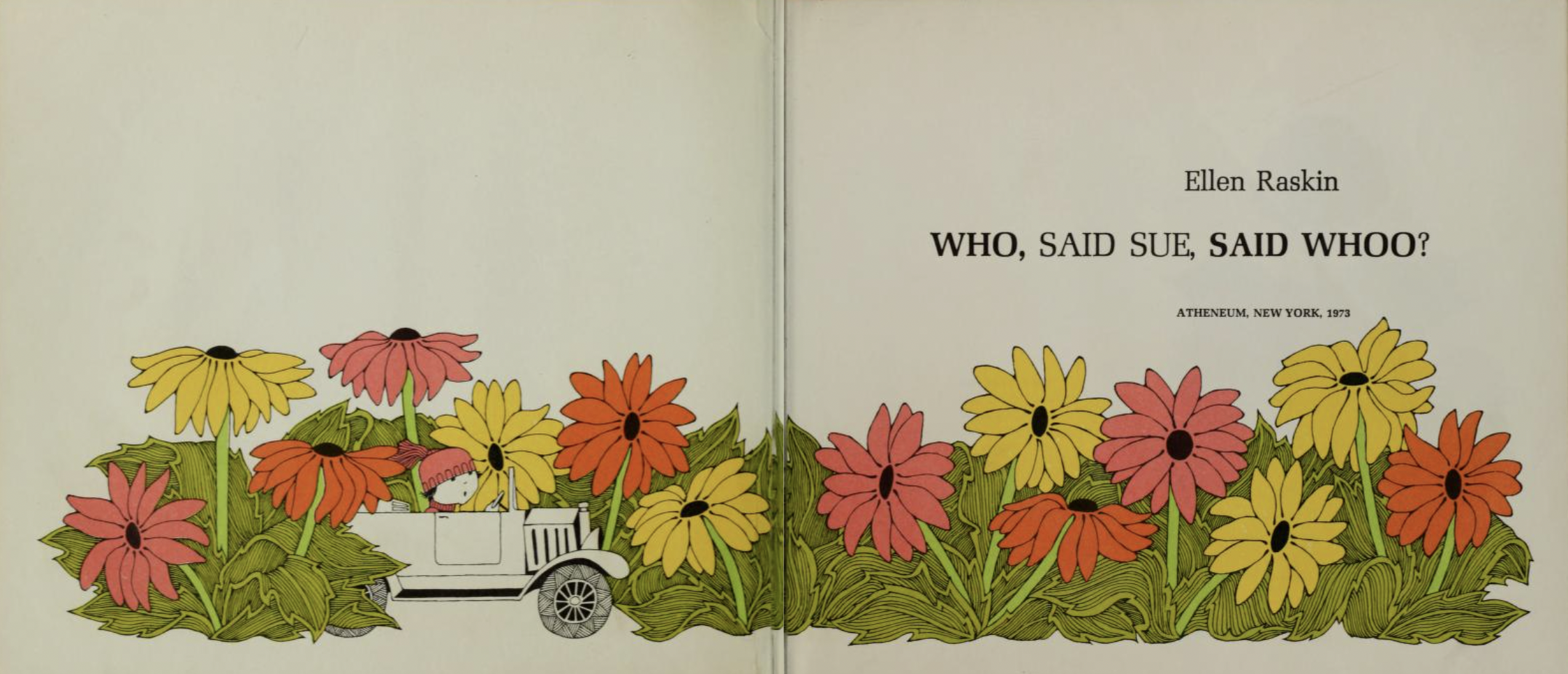
A girl named Sue asks who said chitter-chatter. Little by little, we see all these animals pile onto her car until the big reveal at the end.
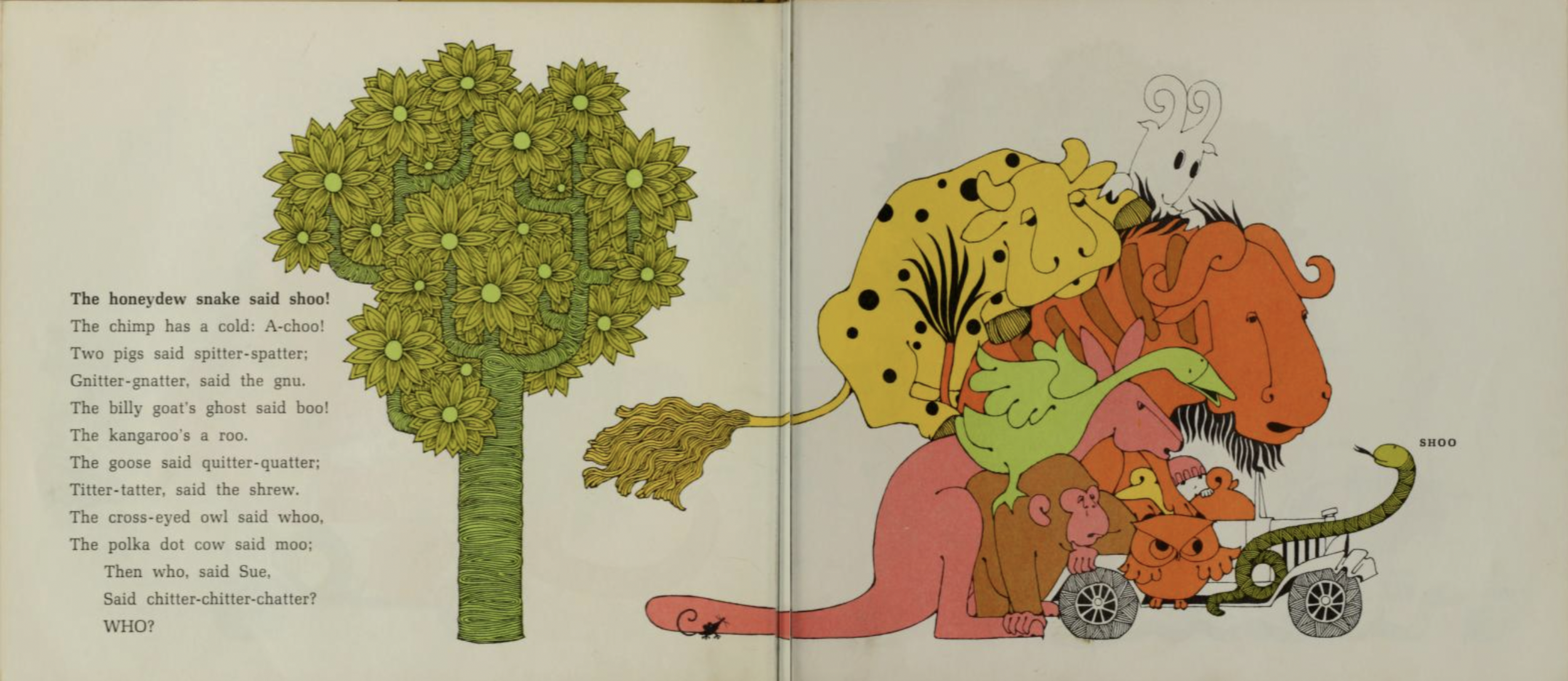
I’m sure lots of kids appreciate being able to guess before each page turn. The question I always have about repetitious add-on stories is: where is the line before it feels like too much? My line as a kid (and an adult) is shorter than most; I’m impatient. But to be fair, without that longer build up, the payoff at the end might not feel as satisfying to some.
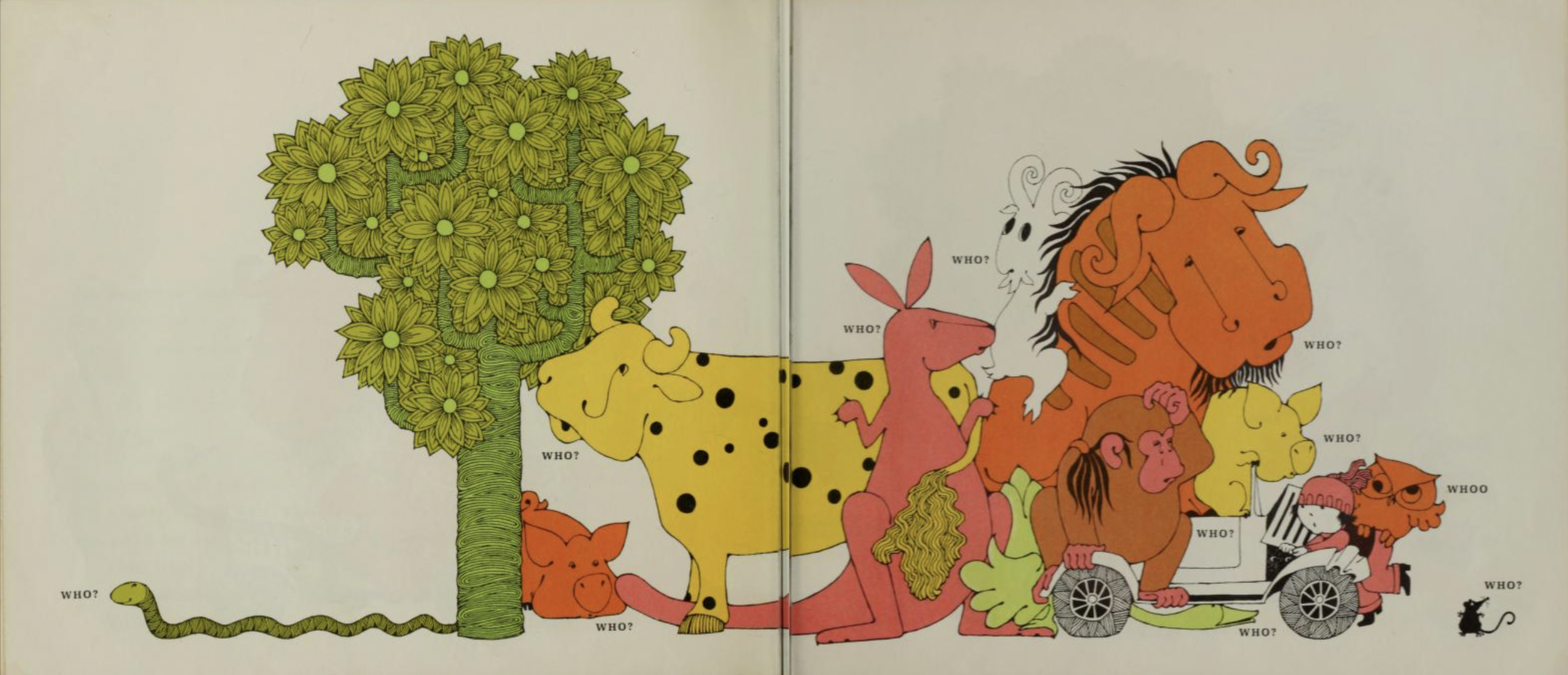
Before the reveal, we have this nice pause.
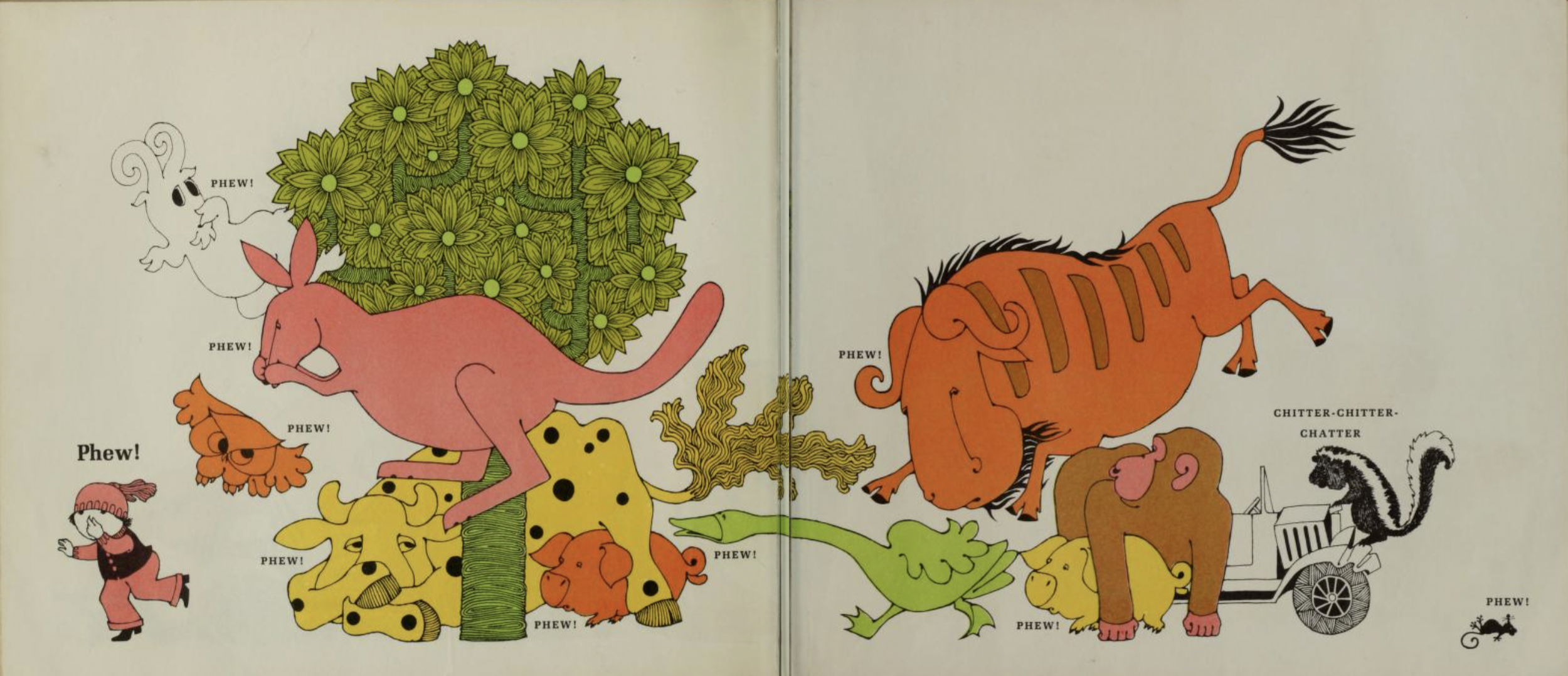
Then surprise!
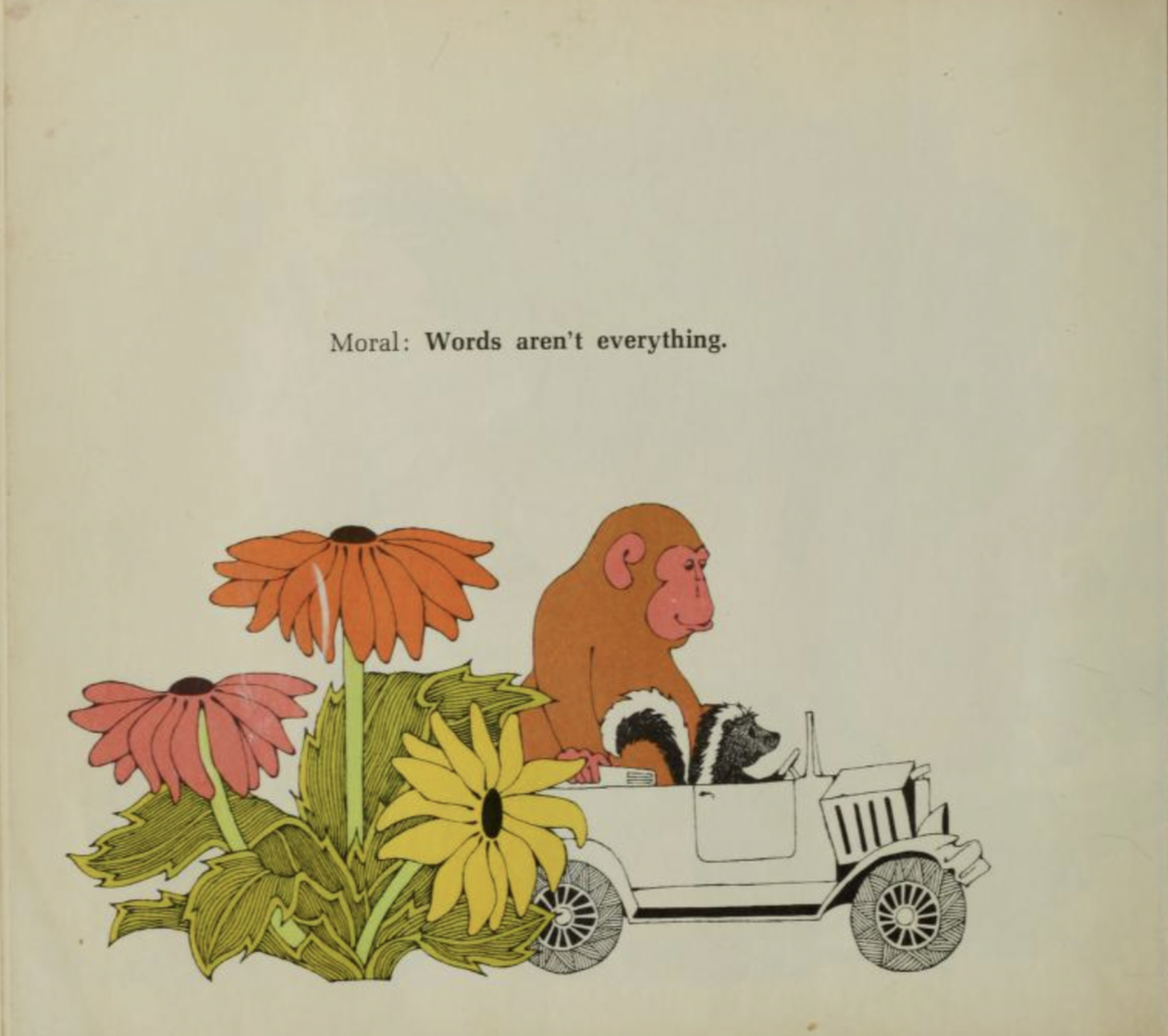
This cheeky ending made me laugh.
Dedication: For jean Karl and David Rogers with many, many thanks, and for Suzanne Glazer, Too. Who? Sue.
Bio: “Ellen Raskin lives in an apartment in New York City, and when she drives to her car she does not encounter animals along the way, generally. But she thinks it might be more fun than the traffic she does find—if, of course, they were the right animals.”
Awards: ALA Notable Children’s Book, 1973; American Institute of Graphic Arts (AIGA) Best Books Exhibit, 1973-74; Boston Globe-Horn Book Honor Book for Picture Book, 1973; Children’s Book Showcase, 1974
Figgs & Phantoms, 1974 (author)
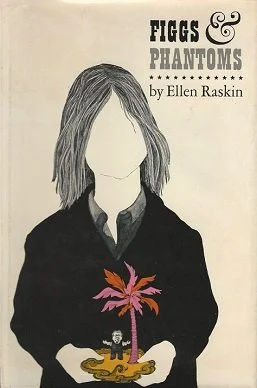
This novel won the Newbery Honor. It’s about a girl named Mona who is part of a quirky family. As she navigates the embarrassment of growing up, including shame about her body and how the world sees her family, she loses her beloved book dealer uncle Florence Figg to “Capri” which is the place Figgs go to when they are ready to move on from the world. She ends up traveling there in a dream and is able to let go of him while also finding motivation to live life more fully.
Though I enjoyed some of the very Raskin details, I struggled to follow this one to be honest. I think the Figg family eccentricity is deserving of a story, but I wished it was a bit more grounded.
Bio: Ellen Raskin lives and works in an old haunted house in New York’s Greenwich Village. Like Uncle Florence, she loves books inside and out, and has a fine collection, in which every book described in Figgs & Phantoms reposes—with one very important exception.
About the author: Ellen Raskin lives in many worlds: in the world of books, in teh world of dreams, and in New York City where she writes and illustrates in an 1820 haunted house. Figgs & Phantoms is her twelfth book. tohers are the picture books: Nothing Ever happens on My Block, Spectacles, and Who, Said Sue, Said Whoo?; and the very popular novel, The Mysettrious Disappearance of Leon (I mean Noel). Ellen Raskin has won many awards for her art and for her books. She is even more successful in her dreams.
About the book: Ellen Raskin made the illustrations. She also designed this book with the patient assistance of Riki Levinson and Susan Shapiro (who is not responsible for Truman Figg’s misspellings). The typefaces were chosen to reflect the content of the words, to point up the contrast of old books with vaudeville. The text was set in Janson, a beautiful seventeenth-centry old style face. The display type is the theatrical Playbill. Truman’s signs are composed of Chisel, PLaybill, and News Gothic. The ampersand is Garamond. This sign represents the word “and” and is dreived from the liten et, which also means “and.”
Awards: ALA Notable Children’s Book, 1974; American Institute of Graphic Arts (AIGA) Best Books Exhibit, 1973-74; Children’s Book Showcase, 1975; Library of Congress Children’s Book, 1974; Newbery Honor Book, 1975; School Library Journal Best Books, 1974; School Library Journal Best Books, 1966-1978
The Tattooed Potato & Other Clues, 1975 (author)
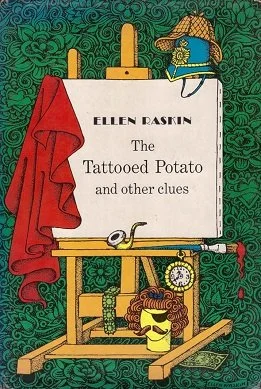
This novel is about a girl named Dickory Dock who, after taking an art assistant job, gets thrown into a mystery of crime and disguises. Every chapter is its own little mystery that eventually connects to the greater mysteries across the book like who is the blackmailer? Who murdered the parents? Who stole the watch?
Raskin has a tendency to write super harsh descriptions, and that tendency is prominent in this book. But she often starts her stories that way because she loves to explore the idea of other people’s perception of each other versus who they really are on the inside. Over the course of her stories, those descriptions soften as her main characters start to see beyond their own biases (and same with the reader’s).
We’ve also got Raskin’s signature cast of quirky characters, lots of word play (almost too much for me), and a few twists. I enjoyed it, and it was so cool to be immersed in a Raskin “puzzle mystery” and see hints of the masterpiece she would soon make.
Awards: ALA Notable Children’s Book, 1975; Mystery Writers of America Edgar Allen Poe Special Award, 1976
Moose, Goose & Little Nobody, 1976 (author and illustrator)
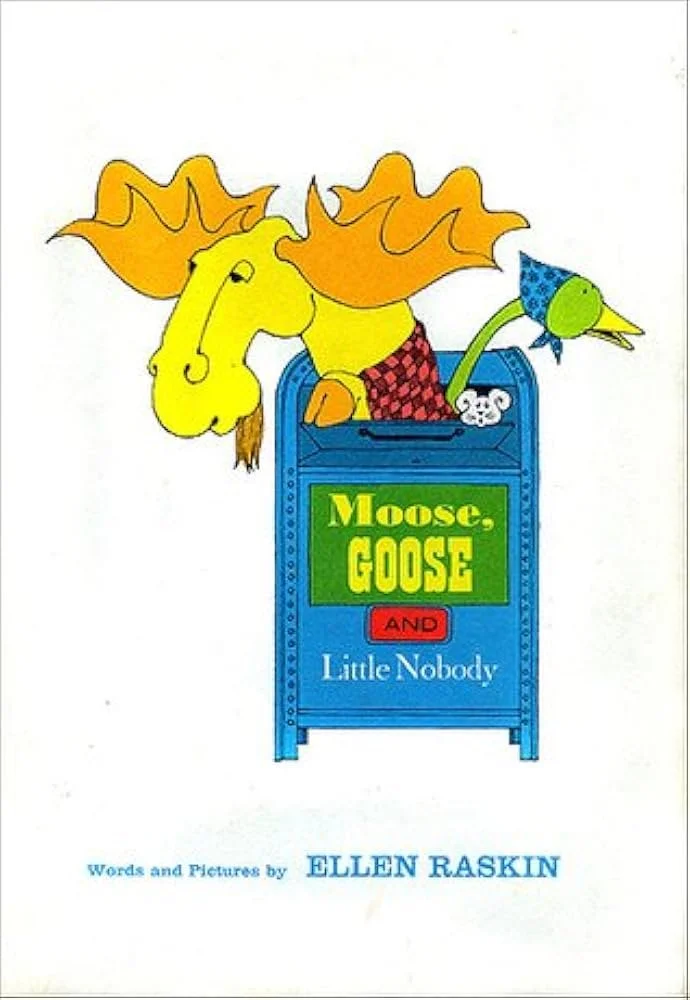
This book is about a little mouse inside a roof that blew off of its house in a big wind storm. A moose and a goose help the mouse find its home and mother.
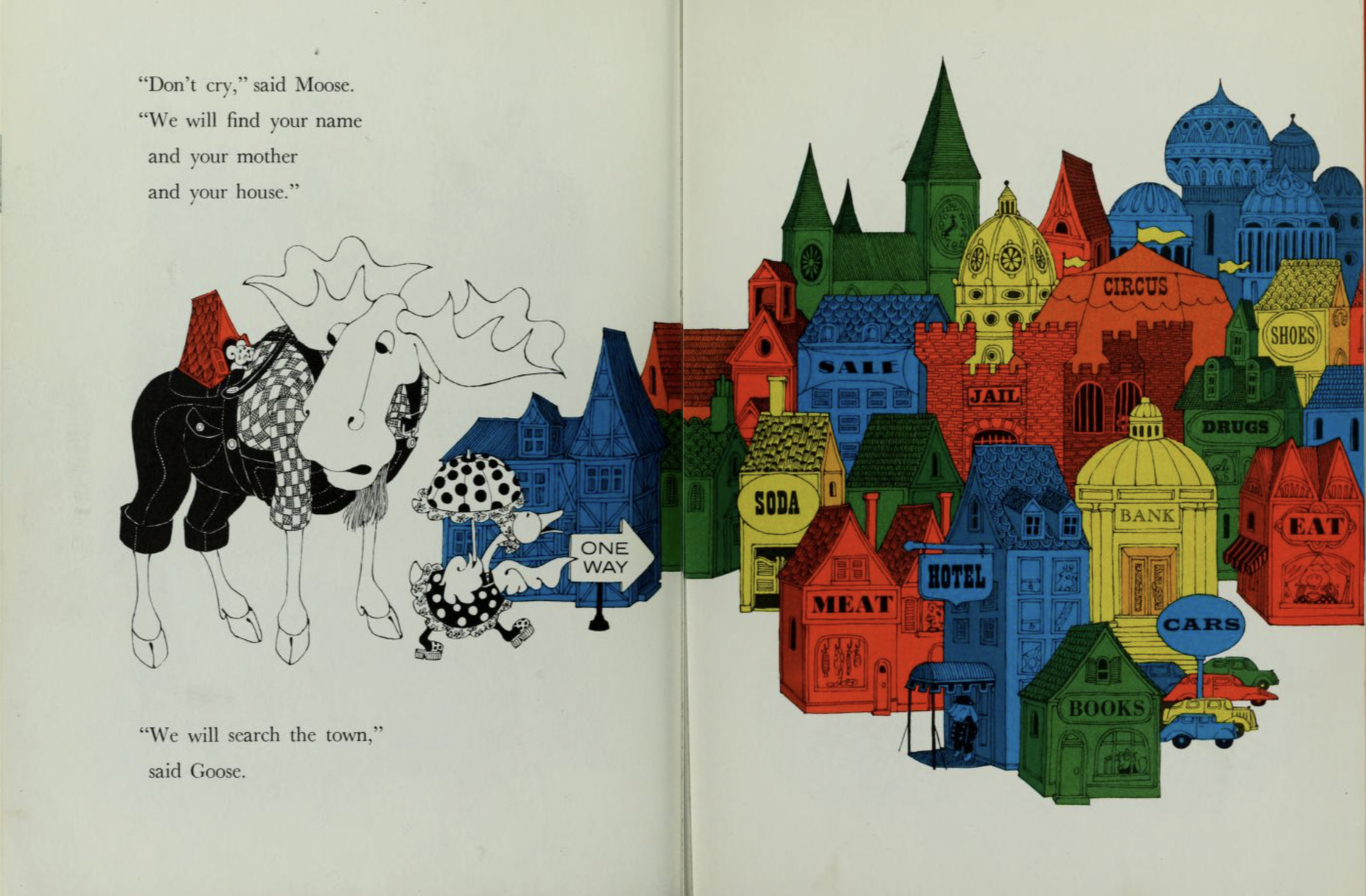
I honestly was really surprised this book was made at all, because it felt very similar to Are You My Mother? by P.D. Eastman which was published in 1960. I prefer Eastman’s. To be fair, it would be a tough act to follow, but I’m very curious why she made it. She did say in an interview that she didn’t read other children’s books, so maybe that’s what happened? It did win an ALA Notable award though.
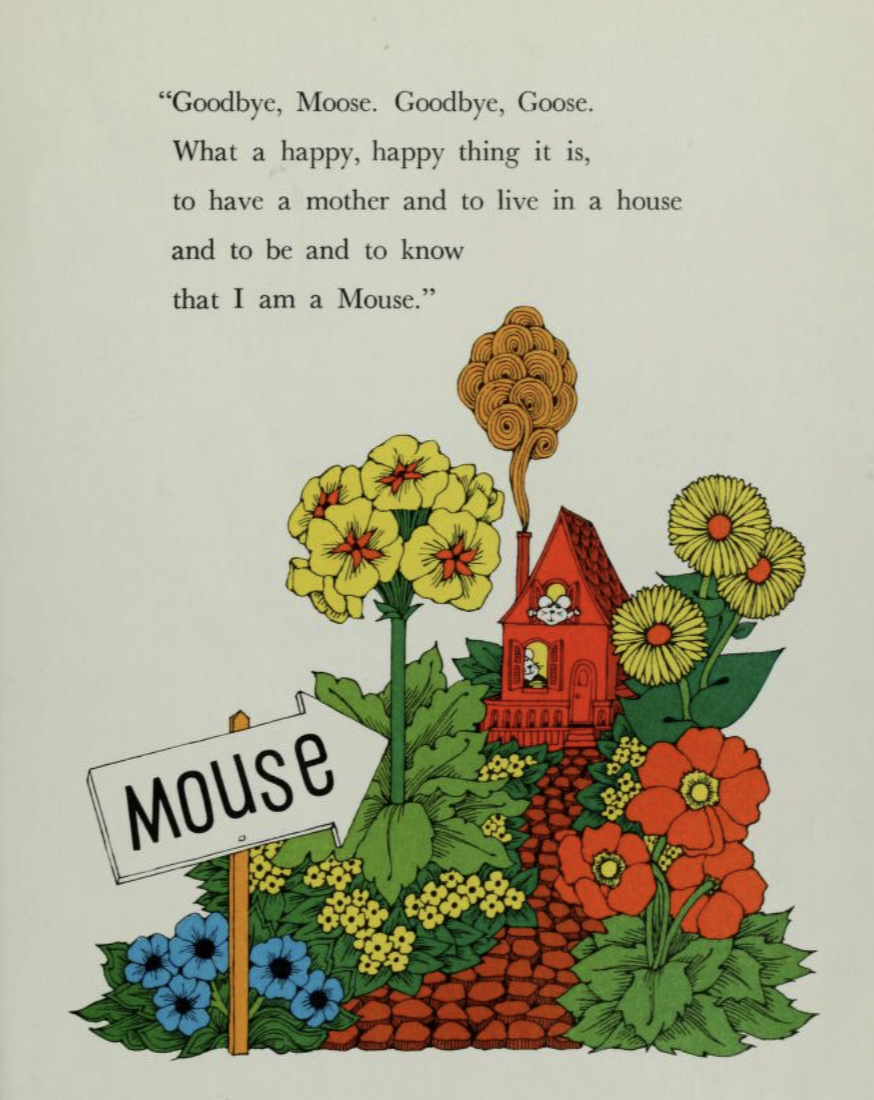
This little house is pretty cute though :)
Dedication: “For my mother, Margaret Raskin Shanske”
Bio: “Ellen Raskin had designed more than 1,000 book jackets before she wrote and illustrated her first picture book for children. Nothing Ever Happens on My Block, which was selected as a Herald Tribune Prize Book, on eo the New York Times’ Ten Best of the Year, and a Notable Book by the American Library Association. Since then she has written as well as illustrated about a dozen more, including one full-length mystery novel for children, and has illustrated some twenty books for other authors…Ellen Raskin was born in Milwaukee, Wisconsin, and now lives in New York City.”
Awards: ALA Notable Children’s Book, 1976
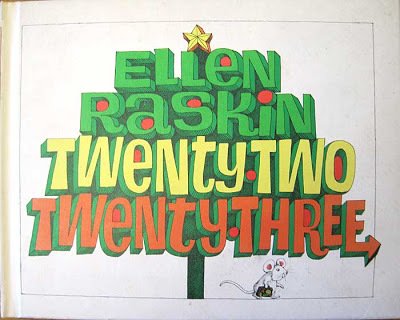
Twenty-Two, Twenty-Three, 1976 (author and illustrator)
Haven’t found this one yet but here is the cover!
Awards: ALA Notable Children’s Book, 1976
The Westing Game, 1978 (author)
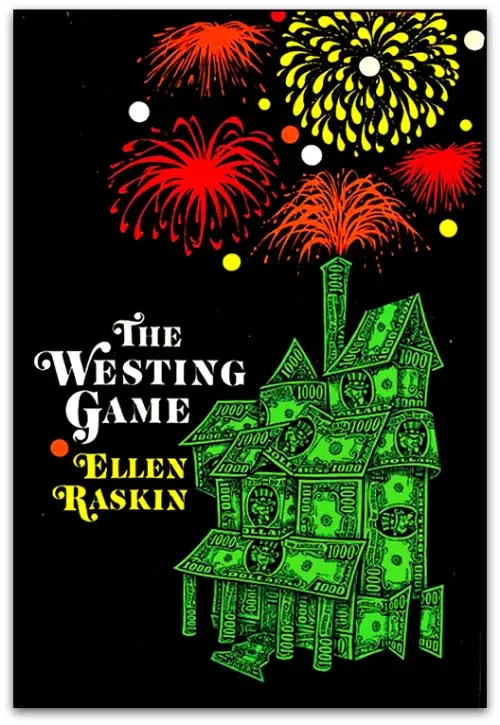
Read a million times but currently rereading :)
Awards: ALA Notable Children’s Book, 1978; Banta Literary Award, 1979; Boston Globe-Horn Book Award for Fiction, 1978; Horn Book Fanfare, 1979; Library of Congress Children’s Book, 1978; Newbery Medal, 1979
her Book Covers
Here are some of the covers she designed provided by the Ransom Center.
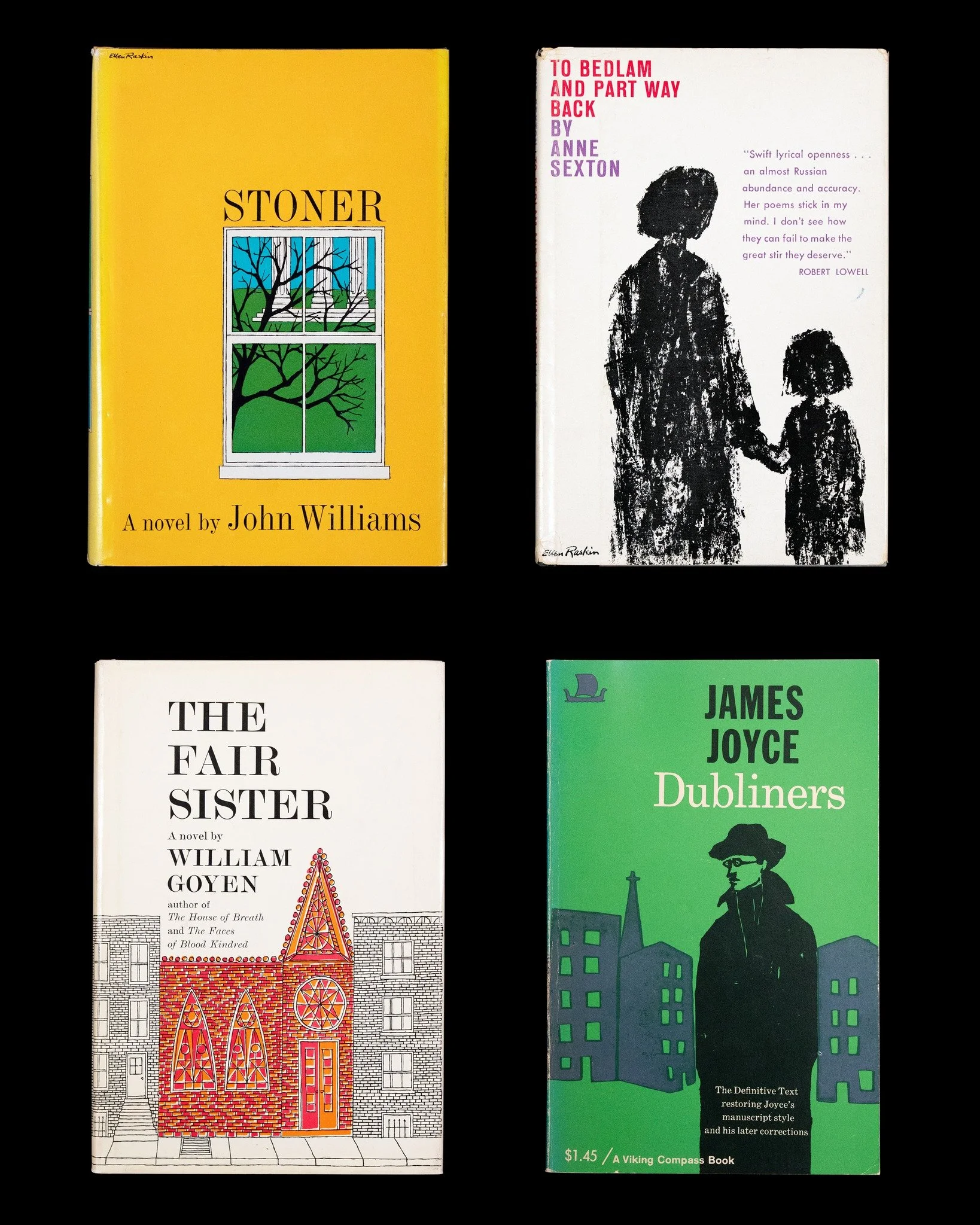
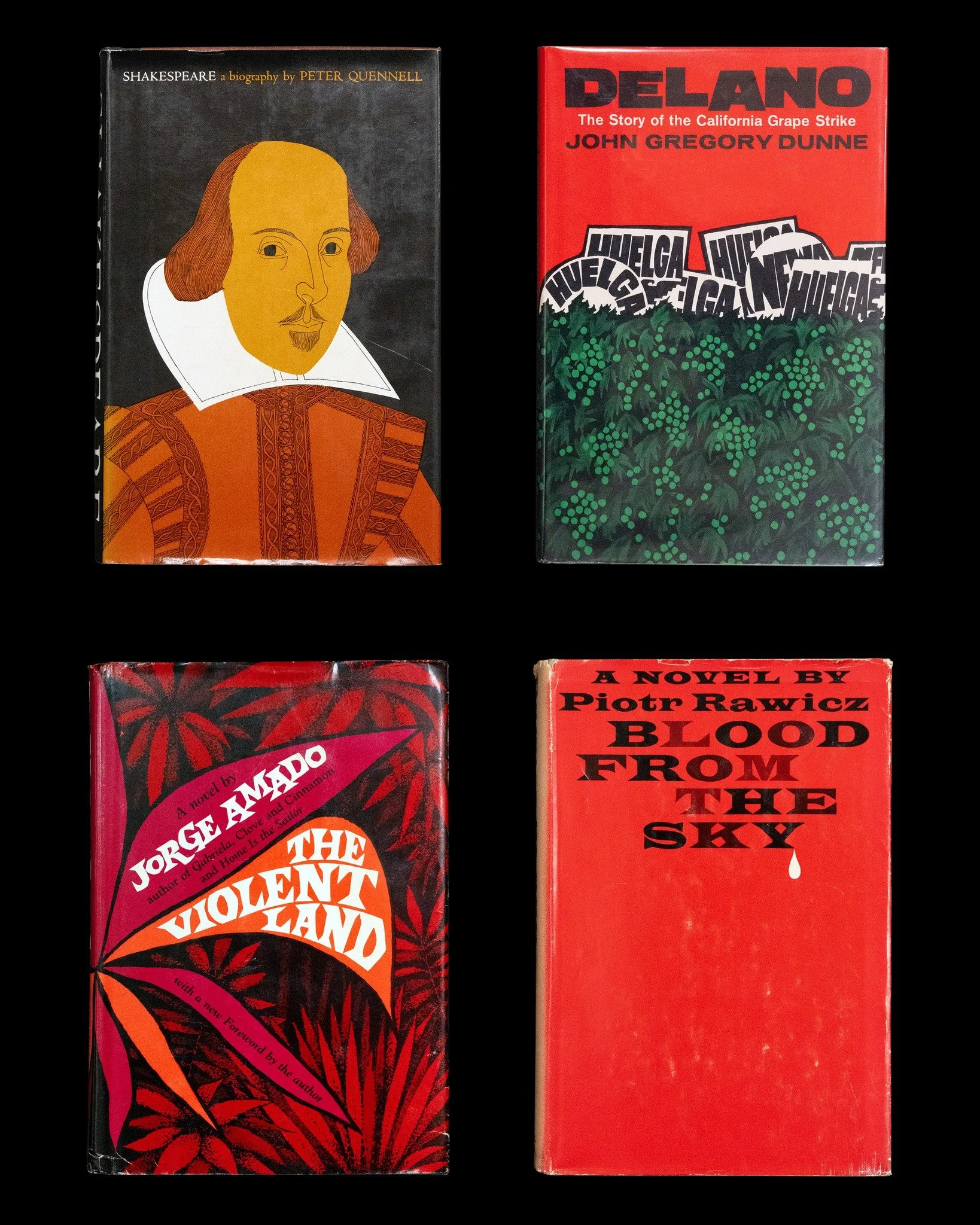
And of course, one of her most famous covers is this book you probably recognize.
Well, that was fun to see her work in chronological order! I’m curious…what did you learn? Or what stood out to you?